The story
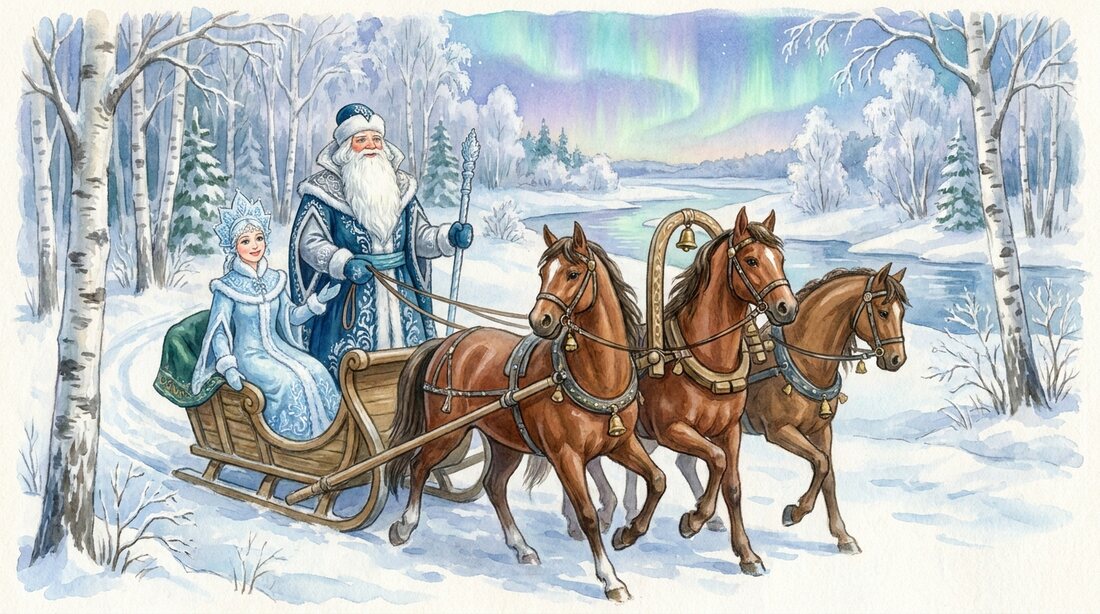
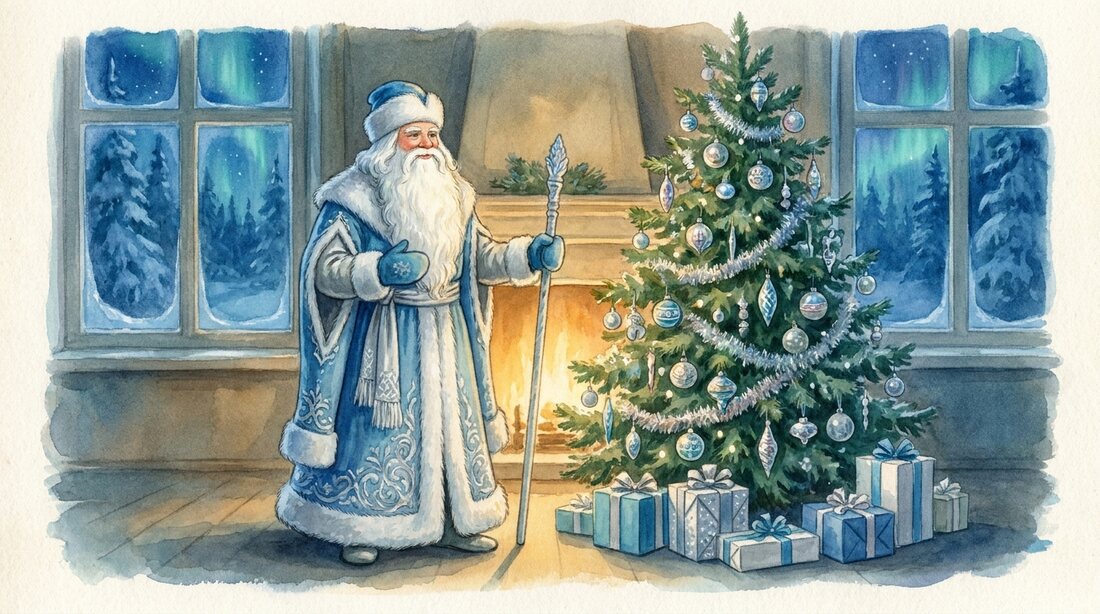
He is tall, he wears blue and silver more often than red, and he walks rather than flies. Snegurochka — the Snow Maiden — travels with him, which makes him almost unique among the winter gift-bringers: he has company. She is described as his granddaughter, made of snow, and she is the one who actually handles the correspondence.
Where it actually comes from
Ded Moroz grows out of Slavic folklore about a frost spirit, softened over the nineteenth century into a benevolent gift-bringer. Snegurochka comes from a folk tale popularised by Ostrovsky's 1873 play and Rimsky-Korsakov's opera. After 1917 religious Christmas celebration was suppressed in the Soviet Union; in 1935 the New Year tree — the yolka — was officially revived as a secular holiday, and Ded Moroz with it. That is why across much of the Slavic world the presents, the tree and the feast belong to New Year's Eve rather than to 25 December. Veliky Ustyug in northern Russia has been promoted as his official home since the 1990s.
What it does for a child
A New Year figure does something a Christmas one cannot: it puts the emphasis on the turn rather than the gift. For children old enough to feel time passing — and some feel it very early — a letter that says plainly that nothing learned is lost in the change of year is steadying. It is also the natural letter for a family that keeps New Year rather than Christmas, or who keep both.
More from the story
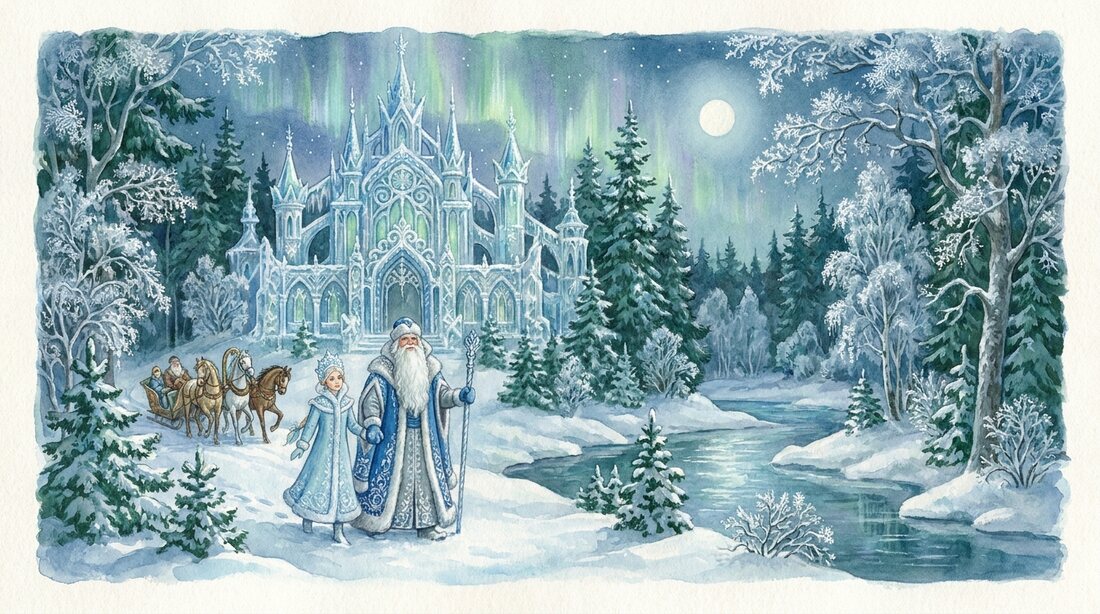
A few more pictures to look at together.