The story
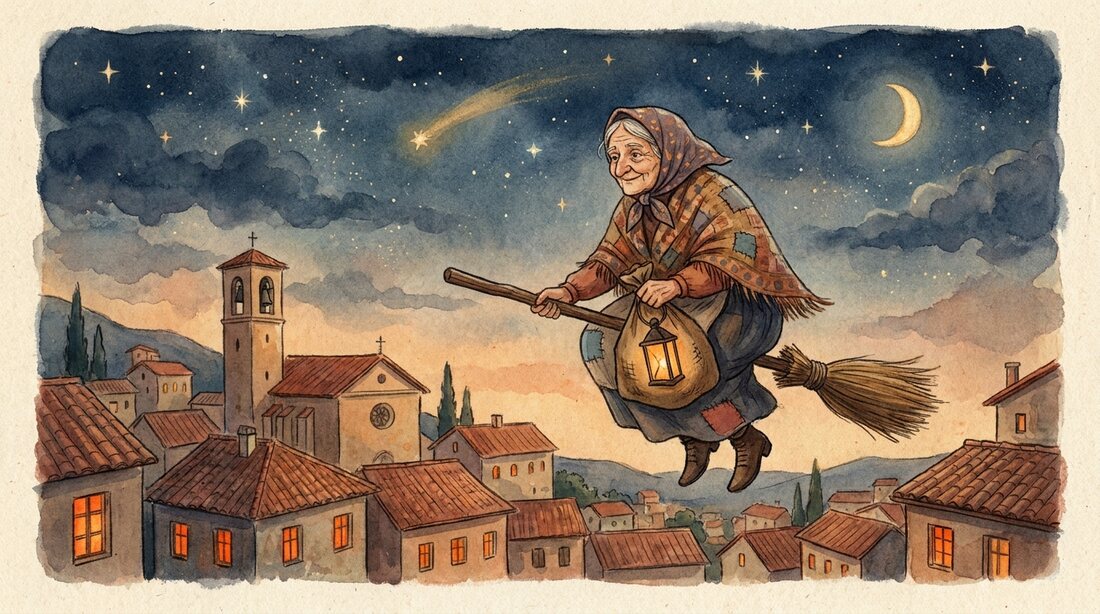
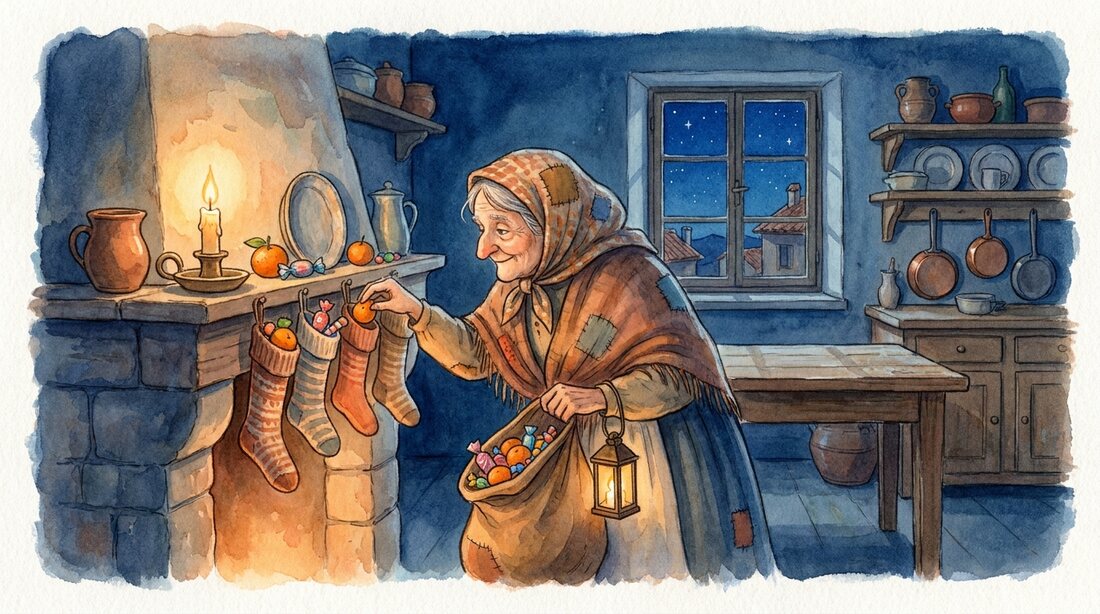
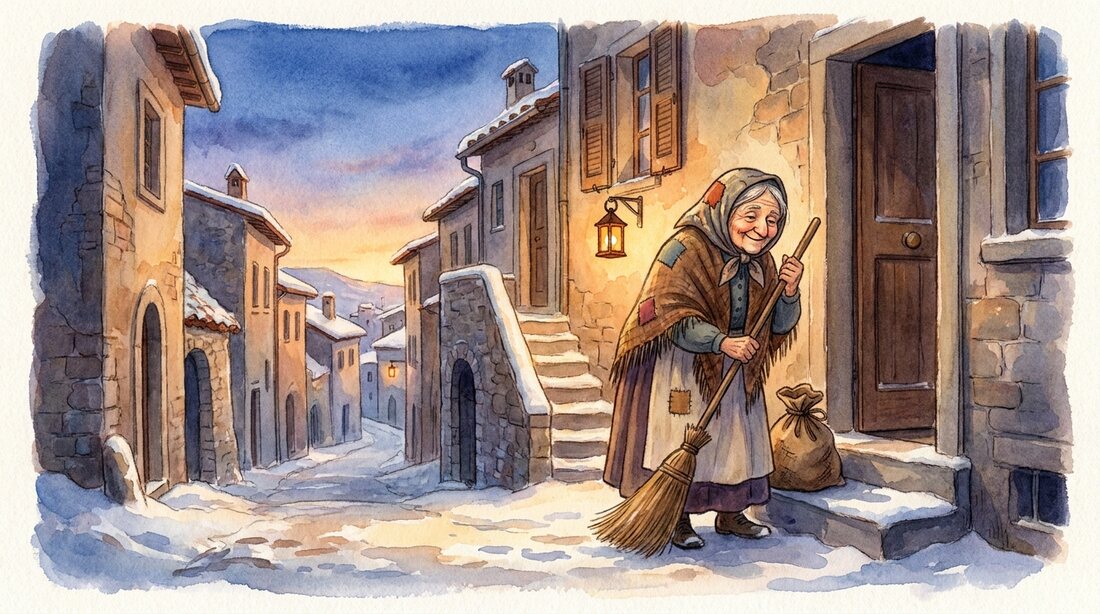
She comes on the night of the fifth of January, a fortnight after everyone else, because she is not celebrating anything. She is searching. The broom is not a vehicle so much as her profession — she was sweeping when the moment came and she missed it — and she fills the stockings of every child she passes on the chance that one of them is the one she is looking for. Nobody has ever had the heart to tell her she can stop.
Where it actually comes from
La Befana attaches to Epiphany, the twelfth night after Christmas, when the Magi are said to have reached the child at Bethlehem. In the Italian folk tale the Magi ask an old woman for directions and invite her along; she declines because of her housework, regrets it, and sets off too late. Her name is a worn-down form of Epifania. She is far older underneath: scholars connect her to pre-Christian midwinter figures marking the year's turn, and the gifts of sweets-and-coal have that same old shape of the year being weighed up. In much of Italy she, not Santa, is the one who brings the presents.
What it does for a child
Befana is the patron saint of the second chance, which is an unusually useful figure for a child to know. She made a mistake, she knows exactly what it was, she is not forgiven and she has not given up. Children who are anxious about getting things wrong respond to her differently than to a figure who only rewards being good — and the coal, which everybody gets, quietly removes the sting from being imperfect.
More from the story
A few more pictures to look at together.