The story
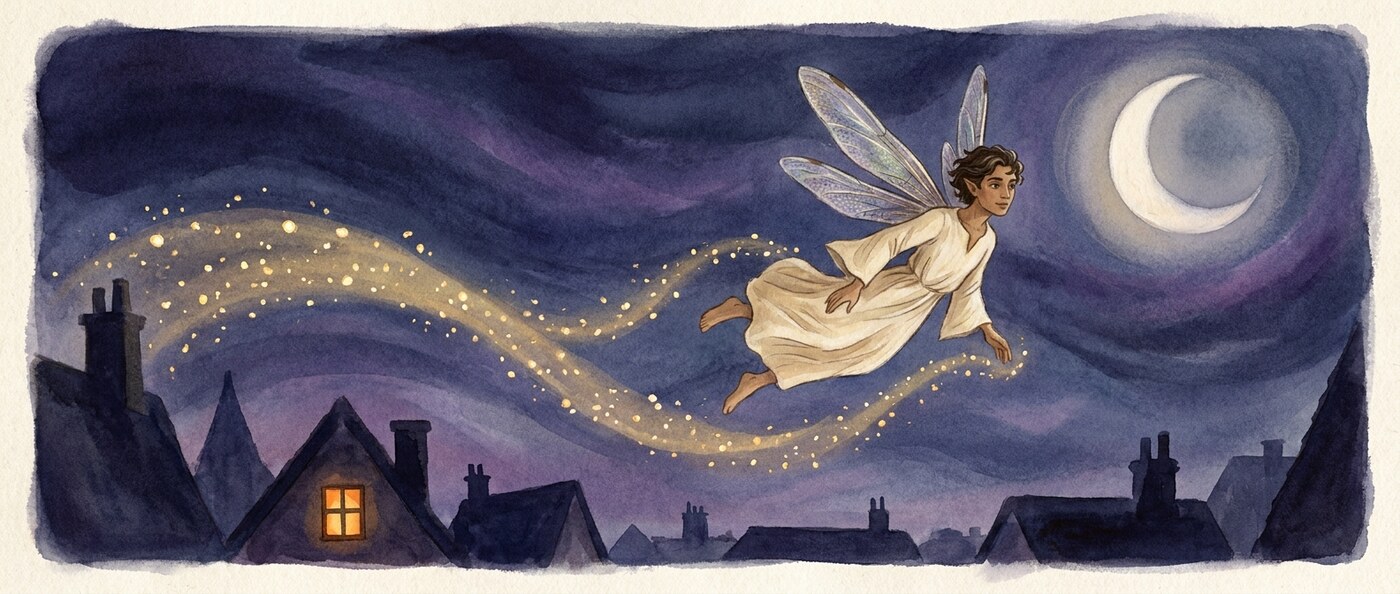
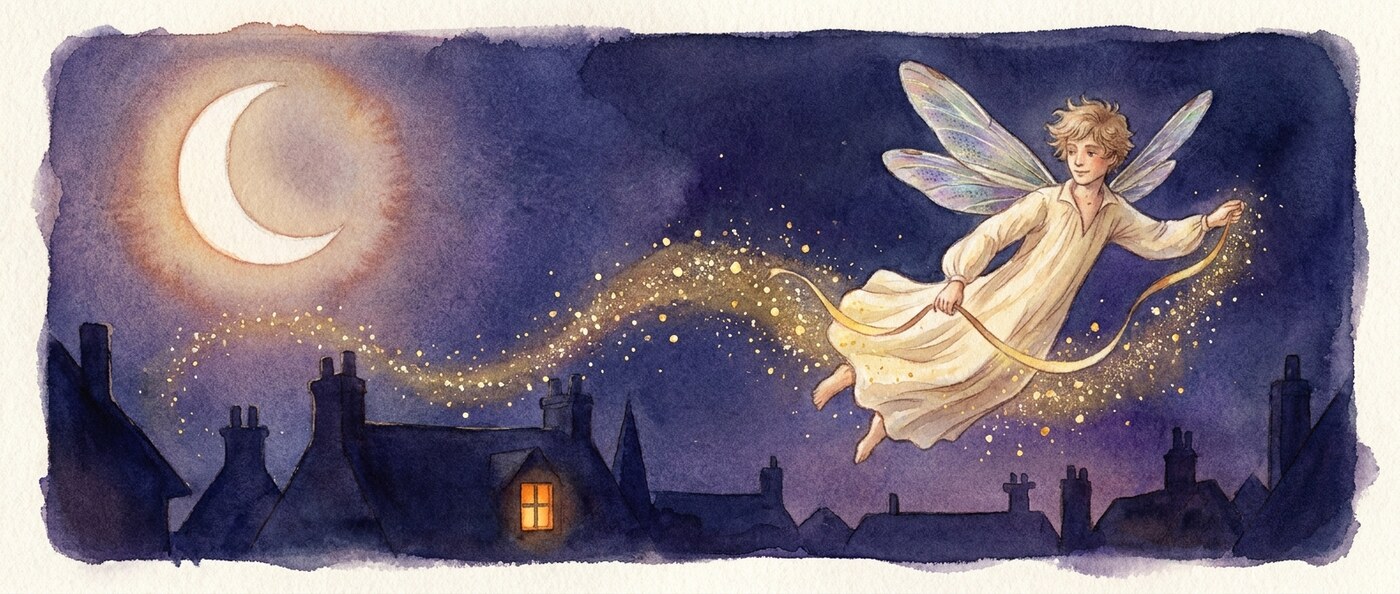
Nobody has ever seen her arrive, which is exactly how she likes it. The Tooth Fairy works the quiet hours between the last light going off and the first bird, and she works alone. She is said to be very small, very fast, and almost entirely made of the light that comes off a candle just after you blow it out. What she takes, she takes carefully. What she leaves is never the point. The point is that somebody important noticed.
Where it actually comes from
Putting a lost tooth somewhere safe is one of the oldest parenting instincts we can trace. Medieval northern Europe had the tand-fé, a small "tooth fee" paid to a child for a first tooth; in much of Europe the collector was a mouse rather than a fairy, because a rodent's teeth grow strong and never stop. The winged, gift-leaving Tooth Fairy as most families now know her is surprisingly recent and largely American: she takes shape in print in the early 1900s and settles into her modern form after the Second World War, alongside a wider, softer idea of childhood itself.
What it does for a child
Losing a tooth is usually a child's first experience of their own body changing without their permission — it wobbles, it hurts a little, and then part of them is simply gone. The ritual does something precise: it takes an unsettling event and reframes it as an achievement worth marking. Children who are given a story for a frightening change tend to approach the next one with less dread, and a letter makes the reframing concrete, because it can be read again tomorrow when the feeling comes back.
However they look at your house
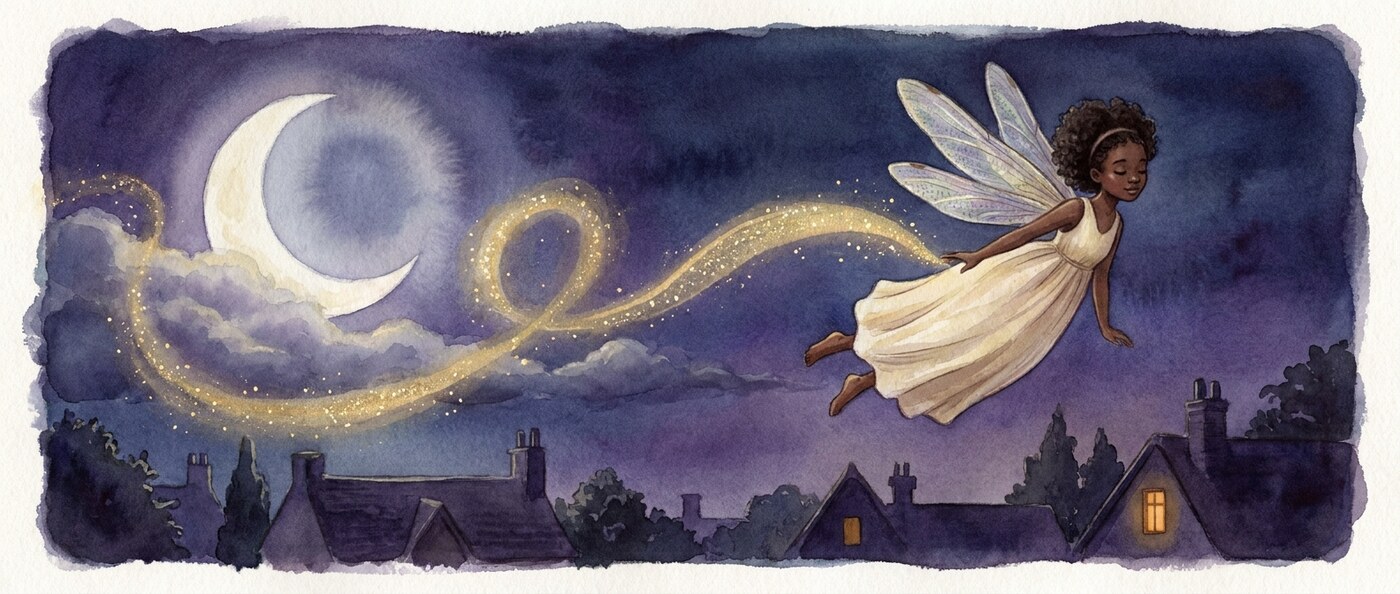
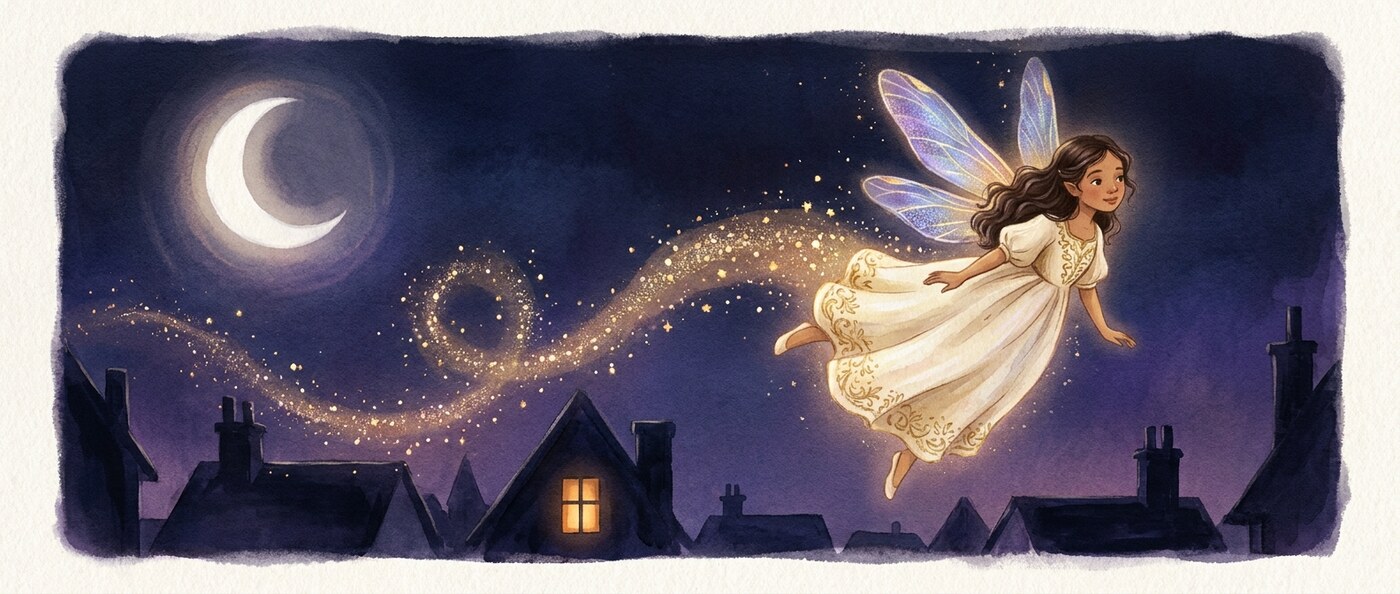
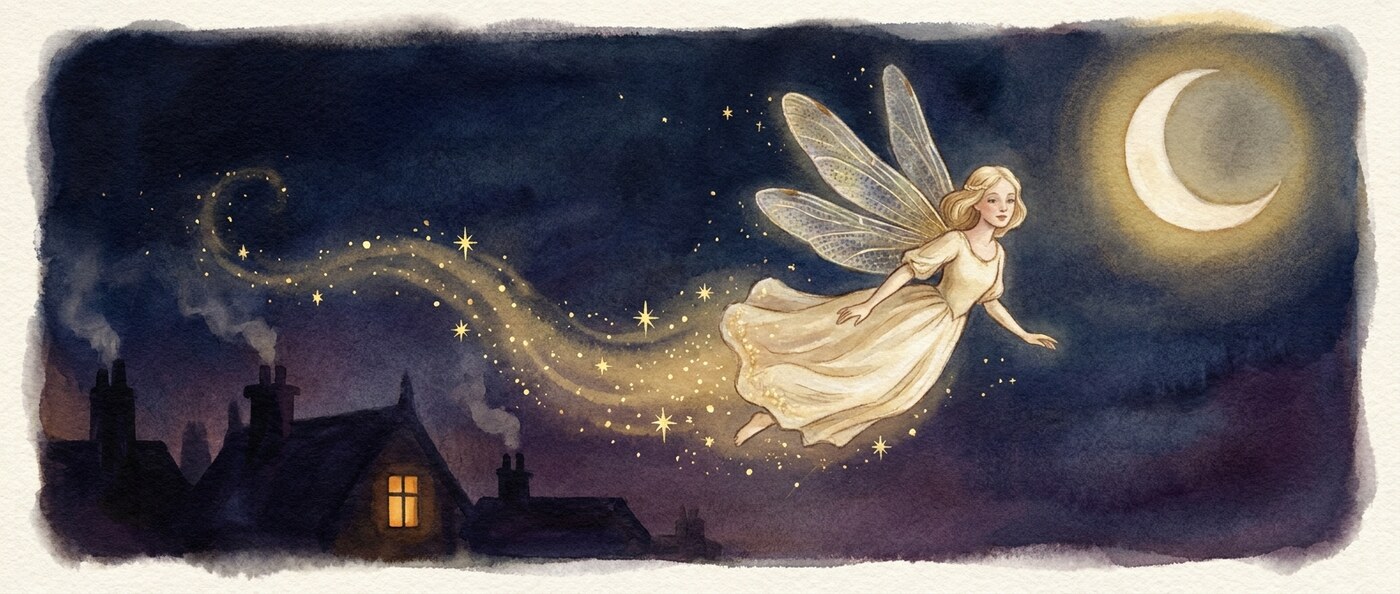
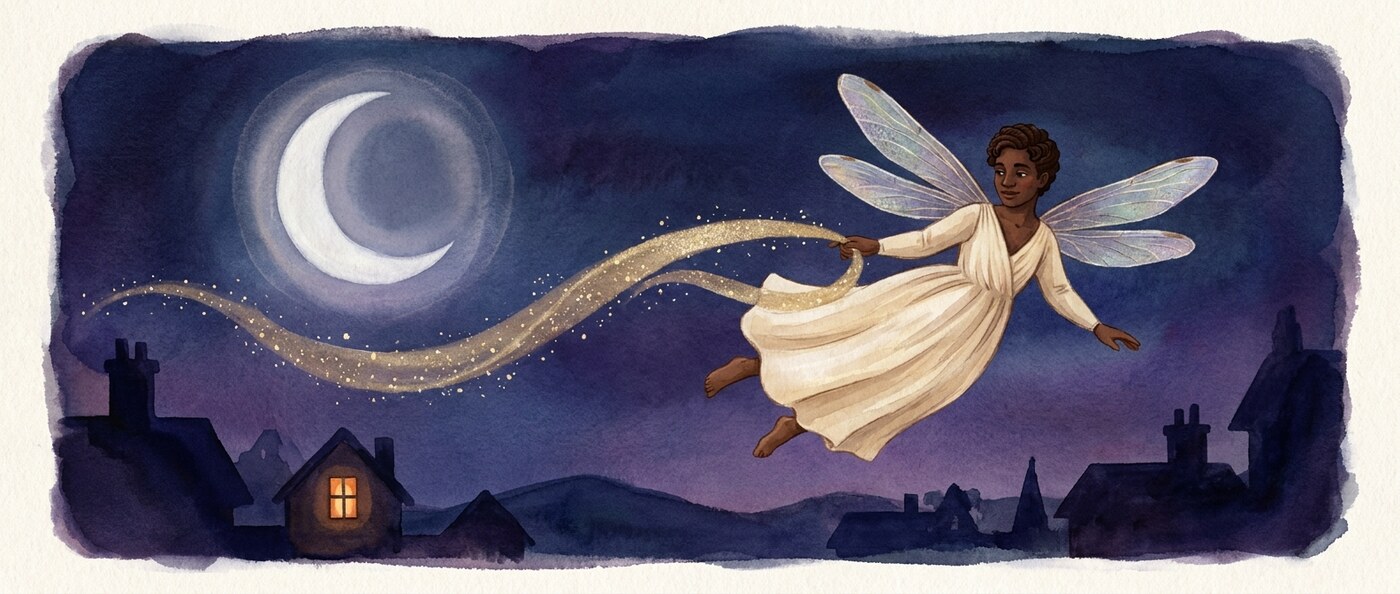
No two families picture The Tooth Fairy quite the same way. Here are six of them.