The story
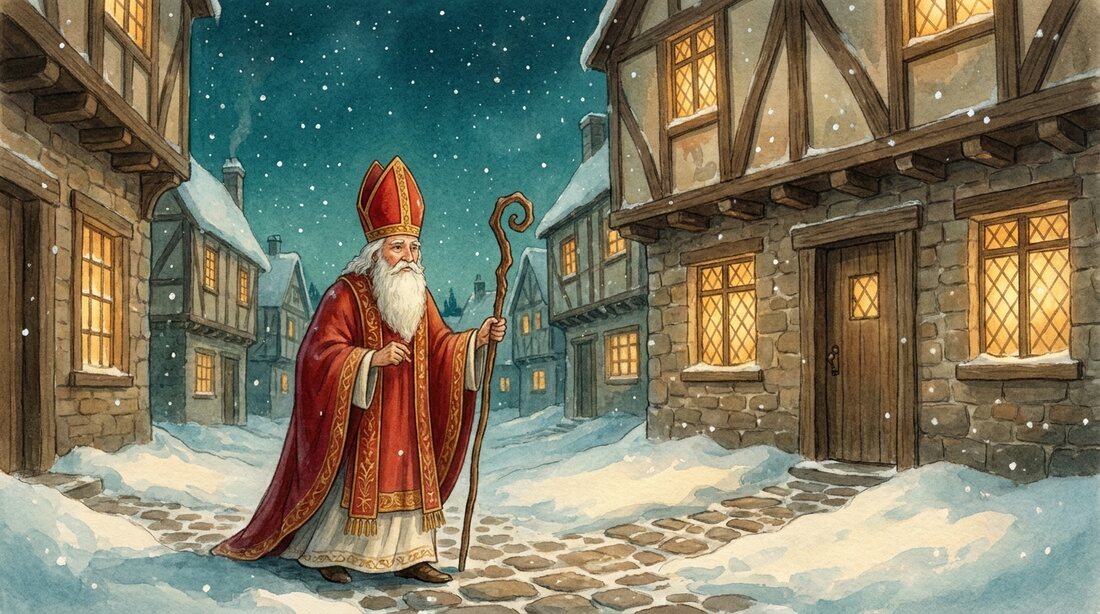
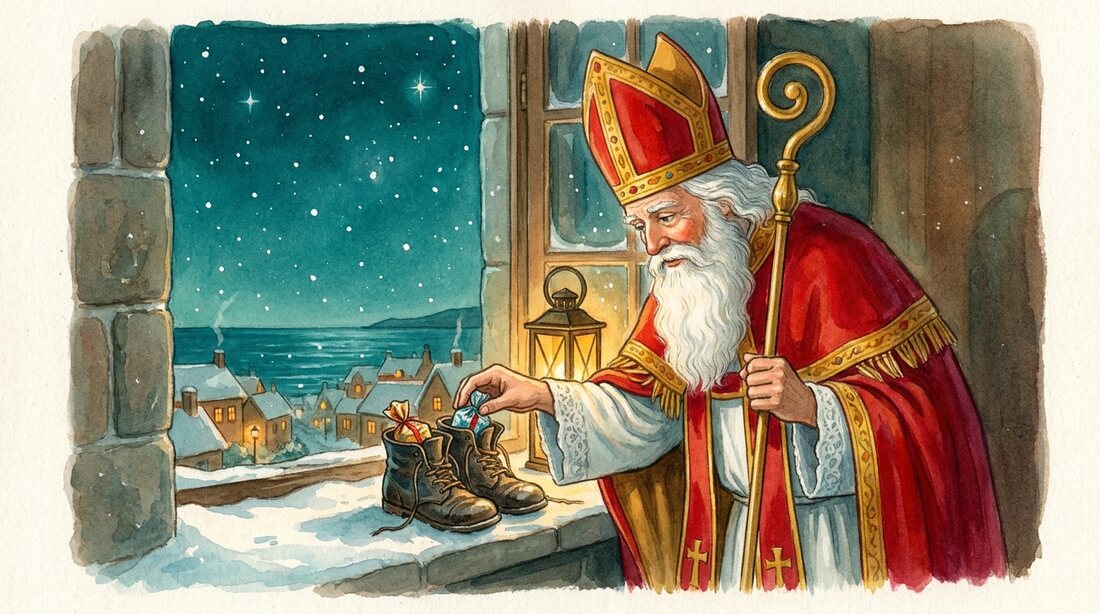
Before the workshop and the reindeer there was simply a man who kept giving things away at night. The best-known tale tells of three sisters whose family had fallen into poverty; Nicholas is said to have thrown bags of gold through their window under cover of darkness so that they could marry rather than be sold, and to have taken great trouble never to be identified. One version has the gold landing in shoes left drying by the fire, which is why children across Europe still put out a shoe on the fifth of December.
Where it actually comes from
Nicholas was a real bishop of Myra in Lycia, in what is now Demre in Türkiye, and he died around the middle of the fourth century. His cult spread rapidly; in 1087 sailors carried his relics to Bari in southern Italy, where they remain, and his feast on 6 December became one of the great children's days of the European calendar. He is the patron of children, sailors and, through the three bags of gold, of pawnbrokers. Reformation Europe suppressed the saints' days in many places, and the gift-giving slid to Christmas — which is precisely how one fourth-century bishop ended up becoming Santa Claus.
What it does for a child
Saint Nicholas gives a family a way to keep the moral heart of the season without the transaction. Where Santa can drift towards a bargain, Nicholas is unambiguous: give, in secret, and leave. For a family that wants their children to understand where Christmas generosity actually came from — and for those who would rather have a religious figure than a commercial one at the centre of December — the sixth is a gentler, older place to stand.
More from the story
A few more pictures to look at together.