The story
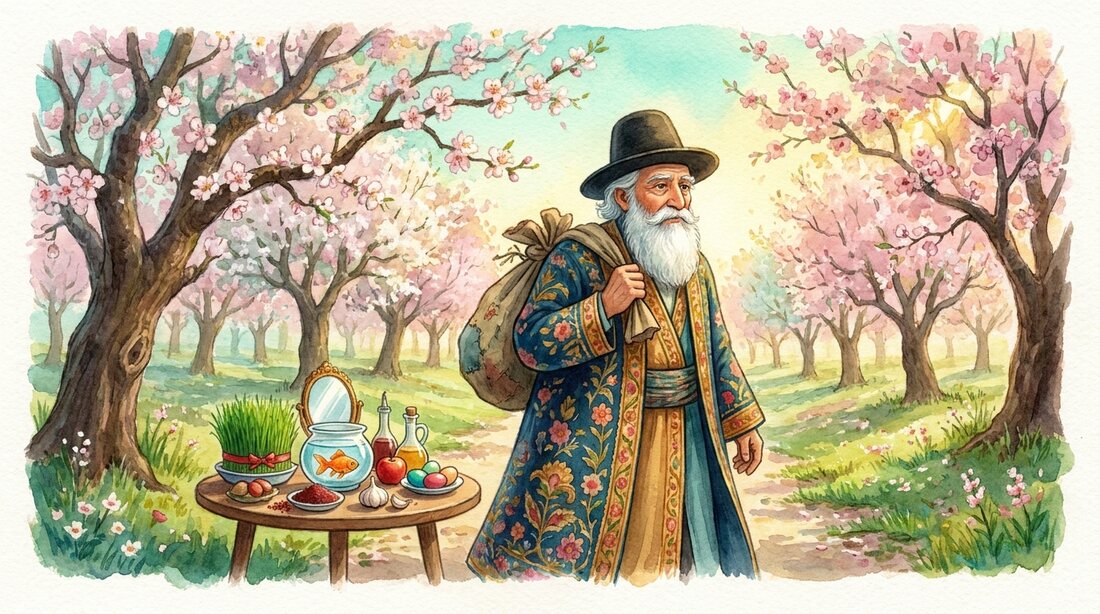
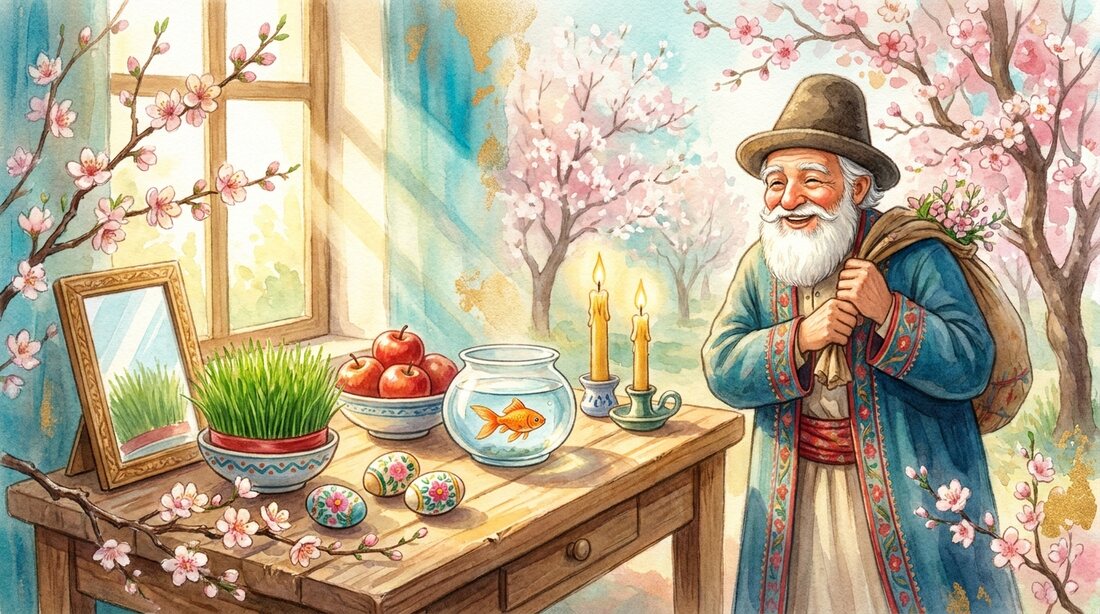
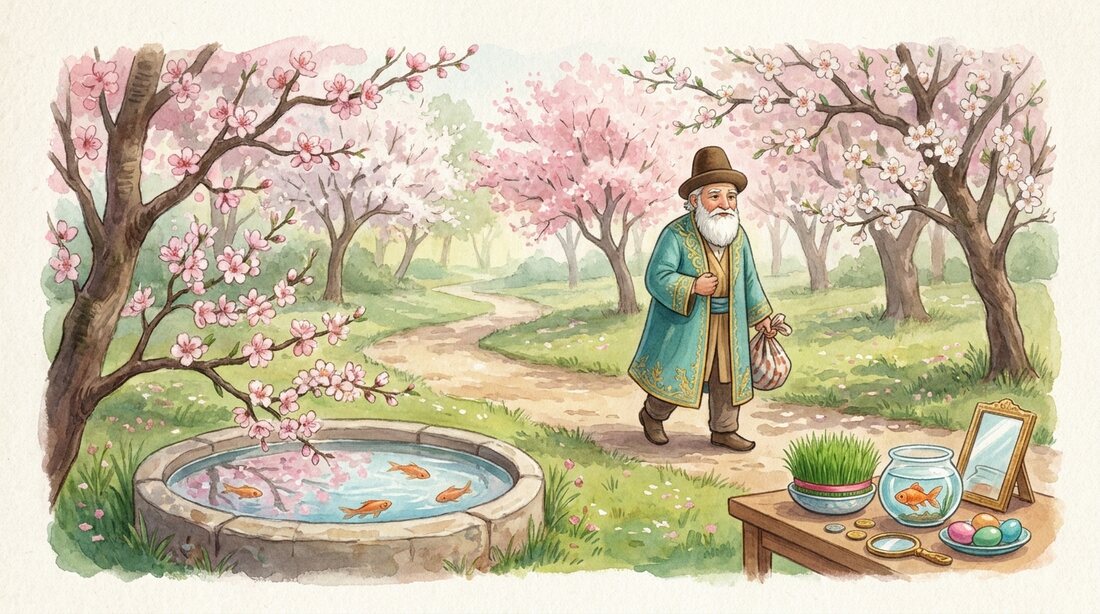
Amu Nowruz — Uncle Nowruz — is a white-bearded elder who appears once a year at the turn of spring, bringing gifts to children. In the folk tale he is bound to Nane Sarma, Grandmother Frost, who waits for him all year and always falls asleep just before he arrives, so the two never quite meet. It is a gentle, melancholy story that Iranian children know well.
Where it actually comes from
Nowruz — "new day" — marks the March equinox and has been celebrated for over three thousand years, with roots in Zoroastrian Persia. It is observed across Iran, Afghanistan, Central Asia, the Caucasus, Kurdish regions and the wider diaspora, by people of many faiths and none, and was inscribed by UNESCO on its list of intangible cultural heritage. The year turns at the precise astronomical moment of the equinox, and families gather at that minute. The haft-sin table holds seven items beginning with the Persian letter sin, each symbolic: sabzeh (sprouts, rebirth), samanu (sweet pudding, strength), senjed, seer (garlic, health), seeb (apple, beauty), somāq and serkeh. Chaharshanbe Suri, the fire-jumping festival, precedes it; Sizdah Bedar, a day outdoors, closes the thirteen-day celebration.
What it does for a child
Nowruz gives children a new year they can actually feel, because it is tied to something observable — the light changing, the ground thawing — rather than to a number on a calendar in midwinter. The haft-sin is also unusually good for small children: every object on the table means one thing, which makes the whole festival learnable by touch. And the sabzeh, grown over weeks on a windowsill, is a patient, visible demonstration of care given long before it is noticed.
More from the story
A few more pictures to look at together.