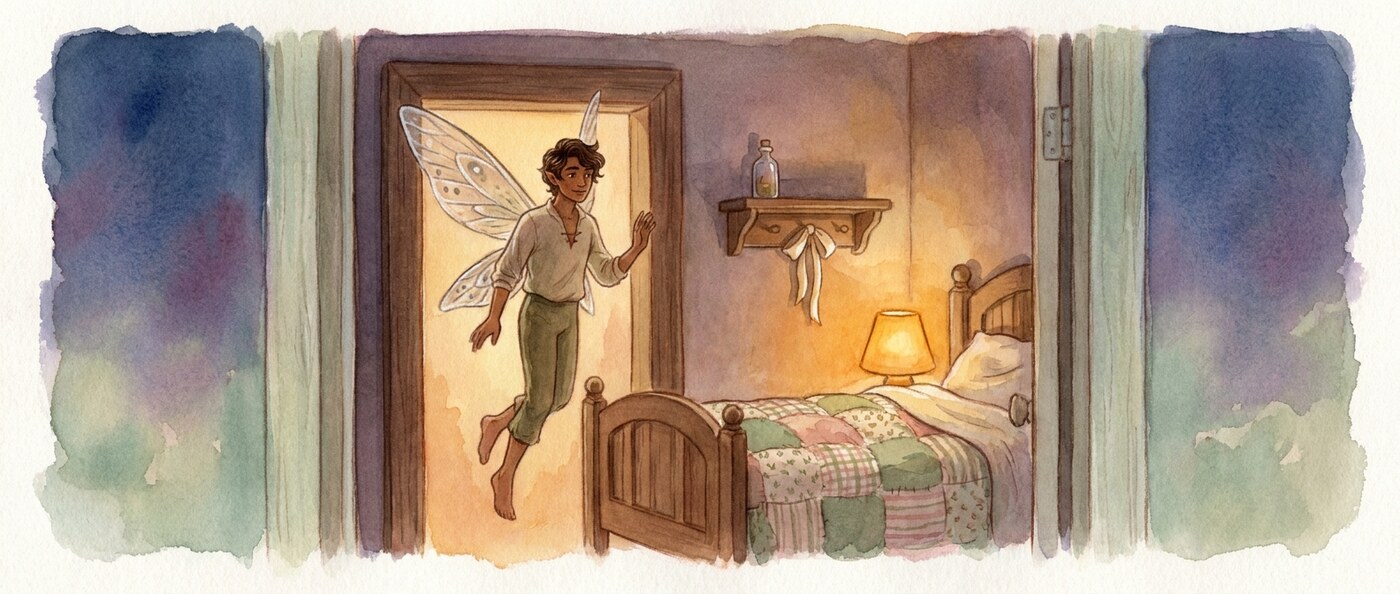
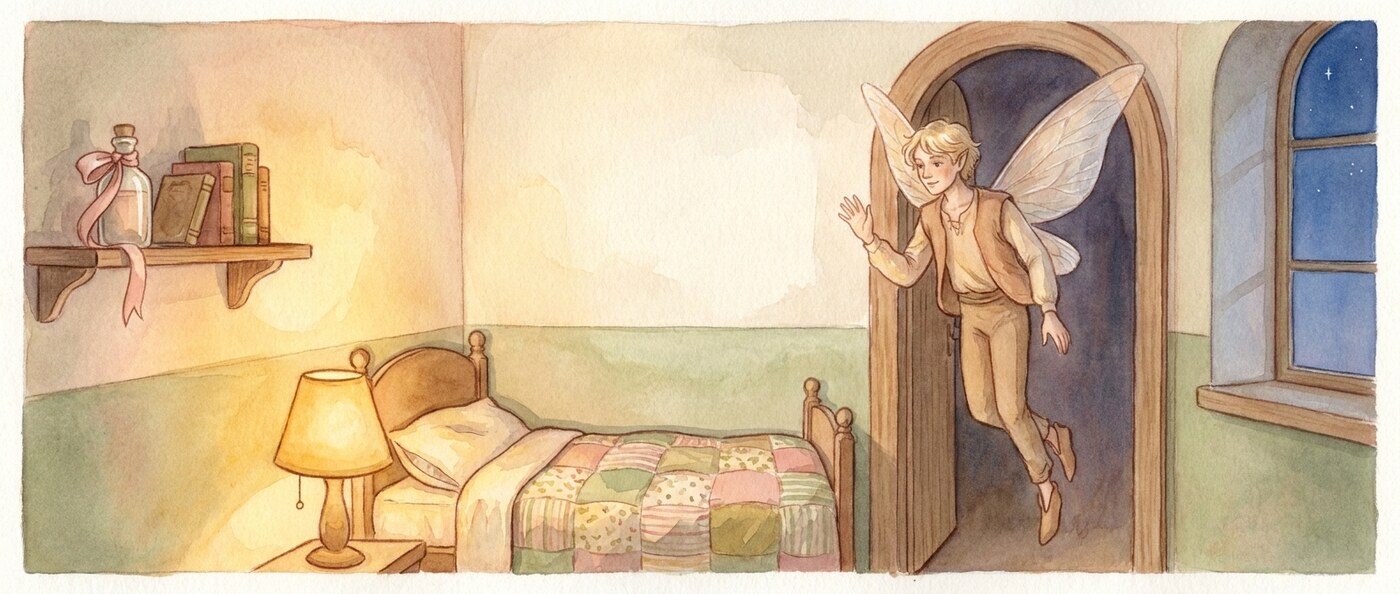
The story
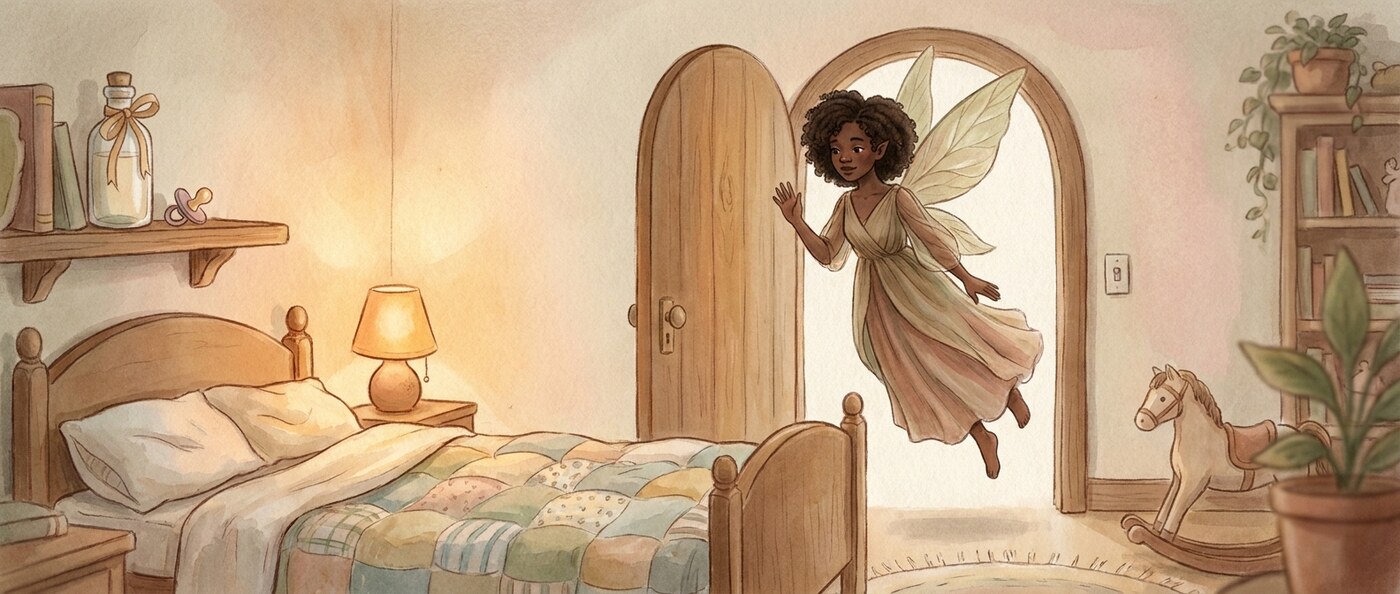
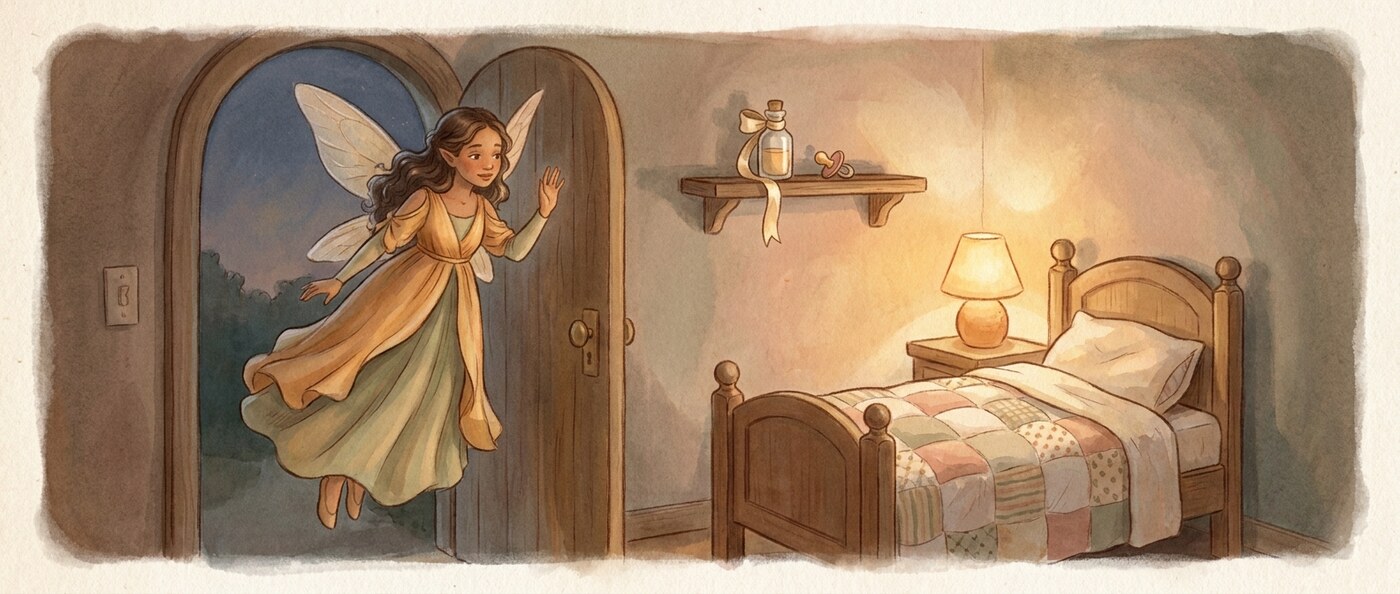
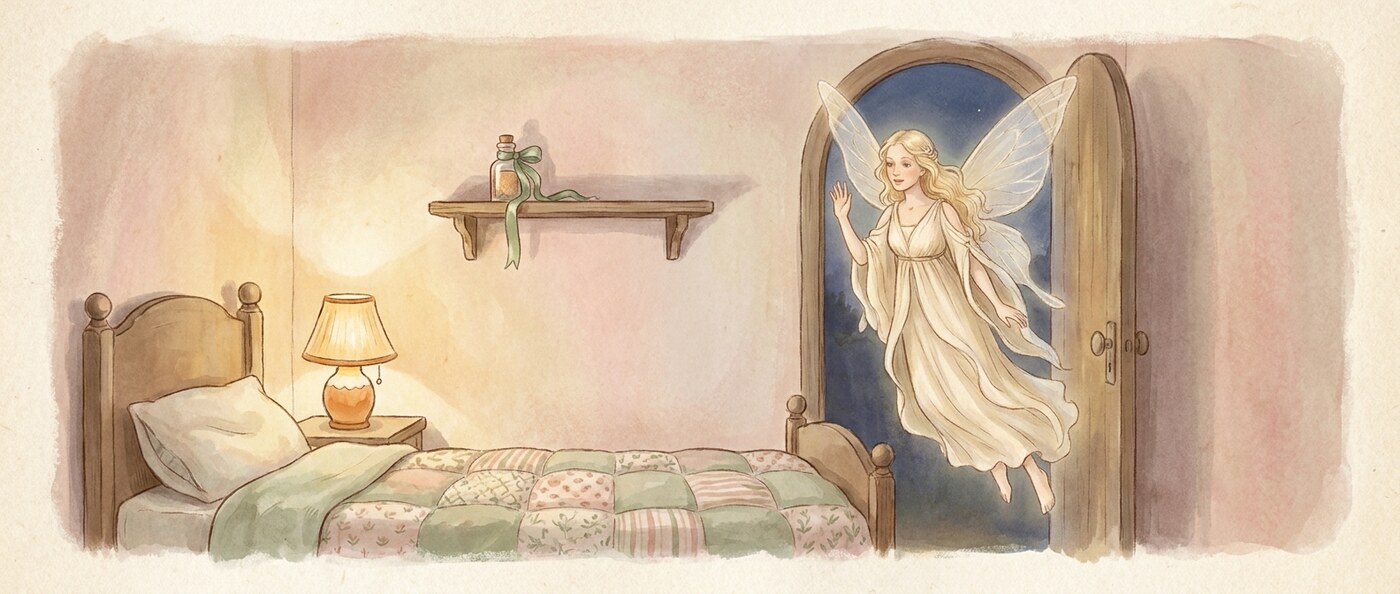
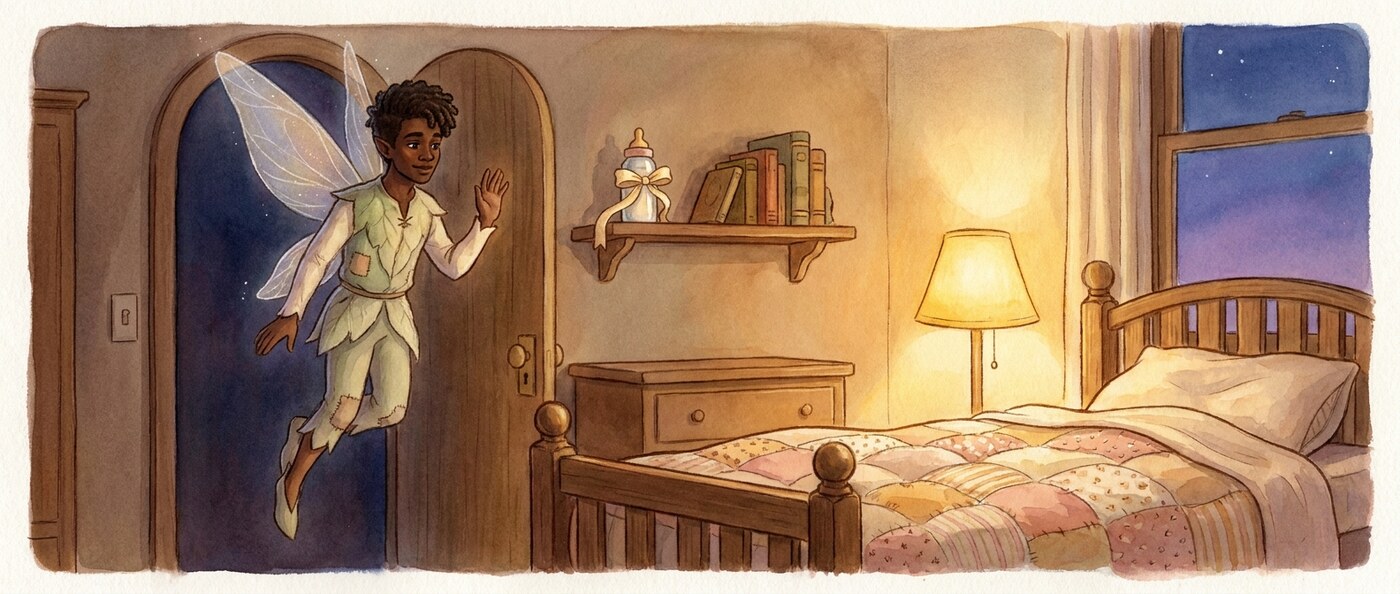
She collects handed-over things: dummies, bottles, the cot rail, the nightlight that finally was not needed. She only ever comes on a night the child has agreed to in advance — she will not take anything by surprise, and she has been very firm about that for as long as anyone has known of her. What she leaves is usually small. What she takes is not.
Where it actually comes from
This is folk practice rather than old folklore, and it has grown up in the last few decades across many countries under many names — the Dummy Fairy, the Binky Fairy, the Soother Fairy, and in parts of Europe the custom of tying dummies to a particular tree in a park, where hundreds hang as a public record of children who have handed theirs over. What every version shares is the same structure: the child gives it up themselves, on a known date, and receives recognition rather than a replacement.
What it does for a child
Paediatric and dental guidance generally encourages moving on from a dummy in the toddler years, and the method matters as much as the timing. Removal that the child participates in, on a date they knew about, is consistently easier than removal done to them — it preserves their sense of agency at exactly the moment it is under strain. Naming in advance that the first night may be hard is the other half: a child who was warned and then finds it hard feels prepared, while a child who was promised it would be fine feels deceived.
However they look at your house
No two families picture The Big-Kid Fairy quite the same way. Here are six of them.