The story
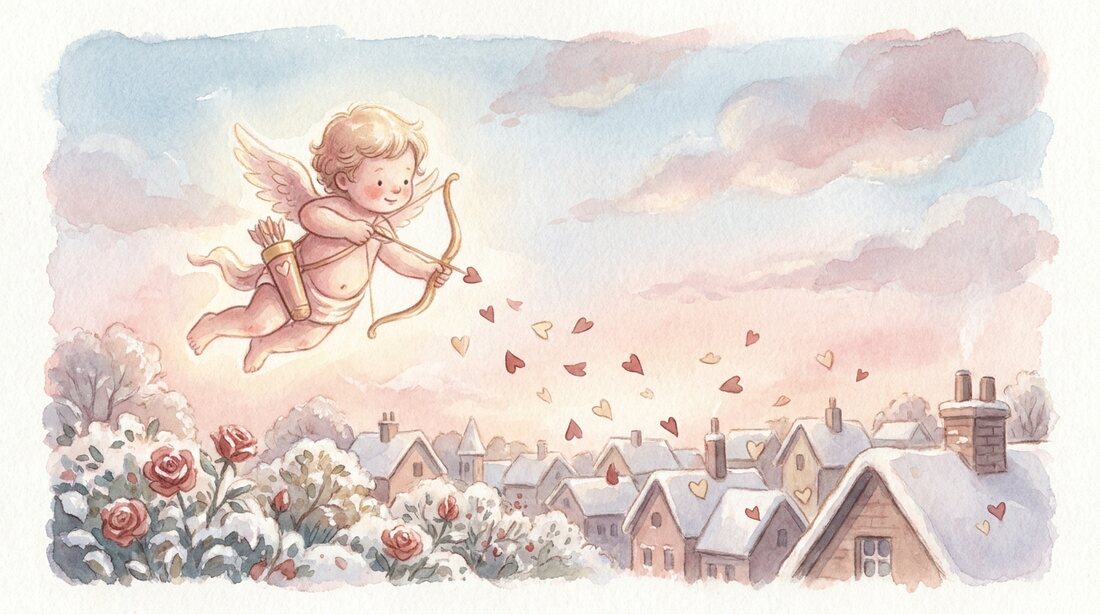
He works before dawn on one day a year, and he is a far better shot than his reputation suggests — the misses are deliberate and he will not explain them. The quiver holds paper hearts as well as arrows, and by his own account the paper ones do considerably more work.
Where it actually comes from
Cupid is the Roman Amor, the Greek Eros, and in the older stories he is not a chubby infant at all but a powerful and sometimes dangerous young god, most memorably in the tale of Cupid and Psyche. The plump winged baby is a Renaissance convention — the putto — that stuck. His attachment to 14 February came through Saint Valentine, a genuinely obscure figure about whom almost nothing is reliably known; the romantic association appears to begin with Chaucer's "Parlement of Foules" in the 1380s, which ties the date to the pairing of birds. The exchange of cards became a mass custom in the nineteenth century.
What it does for a child
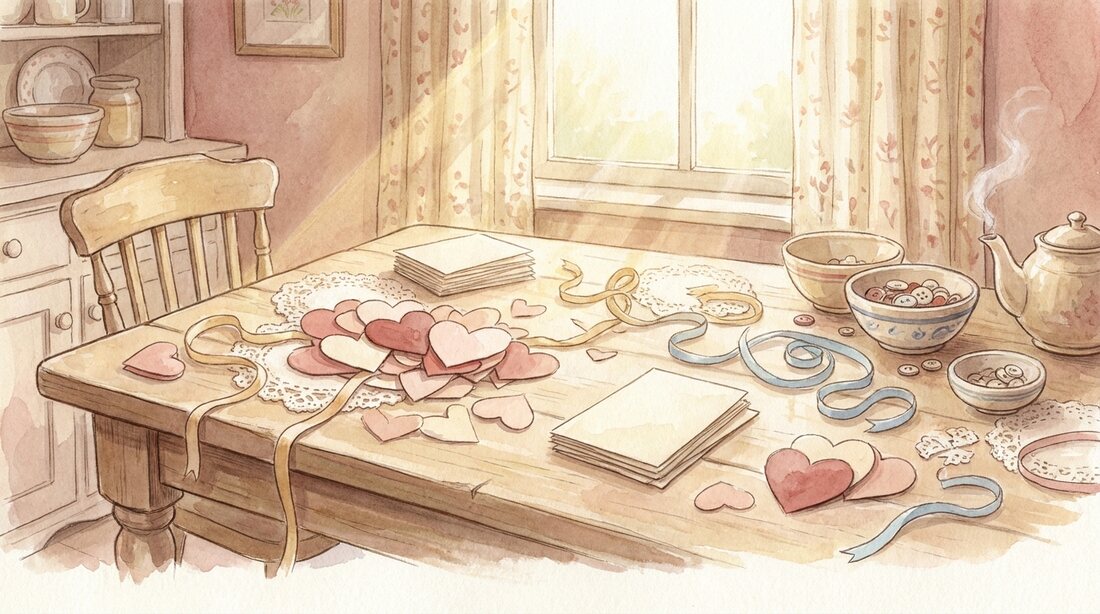
Valentine's Day can sit awkwardly with children, because the adult version of it is about something they do not have and should not be hurried towards. Redirecting it to friendship, family and specific gratitude gives them a version they can genuinely use — and "name the reason, not just the feeling" is a habit that makes children noticeably better at telling people things.
More from the story
A few more pictures to look at together.