The story
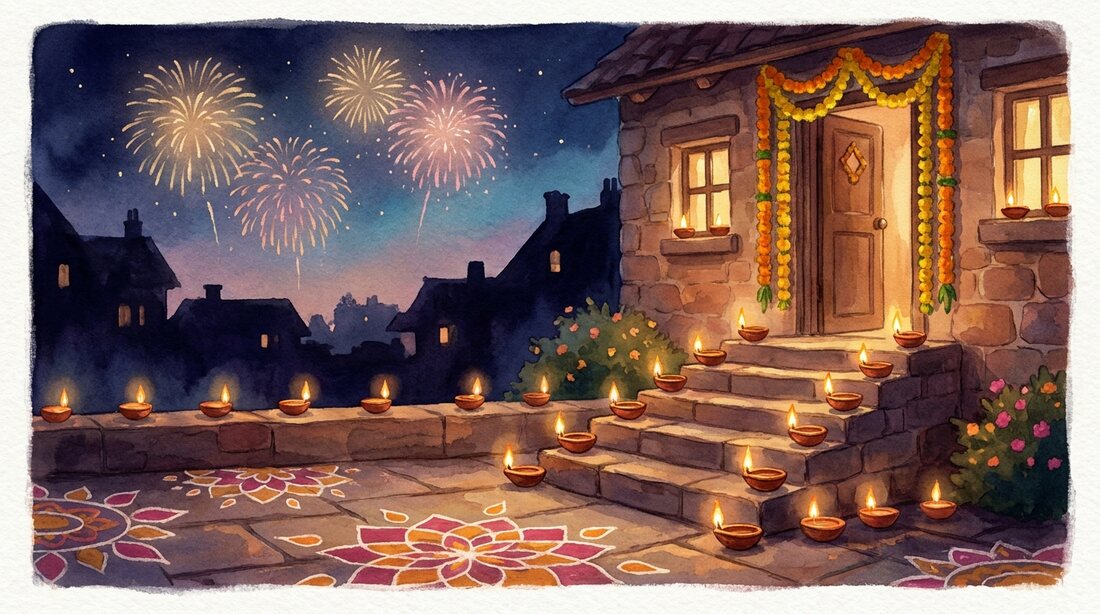
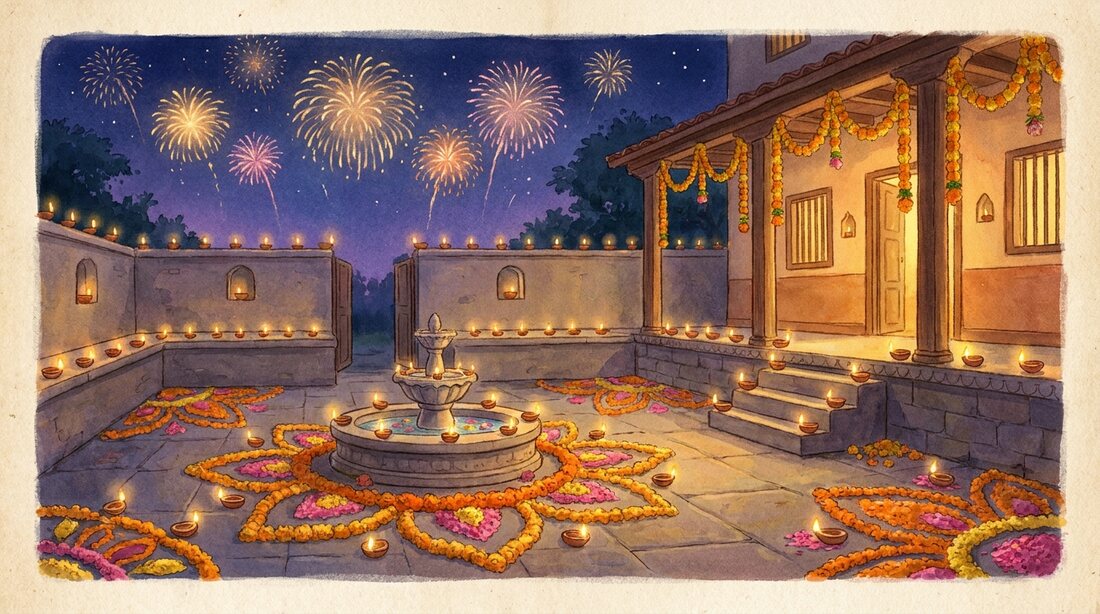
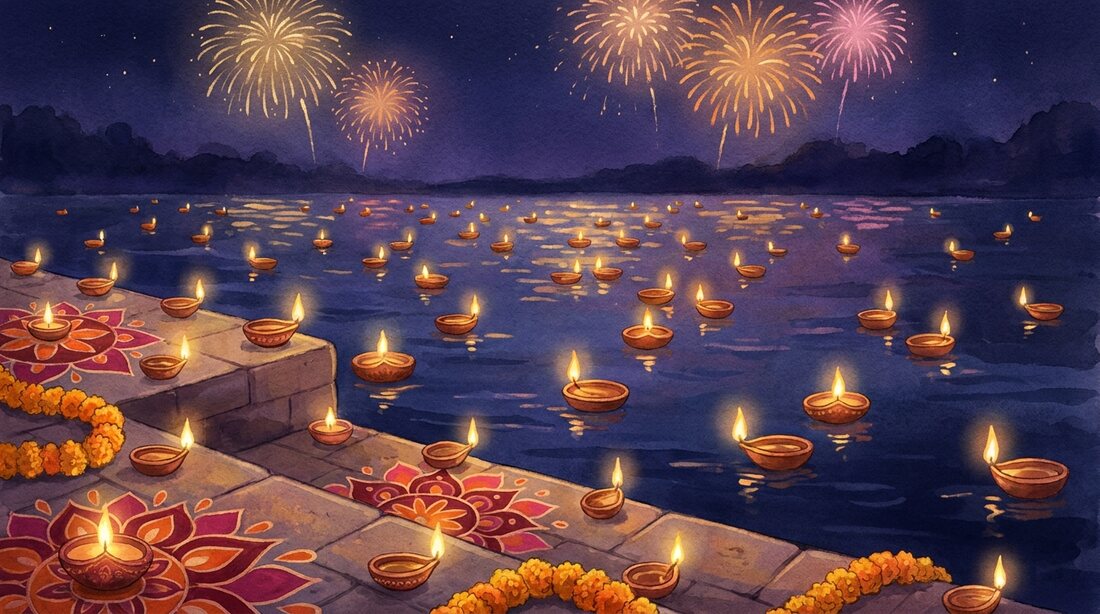
The diya is a shallow clay saucer with a cotton wick and a little oil, made by the thousand and sold for pennies. It is placed at thresholds, on steps, along walls and roof edges — outward-facing, almost always. A single one is very nearly useless. A street of them is one of the most beautiful sights in the world.
Where it actually comes from
Diwali, or Deepavali — "a row of lights" — is celebrated over five days by Hindus, Jains, Sikhs and some Buddhists, and the story behind it differs by community and region. In much of northern India it marks the return of Rama to Ayodhya after fourteen years of exile, the townspeople lighting lamps to guide him home. In parts of the south it commemorates Krishna's victory over Narakasura. Lakshmi, goddess of prosperity, is widely worshipped on the main night, and homes are cleaned and opened to welcome her. For Jains it marks Mahavira's attainment of moksha; for Sikhs, Bandi Chhor Divas, the release of Guru Hargobind from imprisonment. The common thread across all of them is light over darkness and knowledge over ignorance, and the near-universal customs are the lamps, the rangoli at the threshold, new clothes, sweets and the settling of the year.
What it does for a child
The diya makes a genuinely difficult idea physical. Children are regularly told that small good actions matter, and it is a hard claim to believe when your own contribution is obviously tiny. A street at Diwali is the proof, visible from the front step: every individual lamp is negligible, and the collective result is overwhelming. It is also a festival of the threshold rather than the living room, which quietly makes generosity outward-facing.
More from the story
A few more pictures to look at together.