The story
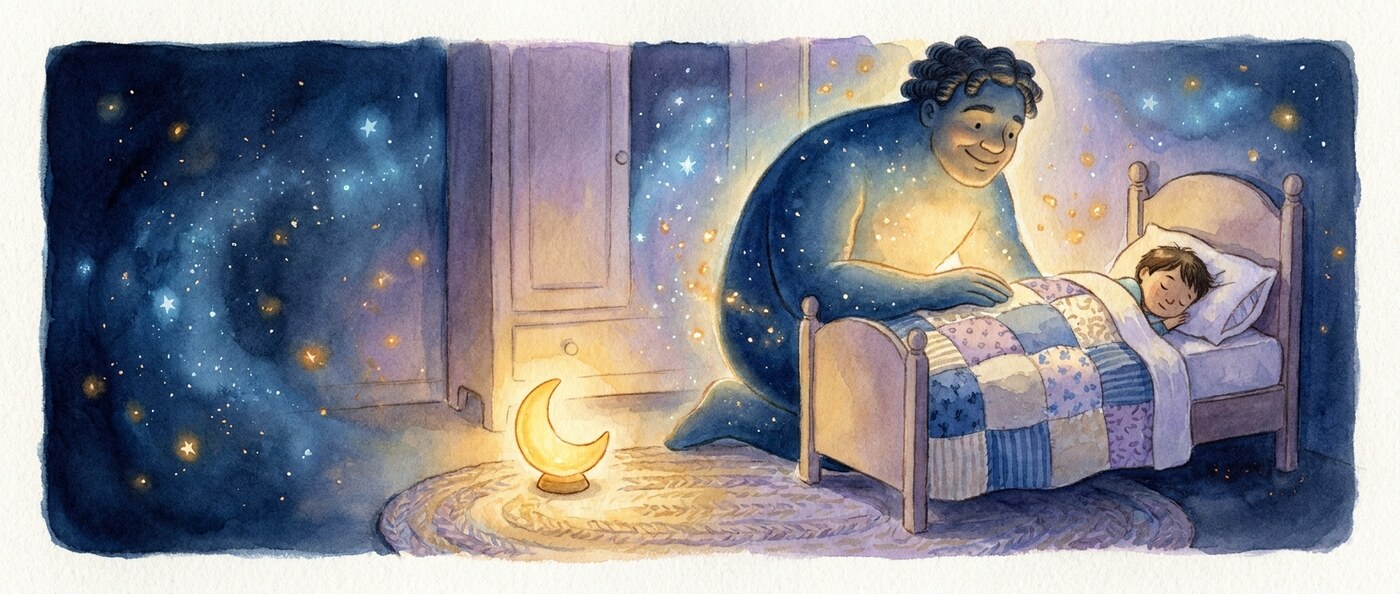
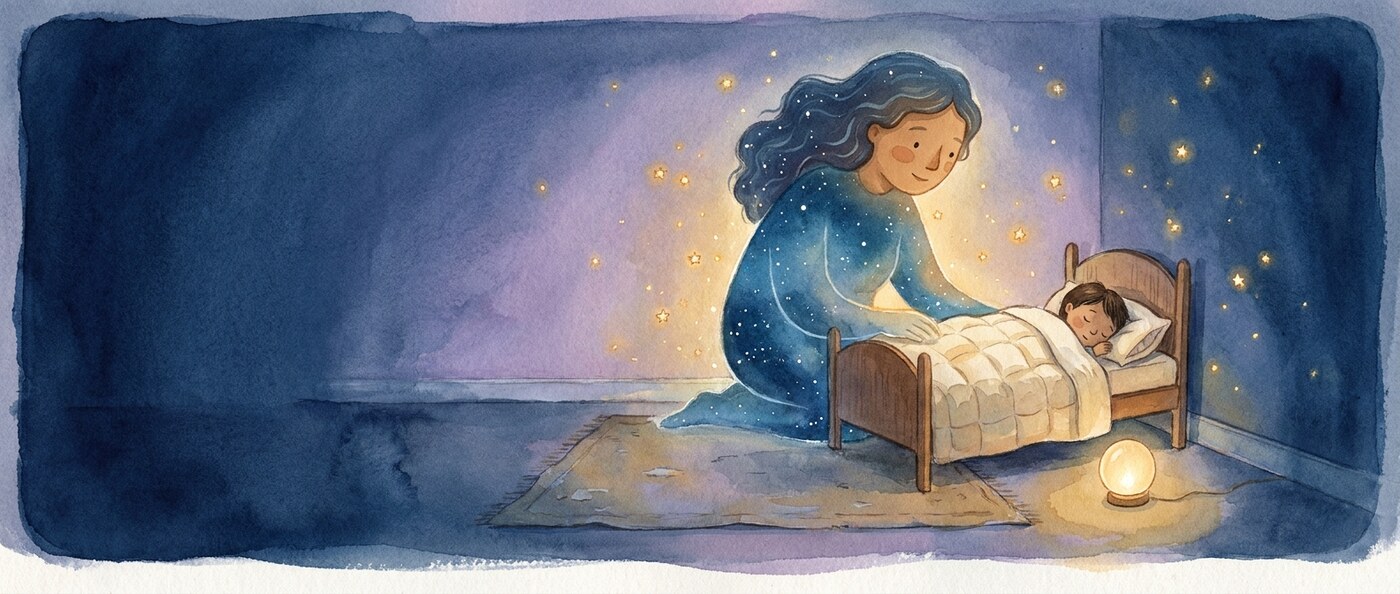
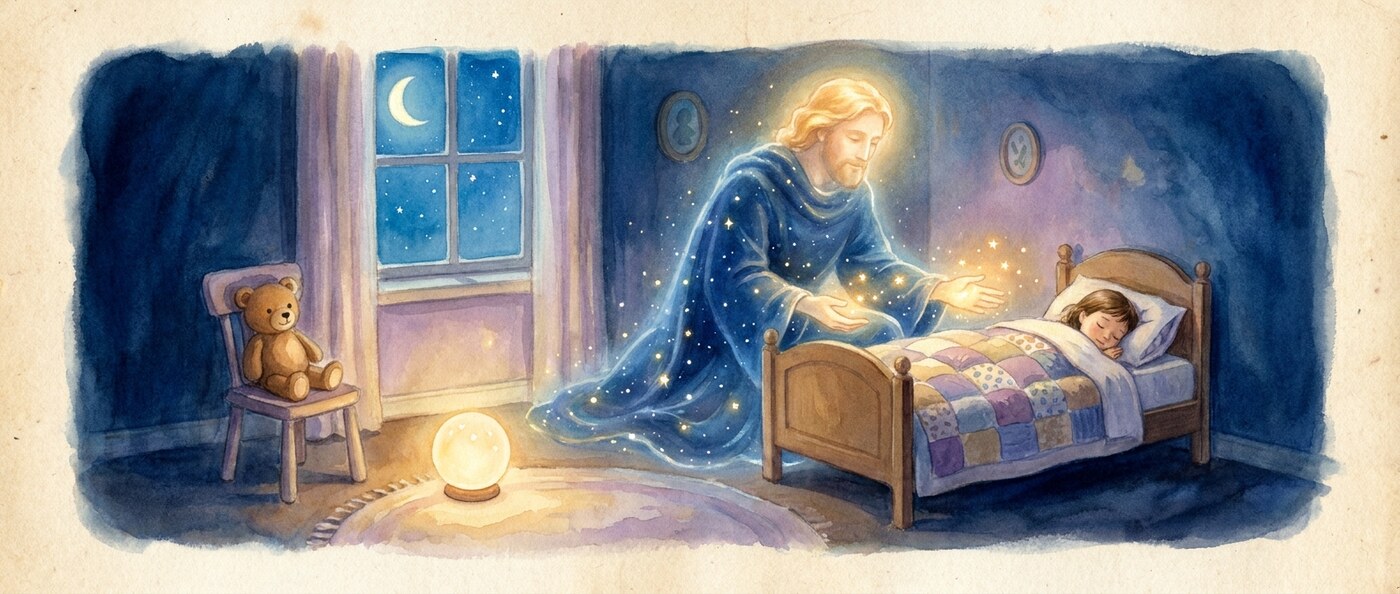
He sits at the foot of the bed, not at the window and not in the doorway, because the foot of the bed is where you can see him from under the covers. He checks the corners before lights-out as a matter of routine, reports the result, and then stays. He is not magical in any particular way. He is simply extremely reliable about being there.
Where it actually comes from
Unlike the Sandman, the Dream Keeper has no folklore behind him — he was written for this catalogue, deliberately, because a family that wanted the reassurance without a religious figure or a European folk tale had nowhere to go. What is in the letter is not invented: the approach reflects what sleep clinicians and child psychologists consistently recommend for childhood night fears, which is to validate the fear rather than dismiss it, give the child agency and information, and normalise seeking comfort rather than shaming it.
What it does for a child
Fear of the dark peaks between about three and eight and is developmentally normal. The evidence is fairly consistent about what works: dismissing the fear ("there is nothing there") teaches children to stop reporting it rather than to stop feeling it, while explanation plus agency reduces it — a light they control, a torch of their own, a check of the room done with them rather than for them. Explaining what a nightmare actually is helps markedly, because much of the residual fear after waking comes from suspecting the dream meant something. And telling a child explicitly that they may come and get you removes the shame that otherwise keeps them lying awake and silent.
However they look at your house
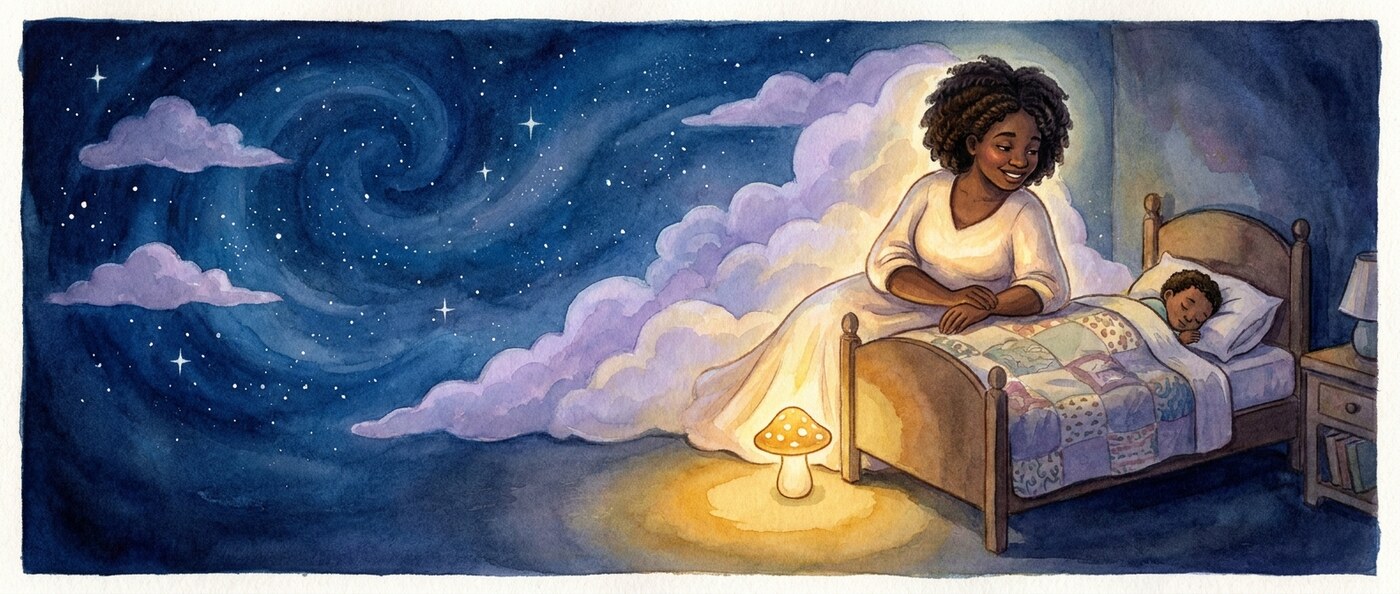
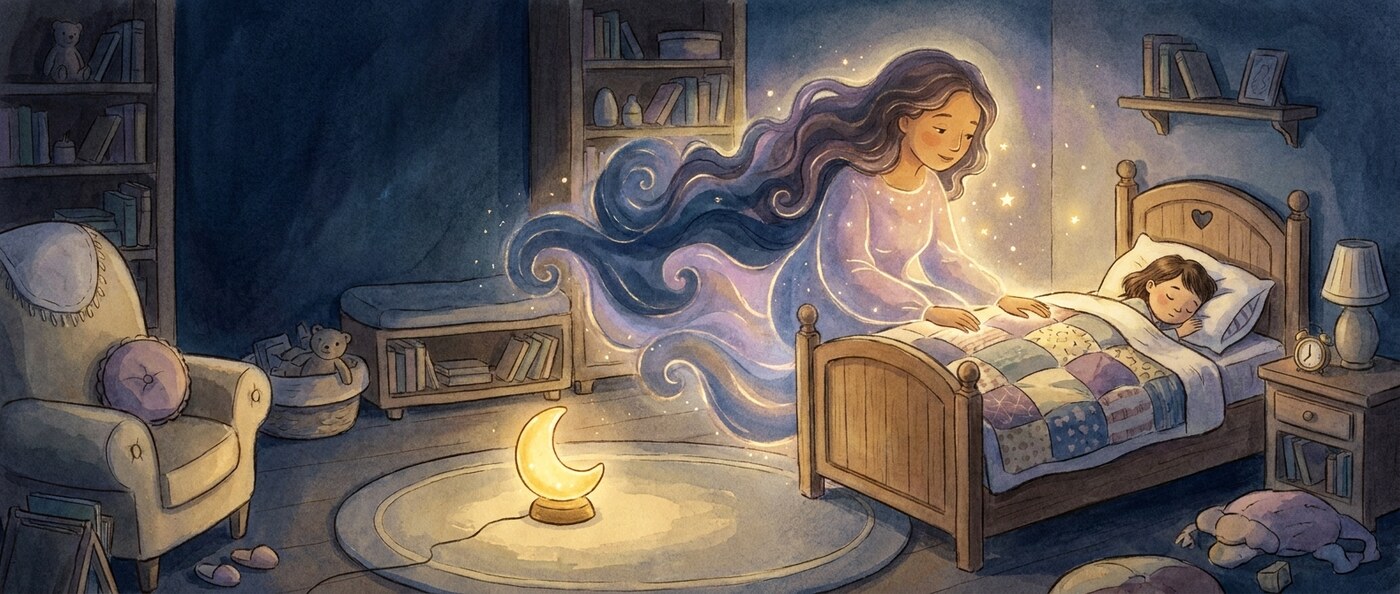
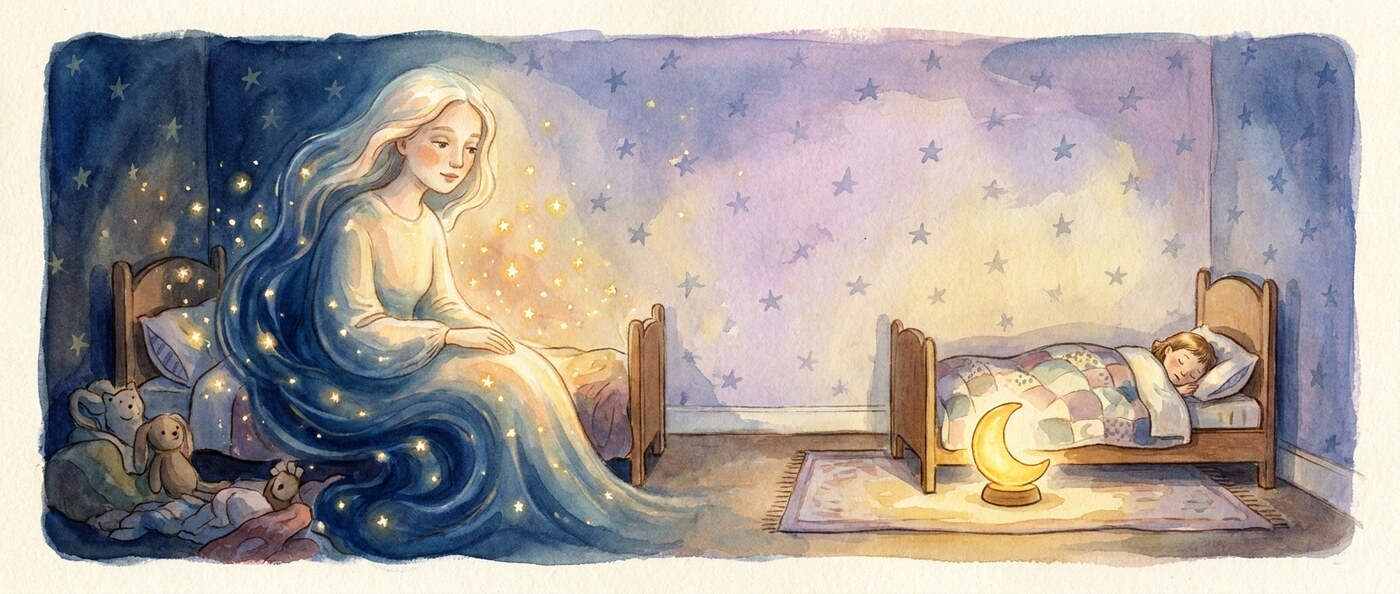
No two families picture The Dream Keeper quite the same way. Here are six of them.