The story
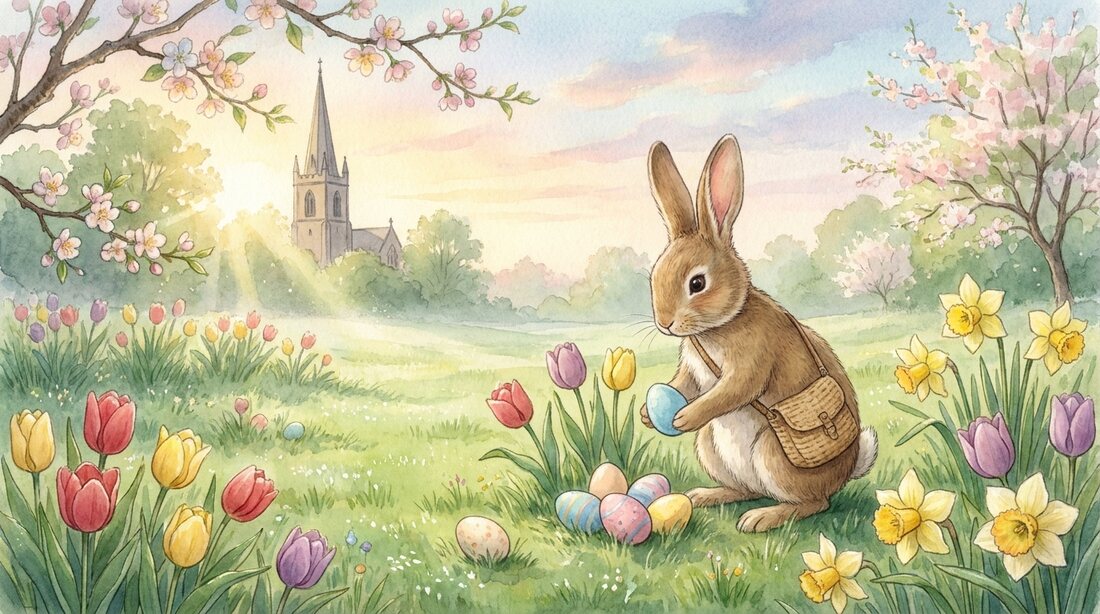
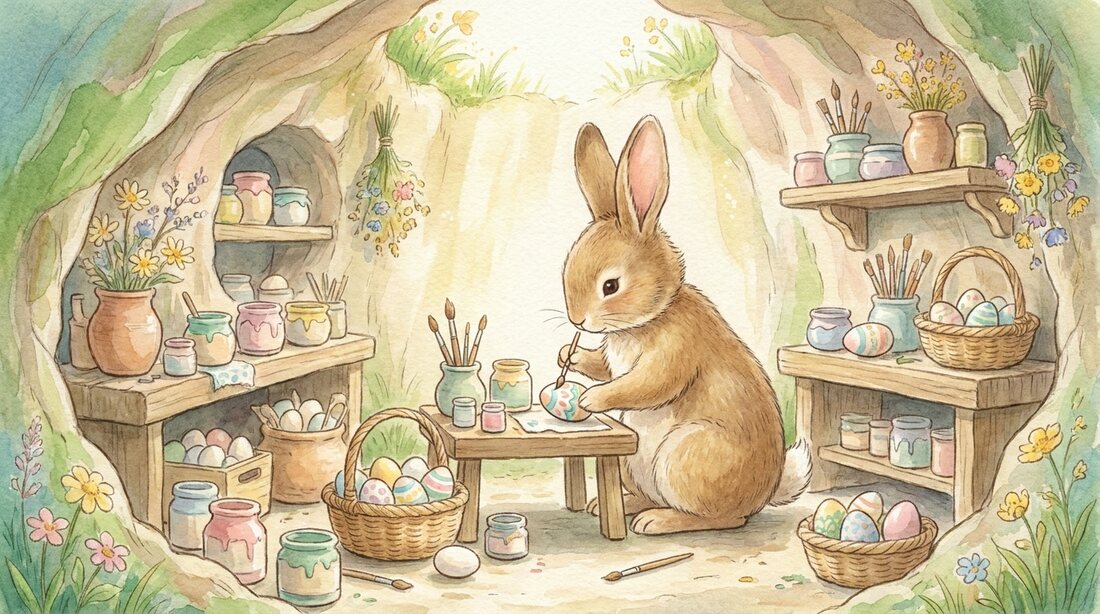
The Easter Bunny does not knock and does not wait around. He works in the last hour before sunrise, when the grass is still grey with dew, and he is gone before the first curtain opens. He is said to be a serious creature about his craft — particular about colour, unhurried about hiding places, and quietly delighted by the moment a child looks straight at an egg three times before finally seeing it.
Where it actually comes from
The egg-bringing hare arrived in America with German immigrants to Pennsylvania in the 1700s, as the Osterhase: children built nests for him and he left coloured eggs in them, which is how we got the Easter basket. Hares had long been spring symbols in Europe — they breed early and famously, and were believed, wrongly but persistently, to be able to conceive while already pregnant, which made them an emblem of fertility. Decorated eggs are far older still, and run across many cultures: Persian Nowruz has painted eggs, and Christians in the eastern Mediterranean dyed them red long before any hare was involved.
What it does for a child
An egg hunt is one of the best games ever invented for small children, and not only because of the chocolate. It rewards patience, close looking and persistence after early failure, and it does so in a setting where the stakes are zero and the adults are on your side. The larger idea underneath it — that things which look finished are often only resting — is one of the most useful things a child can carry into a hard winter later in life.
More from the story
A few more pictures to look at together.