The story
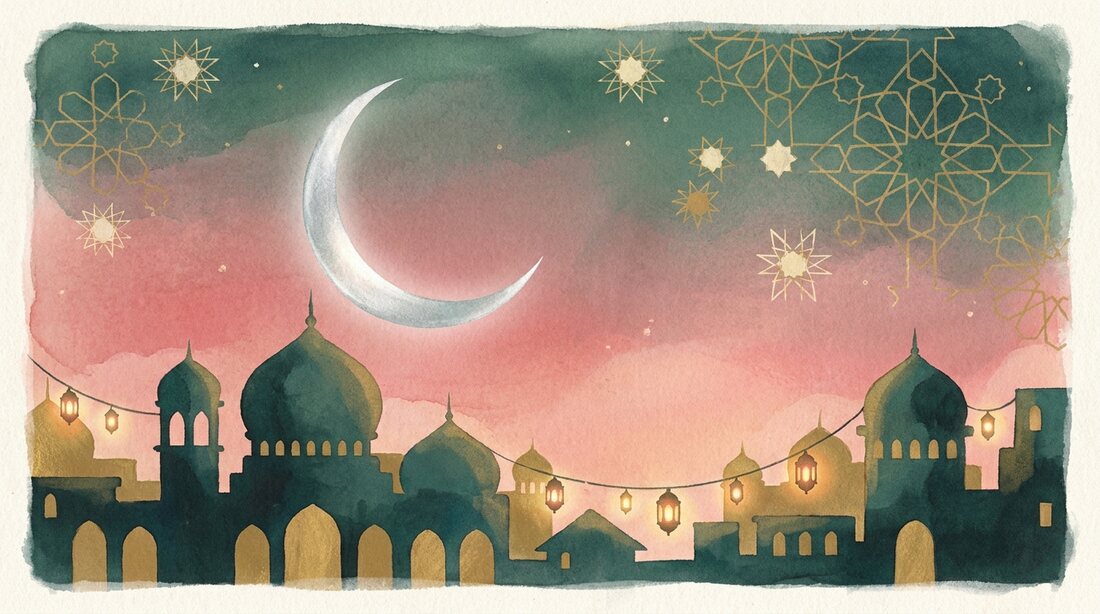
The crescent is the messenger. For a whole month people have been waiting for it, and on the right evening they go outside at dusk and search the western sky for a sliver of light so thin it is easy to miss. Someone sees it. Word goes round. And a month of discipline ends in a single sighting — which is why the moon, rather than a calendar, is the thing children remember.
Where it actually comes from
Islam keeps a lunar calendar, and its months begin with the sighting of the new crescent — the hilal. Eid al-Fitr, the festival of breaking the fast, falls on the first of Shawwal, directly after the month of Ramadan in which adult Muslims fast from dawn to sunset. Eid al-Adha, the festival of sacrifice, falls in Dhu al-Hijjah at the time of the Hajj pilgrimage. Both begin with a communal prayer in the morning, and both carry an obligation of charity: Zakat al-Fitr, given before the Eid prayer so that everyone can eat well that day. Children traditionally receive new clothes, sweets, and Eidi — money given by relatives. Because the calendar is lunar, the dates move about eleven days earlier each year against the Gregorian calendar.
What it does for a child
Ramadan and Eid give children something most festivals do not: a celebration that is explicitly earned, and a built-in obligation to make sure other people can celebrate too. Younger children who are not yet fasting still absorb the household rhythm, and marking the night of the sighting gives them a share in the anticipation rather than only the reward. Naming the charity part alongside the sweets is what keeps the day from collapsing into presents.
More from the story
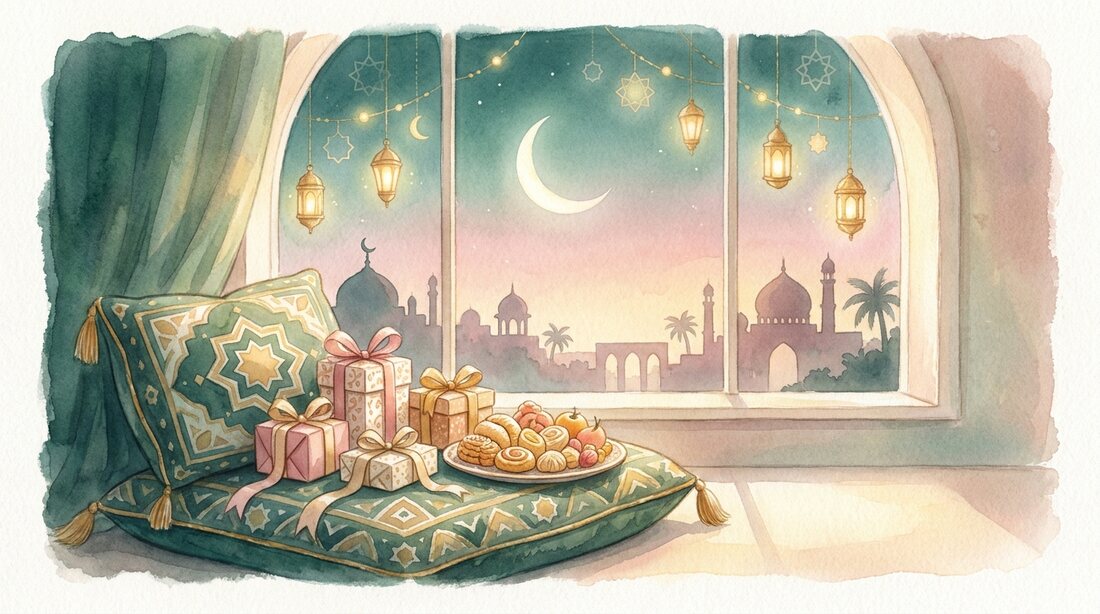
A few more pictures to look at together.