The story
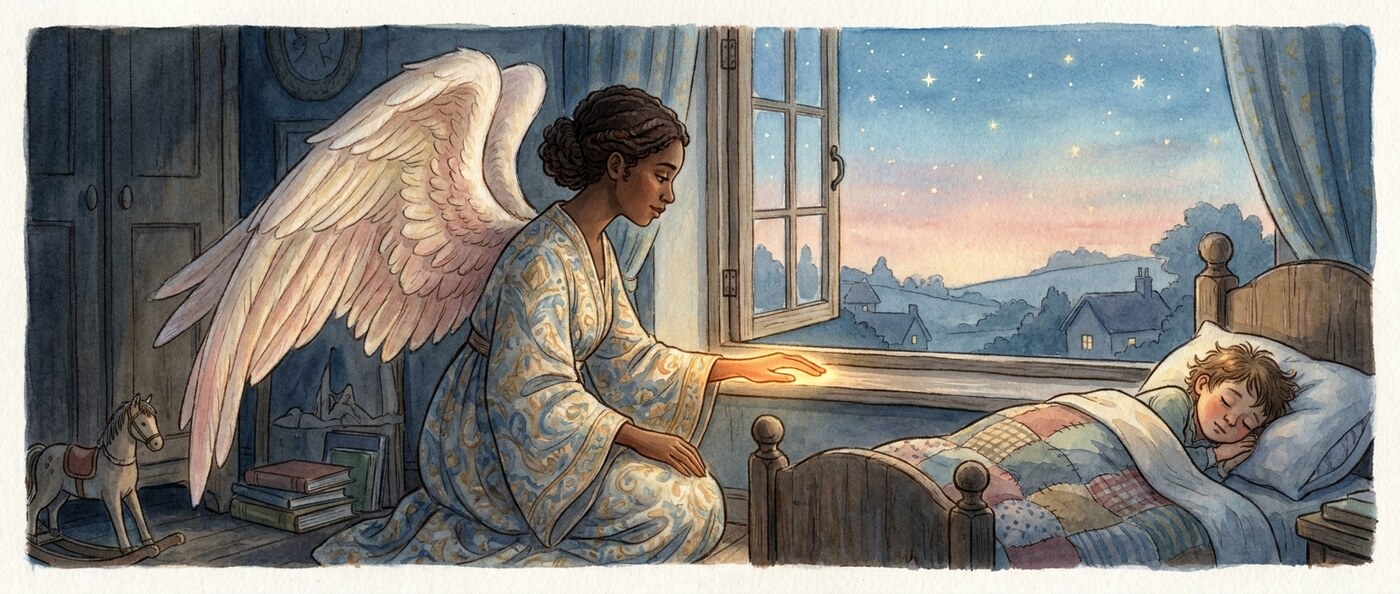
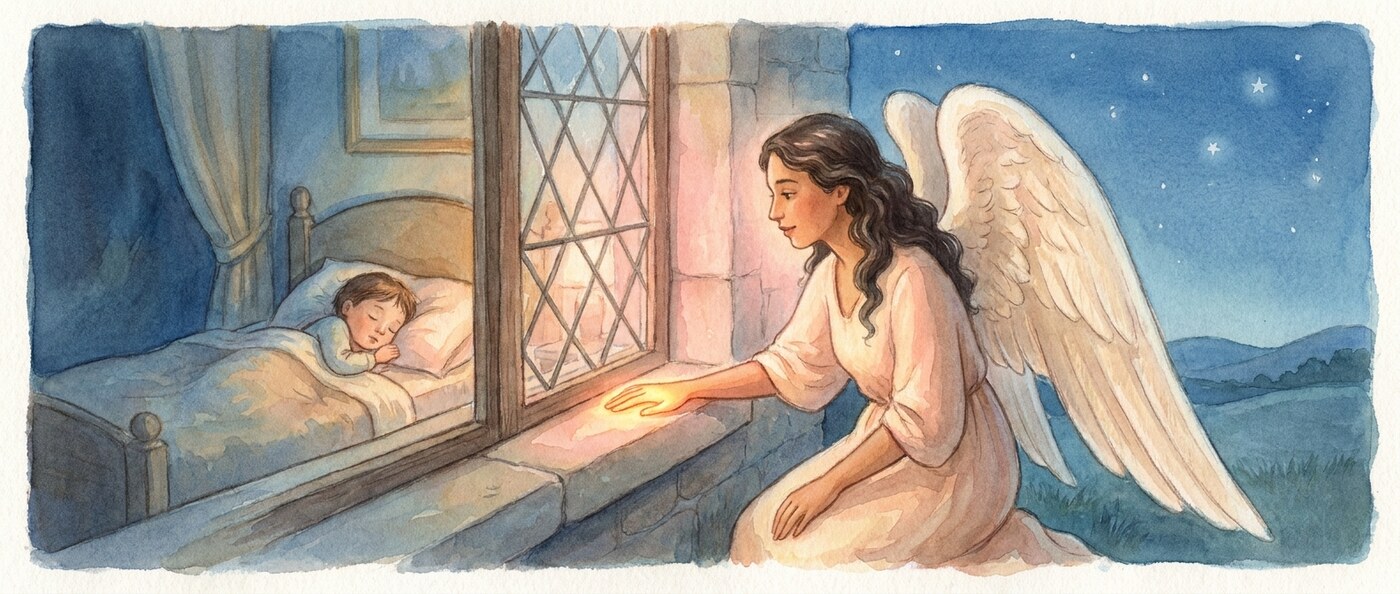
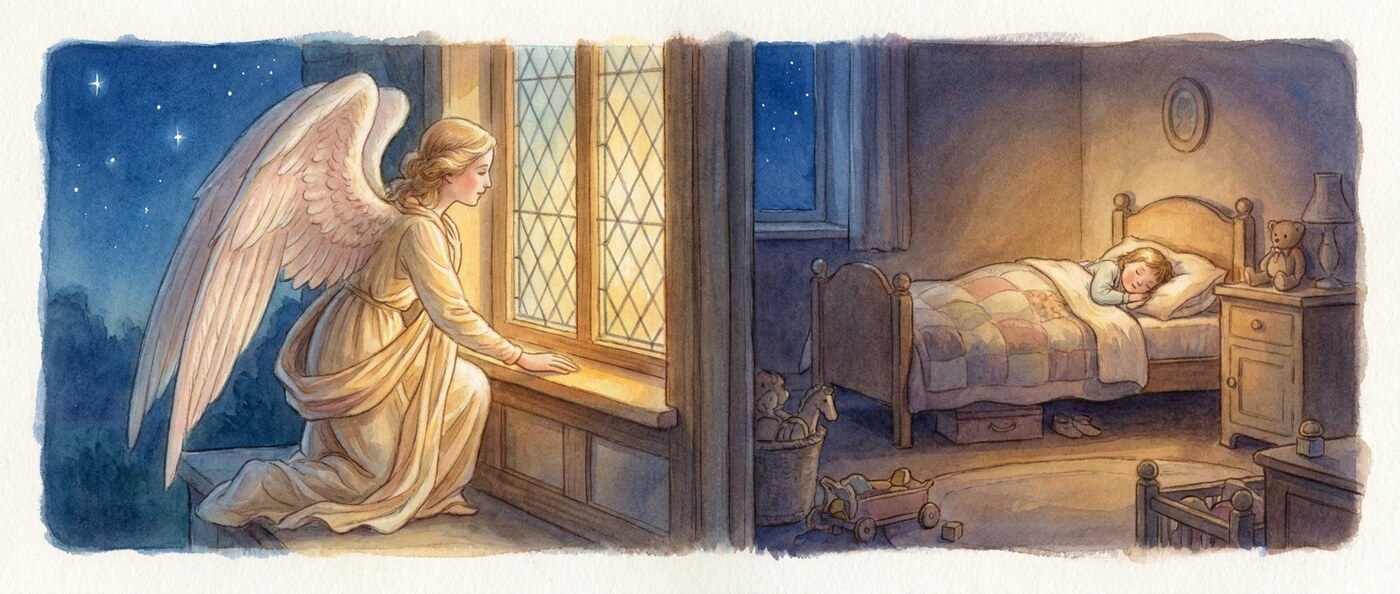
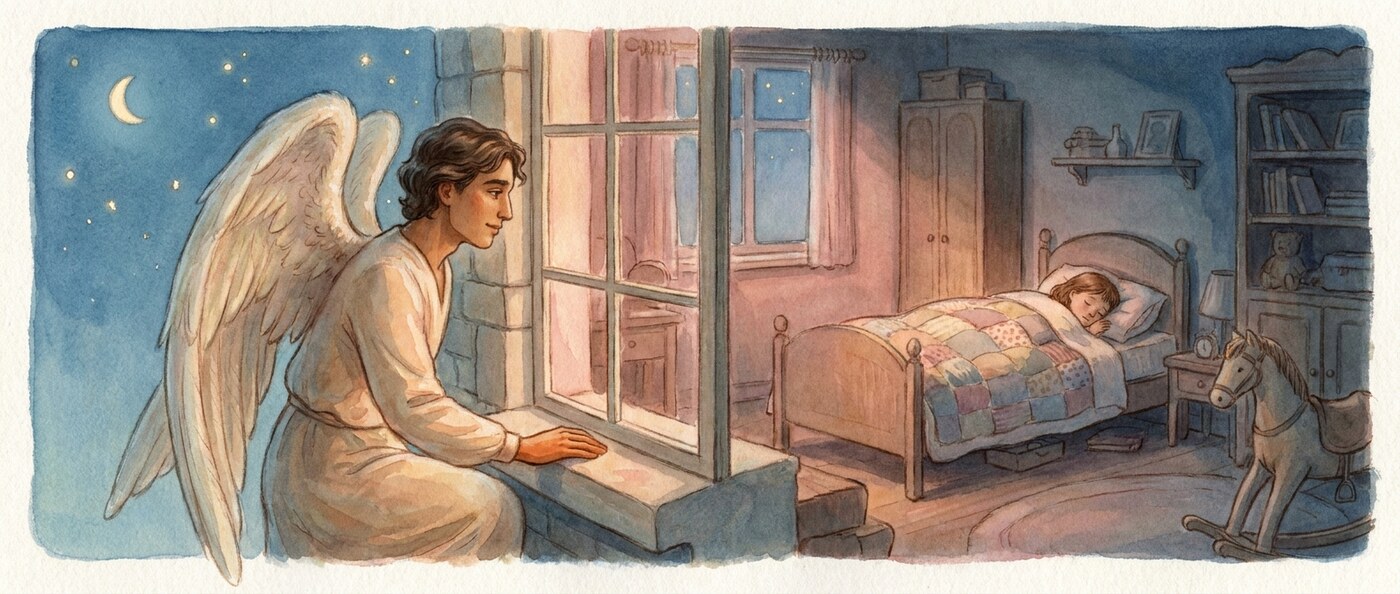
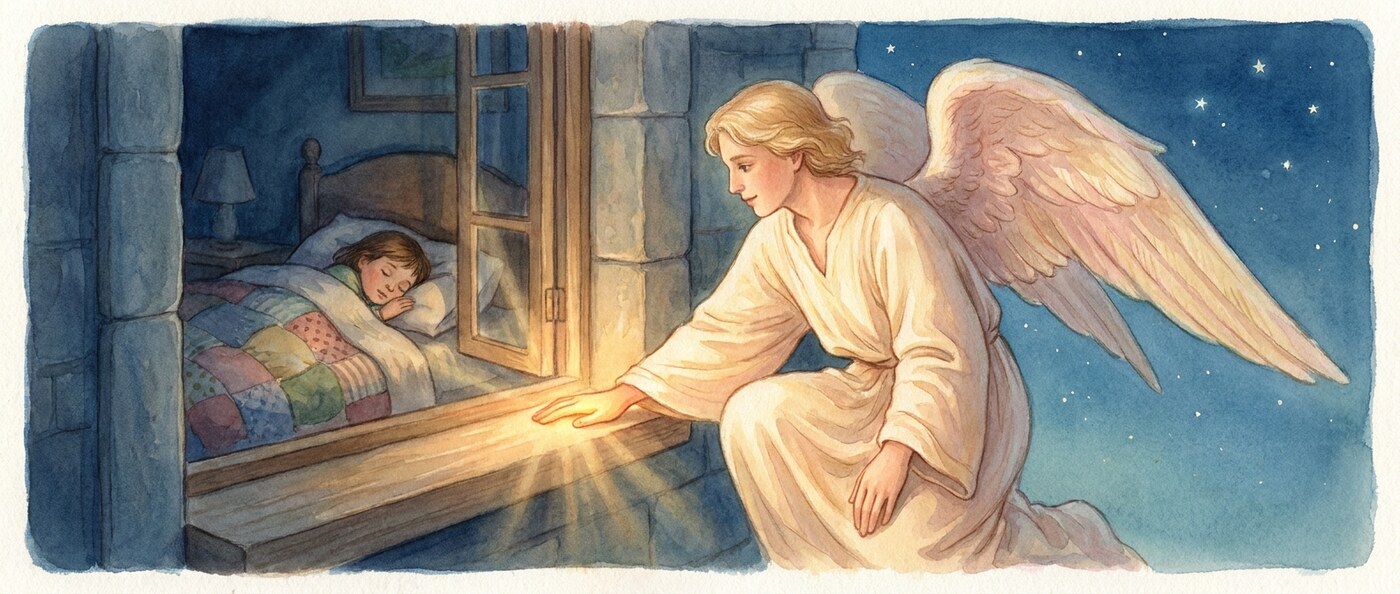
She keeps the window, which is not a metaphor — the window is where she is. She does not intervene often and does not explain when she does. What she offers is attendance: the unglamorous, unbroken fact of somebody being present through the whole of a bad night, without needing to be asked and without leaving when it gets dull.
Where it actually comes from
The idea that each person is accompanied by a protecting angel is ancient and appears across Judaism, Christianity and Islam. In Christian tradition it draws on passages including Matthew 18:10 and Psalm 91; the Catholic Church keeps a feast of the Guardian Angels on 2 October, and the familiar bedtime prayer "Angel of God, my guardian dear" dates in various forms to the medieval period. Depictions of an angel watching over children became especially widespread in nineteenth-century European devotional art, which is where most of the imagery families recognise today comes from.
What it does for a child
This is the letter for the weeks that are genuinely hard — illness, a death in the family, bullying, a frightening change — and its value is that it does not overpromise. Children are quick to spot an adult reassurance that cannot be guaranteed, and a promise that turns out false costs more than the comfort it bought. "You will not be alone in it" is a promise that can actually be kept, by the angel and by the parent writing as the angel, which is the honest version of the same comfort.
However they look at your house
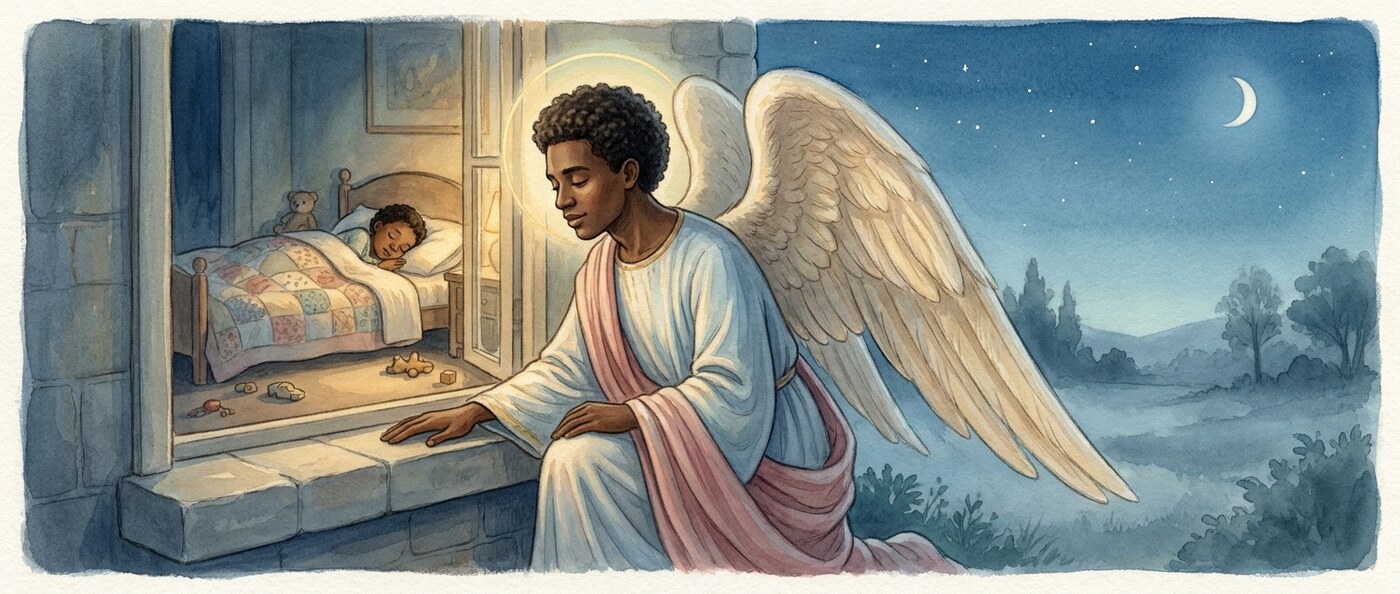
No two families picture The Guardian Angel quite the same way. Here are six of them.