The story
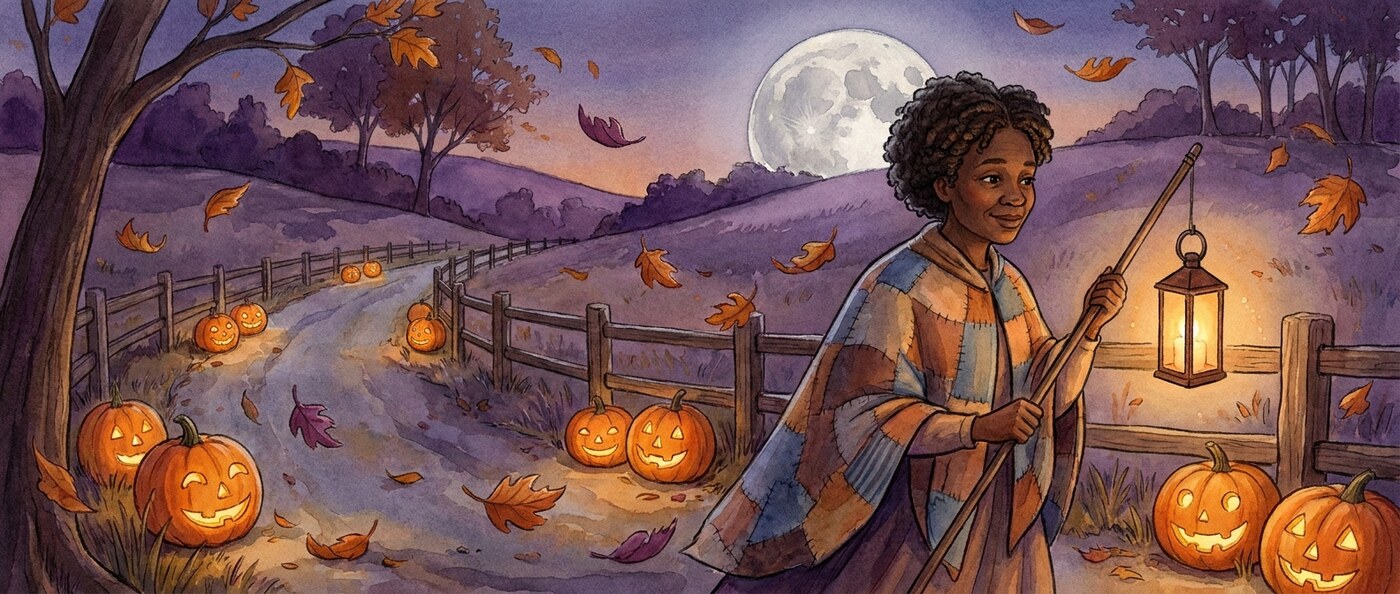
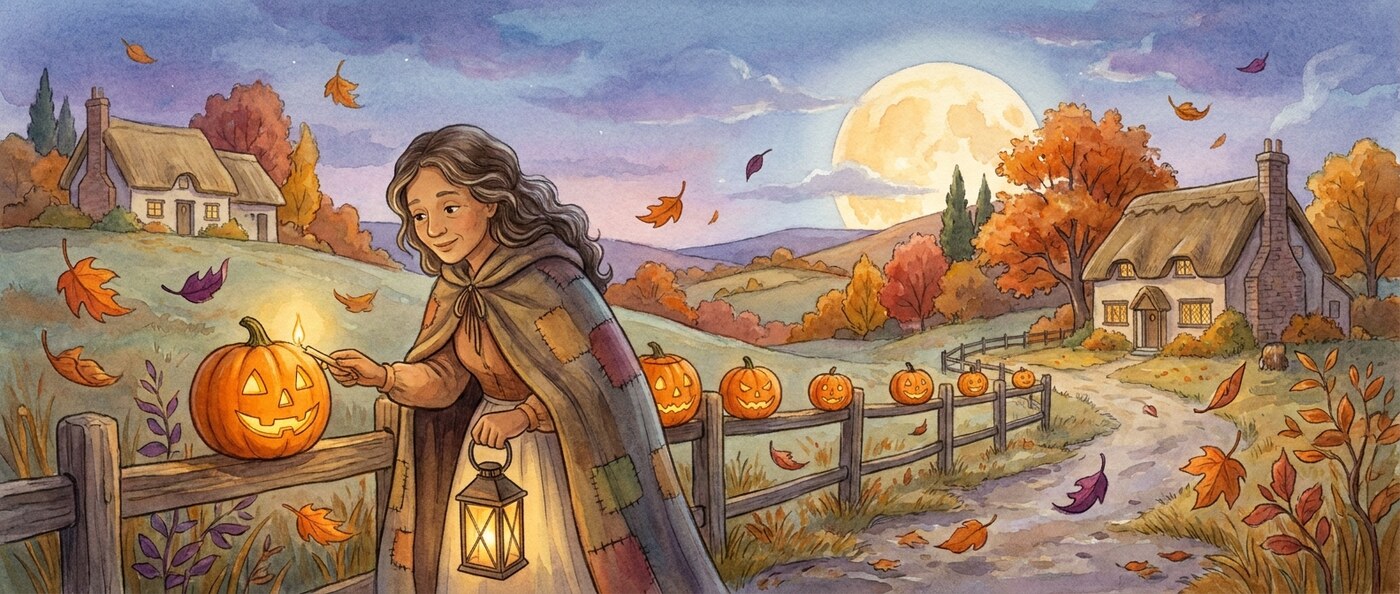
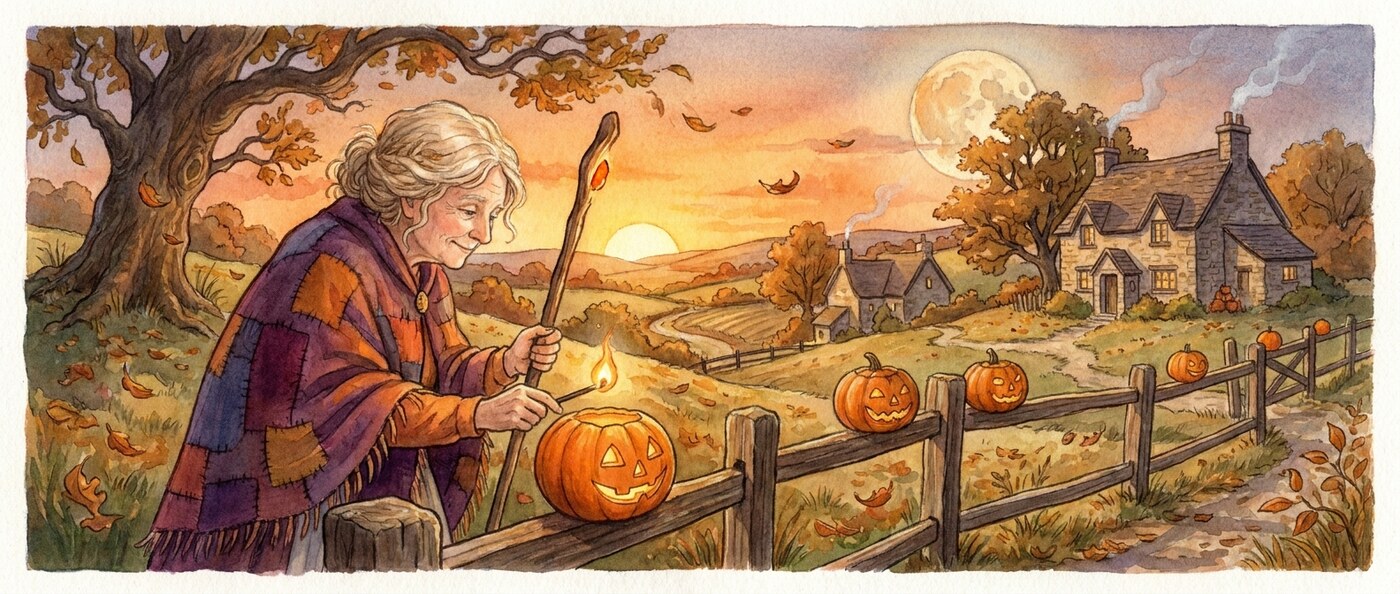
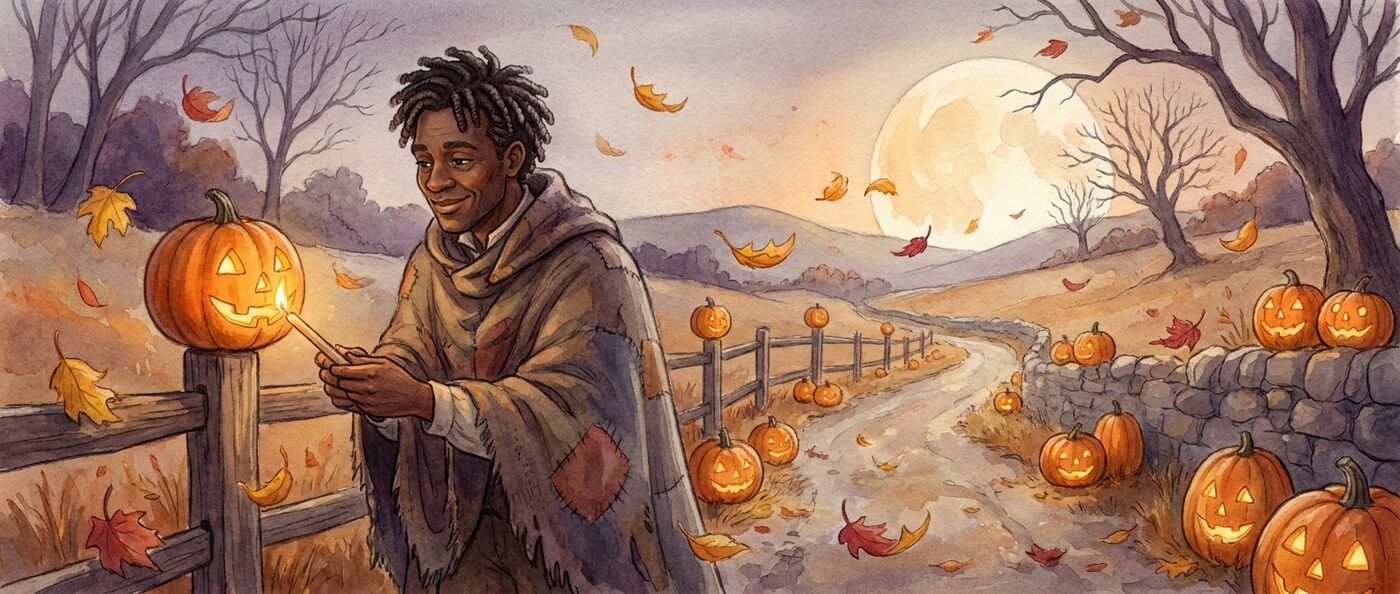
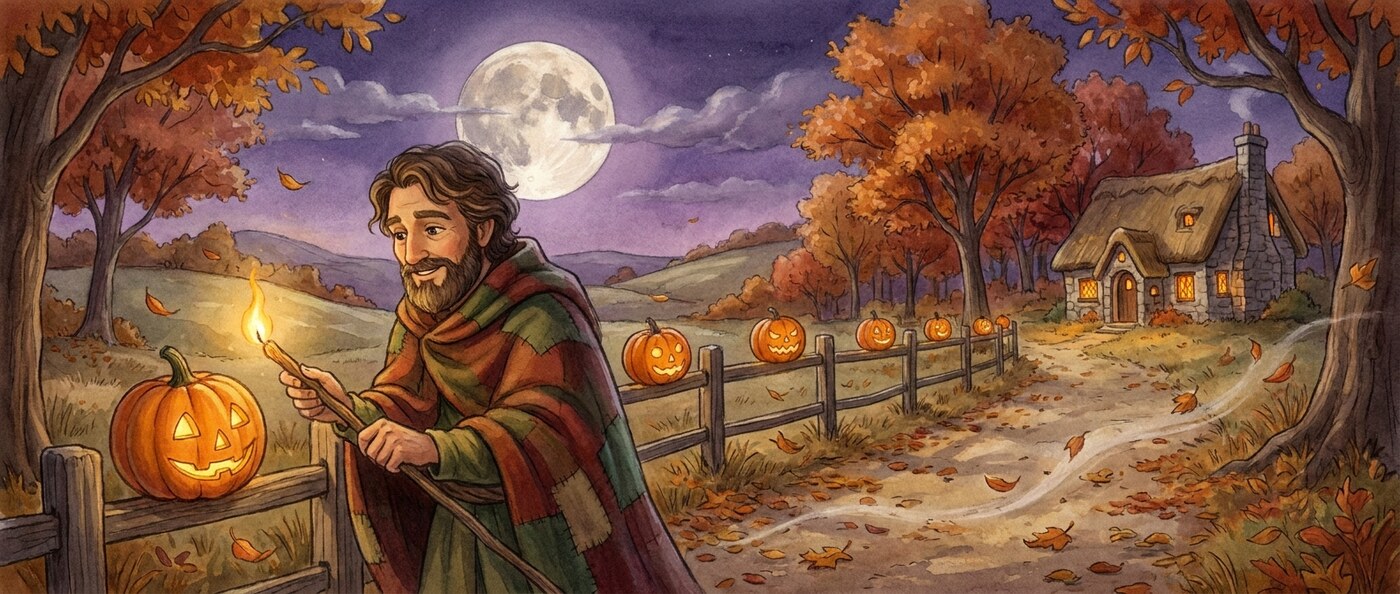
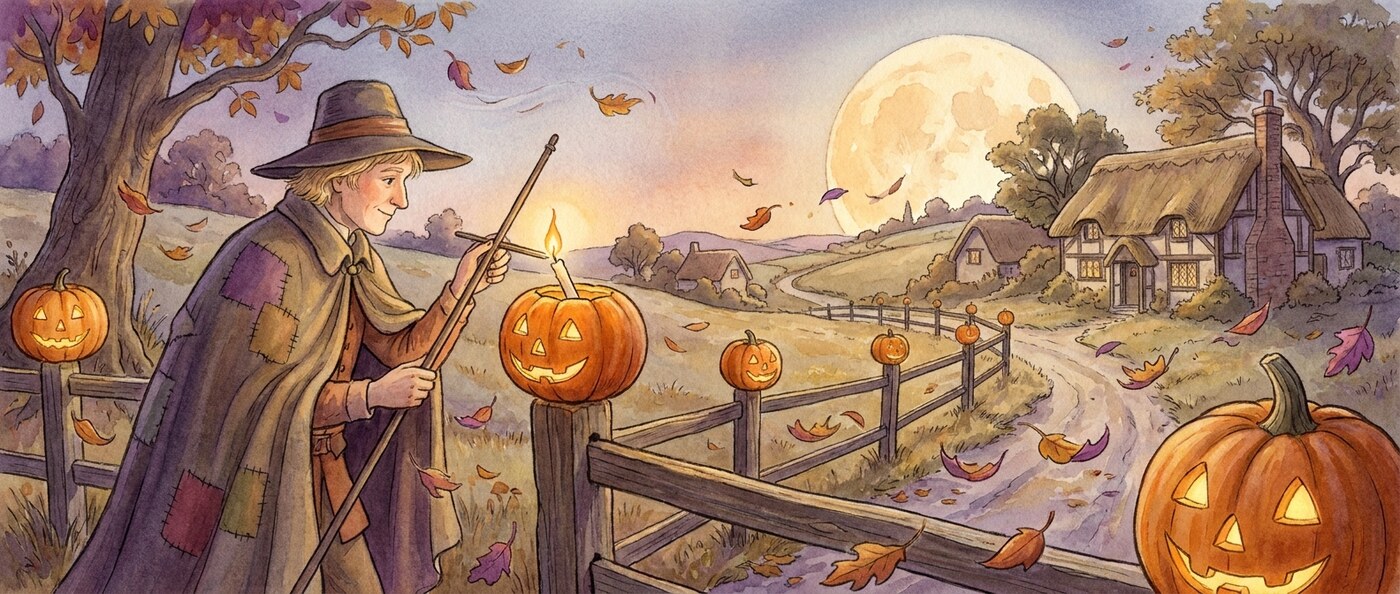
He is not a ghost and he is not frightening, though he keeps company with things that are. He walks the lanes at dusk on the last night of October with a taper, lighting the carved lanterns one by one, and he is still out long after the children have gone in. He is said to be fond of the fierce faces and to take a professional interest in the carving.
Where it actually comes from
The carved lantern comes from Ireland and Scotland, where turnips and large beets were hollowed out, given grotesque faces and lit, then set in windows and doorways on Samhain to ward off wandering spirits. Irish immigrants to North America found the native pumpkin far bigger and vastly easier to carve, and it replaced the turnip almost completely. The name comes from the folk tale of Stingy Jack, condemned to wander with only an ember in a hollowed turnip — Jack of the Lantern. Samhain itself marked the end of harvest and the start of winter, when the boundary between worlds was held to be thin.
What it does for a child
Halloween is many children's first deliberate, voluntary encounter with being frightened, and that is genuinely valuable — fear approached on your own terms, in costume, with an exit and a bag of sweets, is how children learn that being scared is survivable. Explaining that the lantern is a guardian rather than a threat reframes the scariest object on the doorstep as something on their side, which helps a good deal with the ones who find the night too much.
However they look at your house
No two families picture The Lantern Keeper quite the same way. Here are six of them.