The story
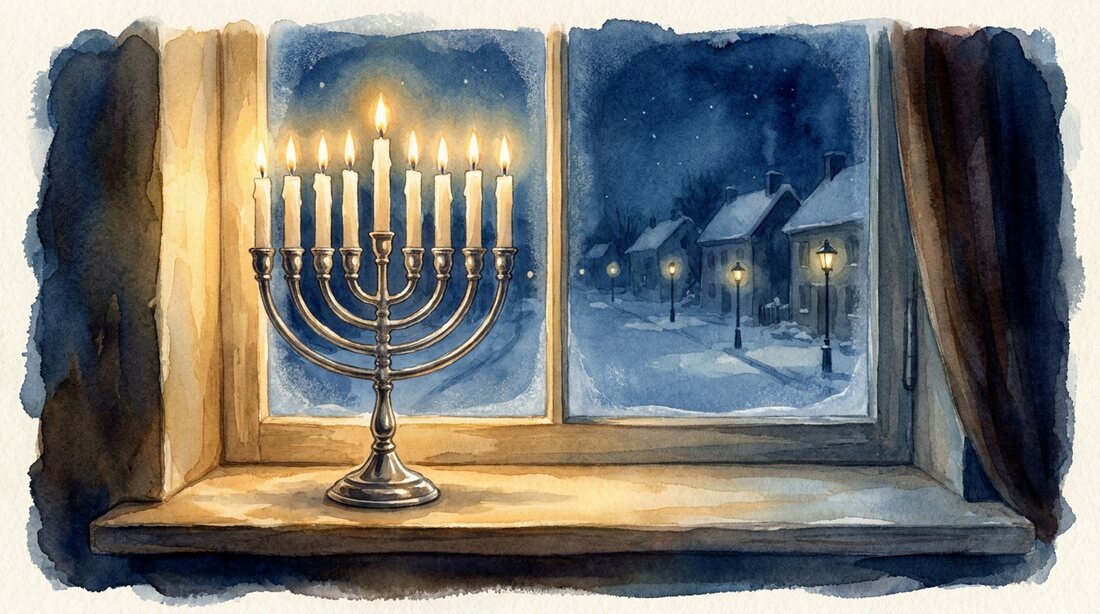
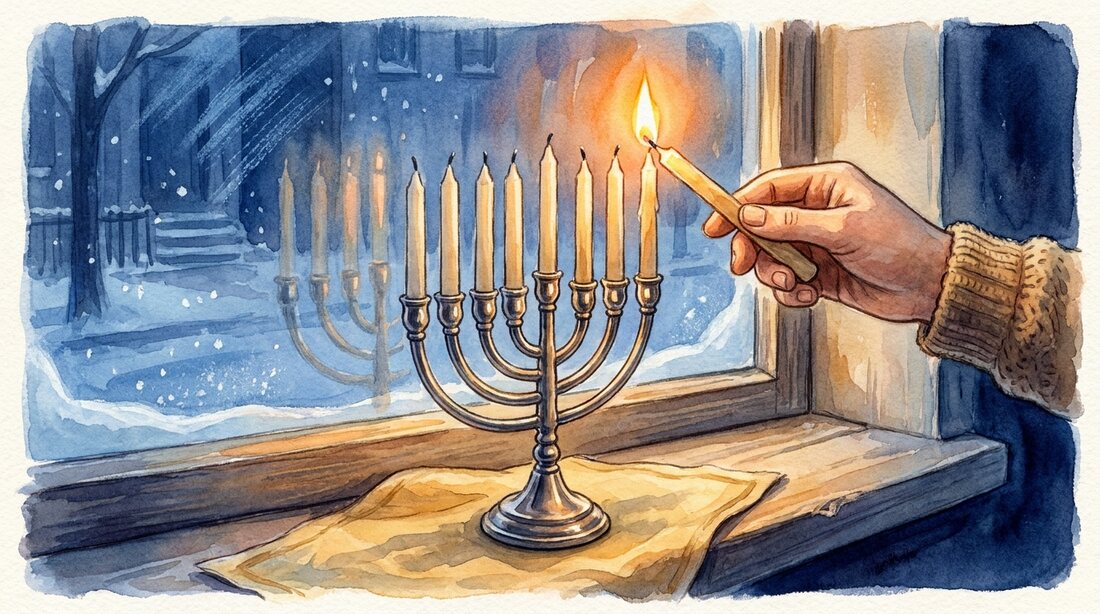
The shamash stands apart from the eight — higher, or off to one side — and it is lit first each night. The eight are holy and may not be used for anything; the shamash is the working candle, the one permitted to do the lighting. It is present at every single kindling of the festival and it is in none of the counts.
Where it actually comes from
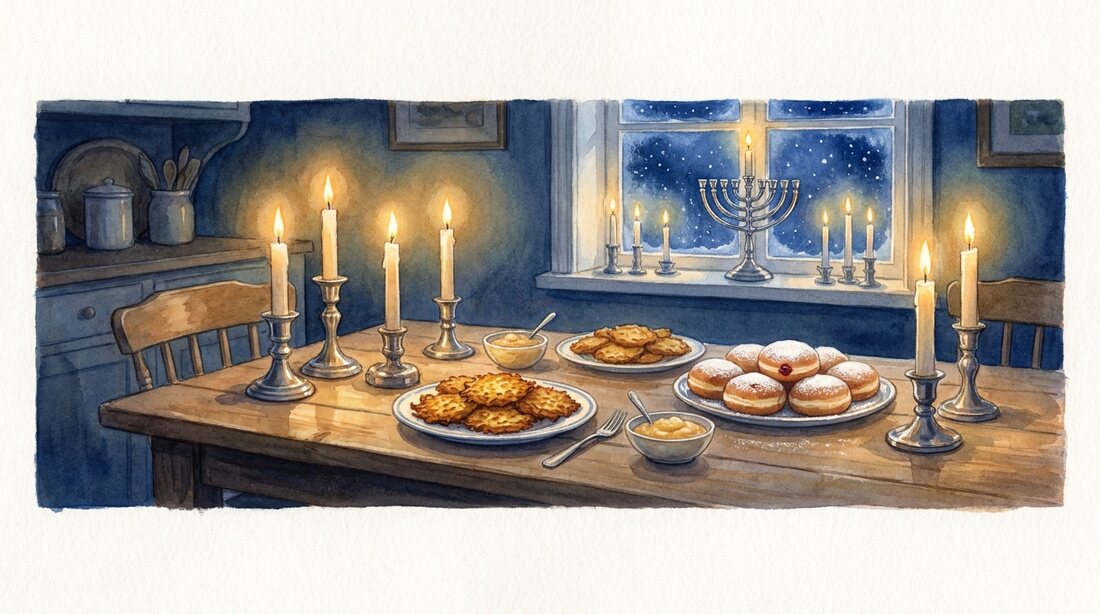
Hanukkah commemorates the rededication of the Second Temple in Jerusalem after the Maccabean revolt against the Seleucid empire in the second century BCE. The Talmud relates that only one day's worth of undefiled oil could be found, and that it burned for eight days until more could be prepared — the reason for eight nights, and for the fried foods, latkes and sufganiyot, that mark the festival. A candle is added each night and the chanukiah is placed where it can be seen from outside, to publicise the miracle. The shamash exists because Jewish law holds that the eight lights are for looking at rather than for use, so a separate helper candle does the lighting. Hanukkah is not a major festival in the Jewish calendar; its prominence outside Israel owes a good deal to its proximity to Christmas.
What it does for a child
The shamash is one of the best moral images available to a child, and it is right there on the table every night for eight nights. Being the one who helps and is not counted, and losing nothing by it, is a difficult idea in the abstract and completely obvious when you are watching a candle do it. It is also a festival built on repetition — one more each night — which small children love and which makes the growth visible.
More from the story
A few more pictures to look at together.