The story
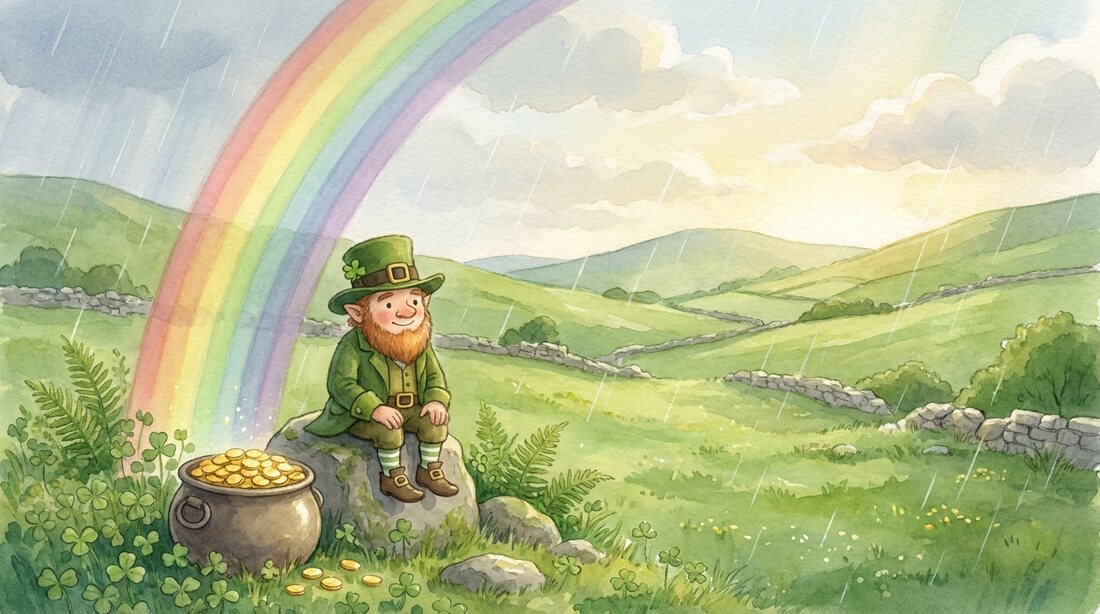
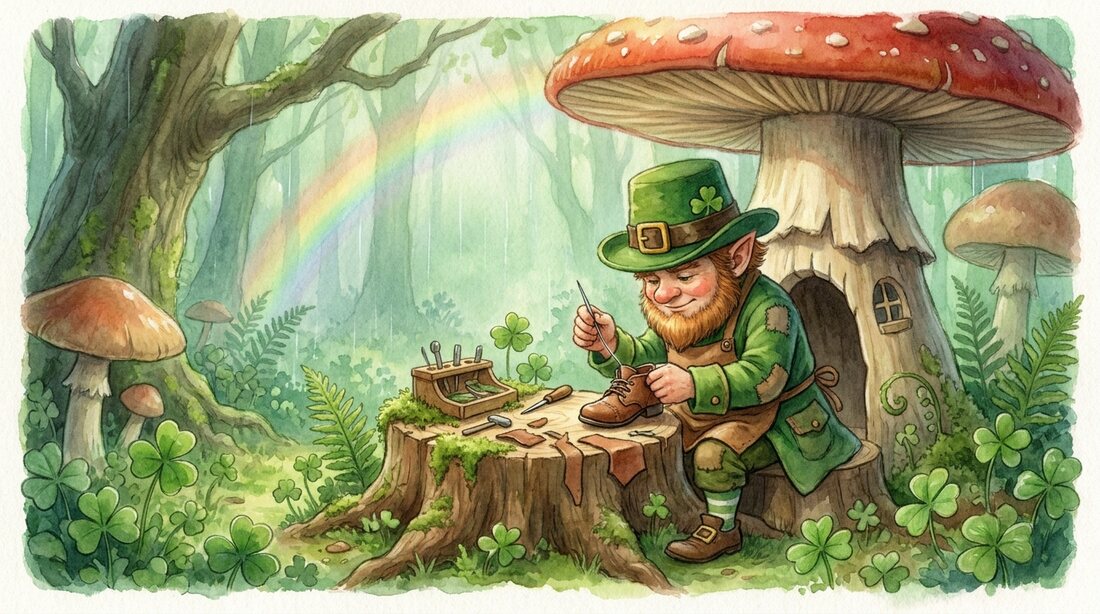
He is a solitary fairy, no taller than a child, and he is a cobbler by trade — the tapping of his hammer is traditionally how you find him. He keeps a pot of gold, and the rule is absolute: catch him and stare at him without blinking and he must give it up. Nobody ever manages it, because he is very good indeed at making people look away.
Where it actually comes from
The leprechaun comes from Irish folklore, the name usually traced to the Old Irish luchorpán, "small body". Early accounts describe him as solitary, ill-tempered and frequently drunk — far from the cheerful mascot of later postcards — and dressed in red as often as green. The shoemaking is the constant: he is a craftsman, and his wealth is explained as the fee for it. His association with St Patrick's Day and the colour green is largely a product of Irish-American celebration from the nineteenth century onward, and many people in Ireland regard the cartoon version with some weariness.
What it does for a child
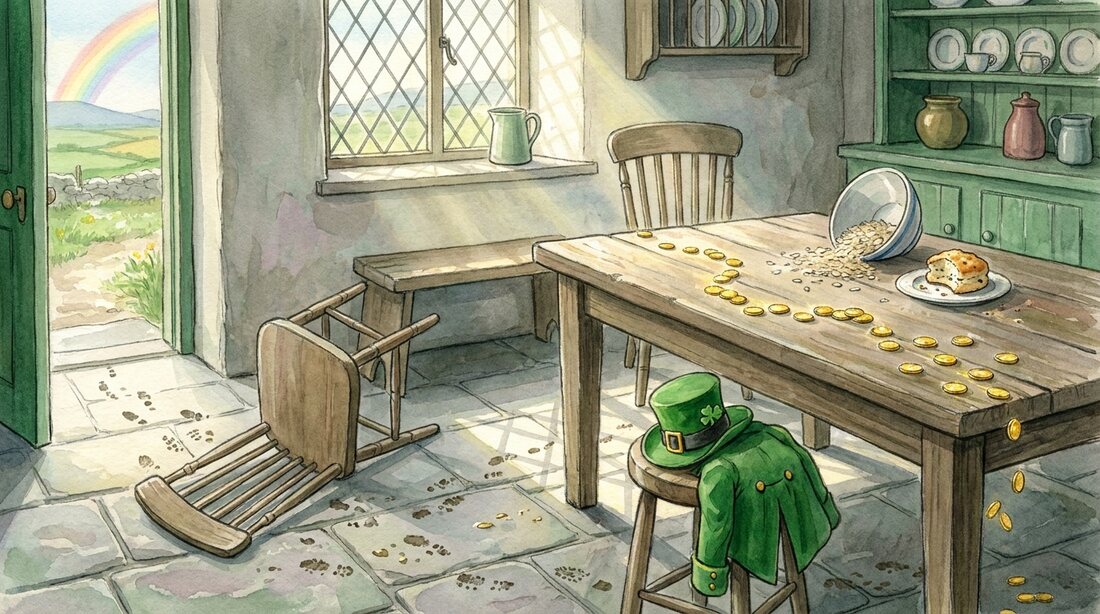
The leprechaun is the one keeper who is openly a trickster, and that makes him unusually good fun to build a game around — the trap, the mess in the morning, the evidence of a near miss. Underneath it is a genuinely good idea for a child: the thing at the end of the rainbow moves when you move, and the satisfying life is the one spent doing the work well rather than chasing the pot.
More from the story
A few more pictures to look at together.