The story
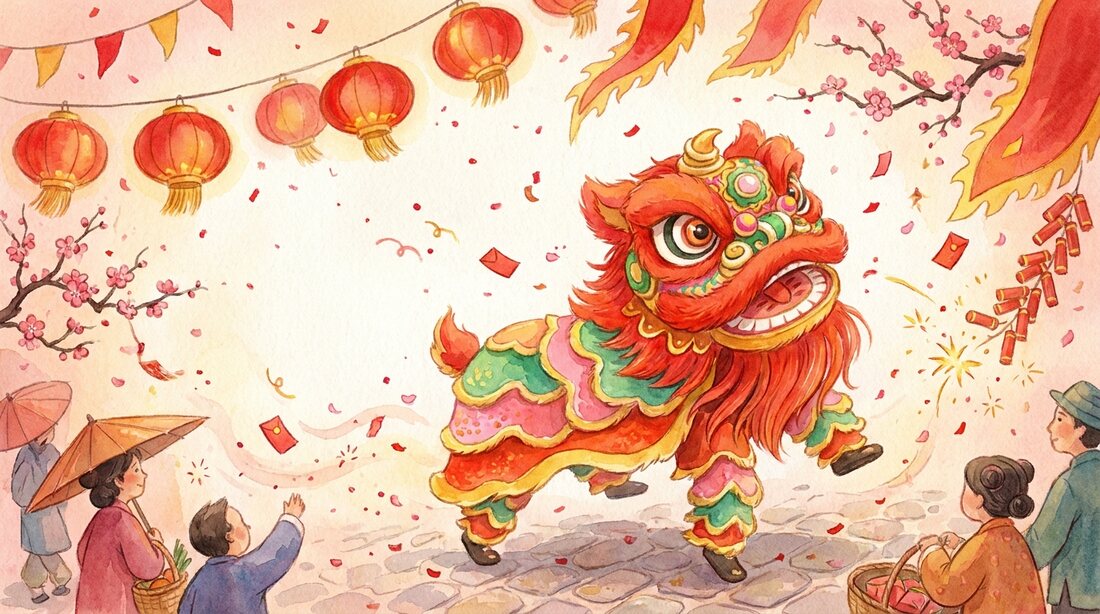
The lion is two dancers, a drum, a gong and a great deal of practice. It works its way down the street stopping at every doorway, clattering its jaw, blinking its enormous eyes, and taking a head of lettuce from above the door before scattering it back over the crowd for luck. It is deafening, and it is meant to be.
Where it actually comes from
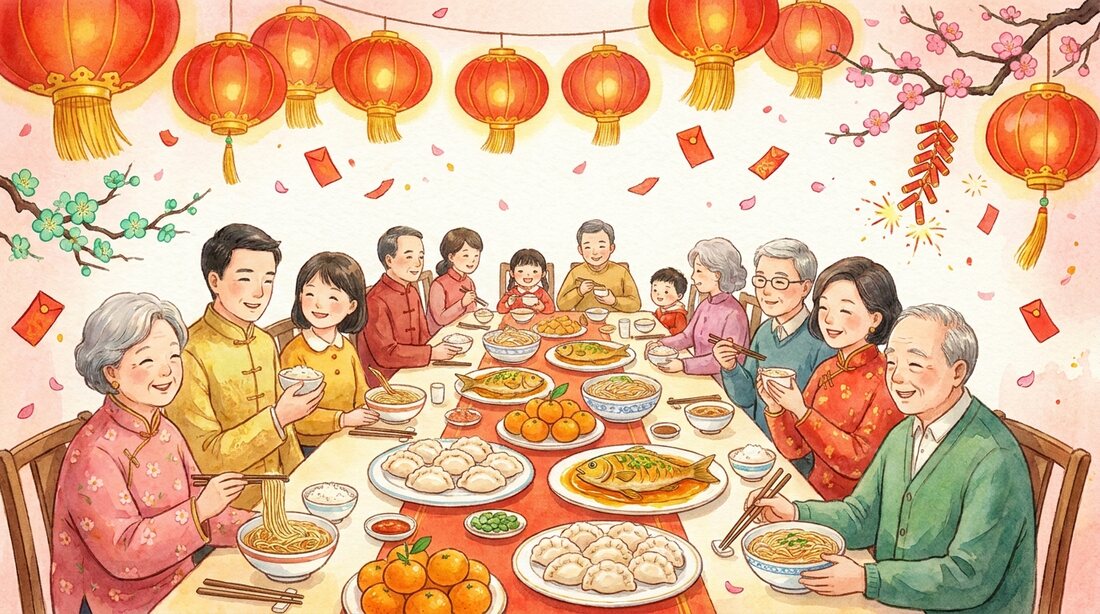
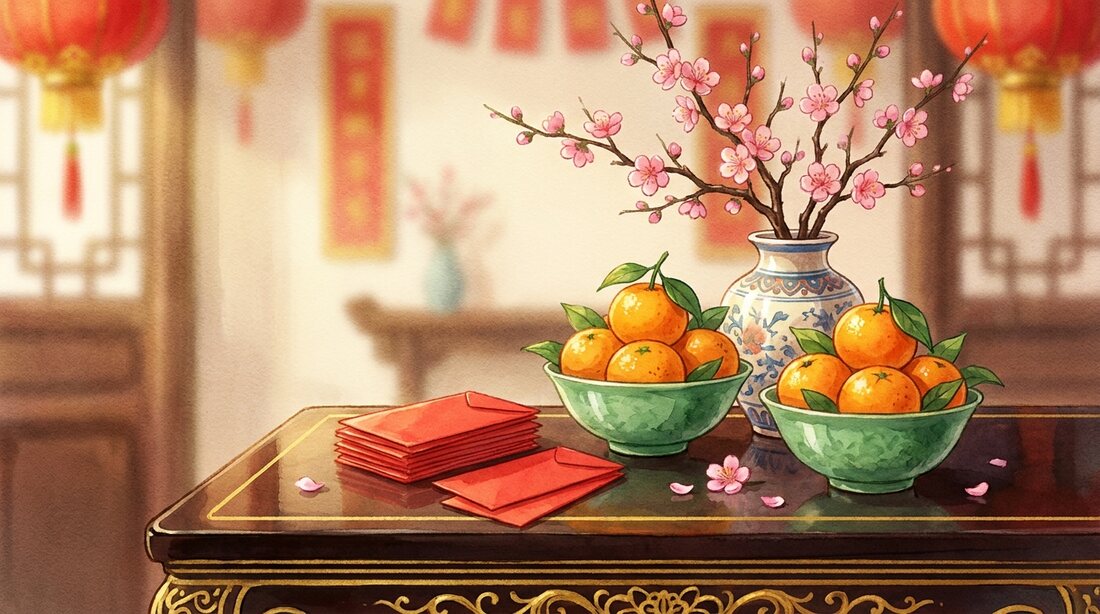
Lunar New Year — Chinese New Year, Tết in Vietnam, Seollal in Korea — falls on the second new moon after the winter solstice and is the largest annual human migration on earth as families travel home. The Nian legend explains the red, the noise and the fire: a beast that came at the year's turn and was driven off by all three. Customs include a thorough house-cleaning beforehand and none on the day itself, reunion dinner on new year's eve, red couplets on the doorframes, firecrackers, and hongbao — red envelopes of money given by married adults to children, always received with both hands and not opened in front of the giver. Each year is associated with one of twelve zodiac animals. The festival runs fifteen days and closes with the Lantern Festival.
What it does for a child
The Nian story is one of the few traditional tales that directly addresses being frightened and offers a strategy rather than reassurance. The village does not wait to be rescued; it works out what the monster cannot stand and does it, loudly, together. For children the festival is also unusually tactile — the sweeping, the red paper, the envelope taken with both hands — and those small enacted courtesies teach more about respect than instruction does.
More from the story
A few more pictures to look at together.