The story
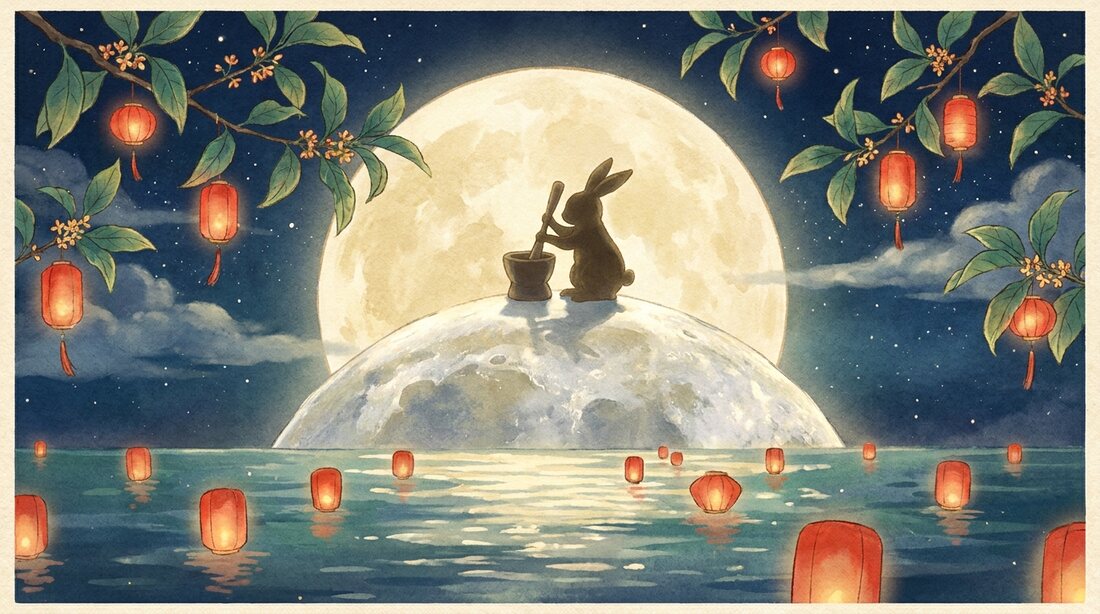
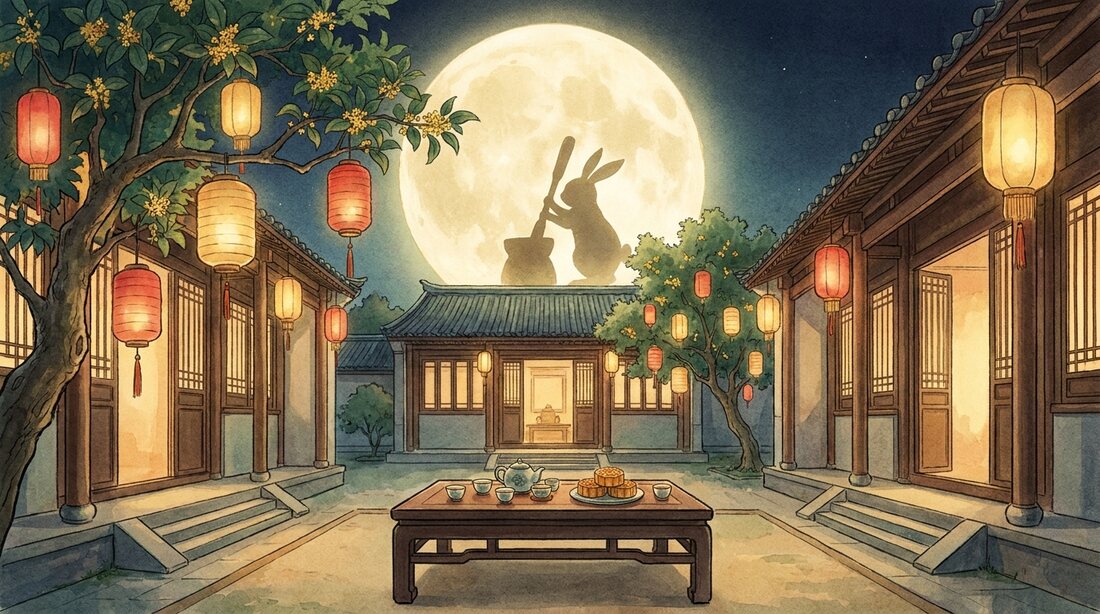
You can see the rabbit if you are shown once, and then you can never not see it. It stands on the face of the full moon with a pestle, pounding — the elixir of immortality in the Chinese telling, rice cakes in the Japanese. It has been working without a break for several thousand years and shows no sign of finishing.
Where it actually comes from
The Mid-Autumn Festival falls on the fifteenth day of the eighth lunar month, when the moon is at its fullest and brightest, and it is kept across China, Vietnam, Korea, Japan and the diaspora under many names. The central themes are reunion and the harvest: families gather, eat mooncakes, carry lanterns and look at the moon together. The jade rabbit appears in Chinese, Japanese, Korean and Indian tellings, and the widely told Buddhist jātaka version has a hare offering itself into a fire to feed a beggar, who is revealed as a god and places the hare in the moon. The rabbit is often paired with Chang'e, the moon goddess of the better-known legend. The roundness of the moon and of the mooncake both stand for the family made whole.
What it does for a child
This is the festival for a family that is not all in one place, and a great many are not. The idea that a relative far away is looking at the same moon at the same moment is concrete enough for a small child to hold, and it converts distance from something sad into something shared. The rabbit's story is also an unusually good one for children who feel they have less to offer than the people around them.
More from the story
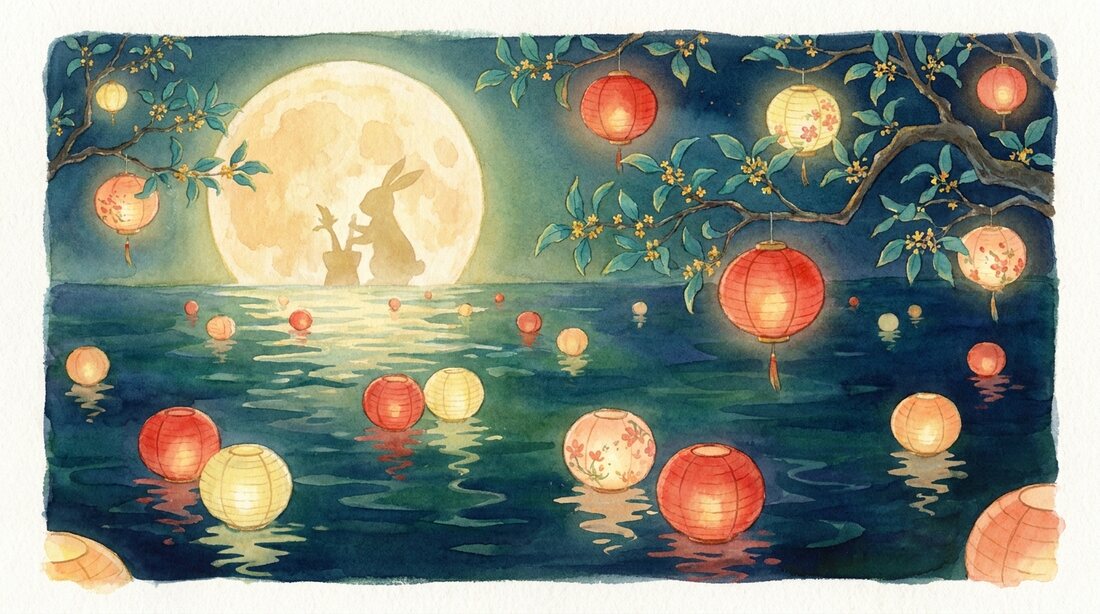
A few more pictures to look at together.