Keepers by The Compendium Company, LLC

The story
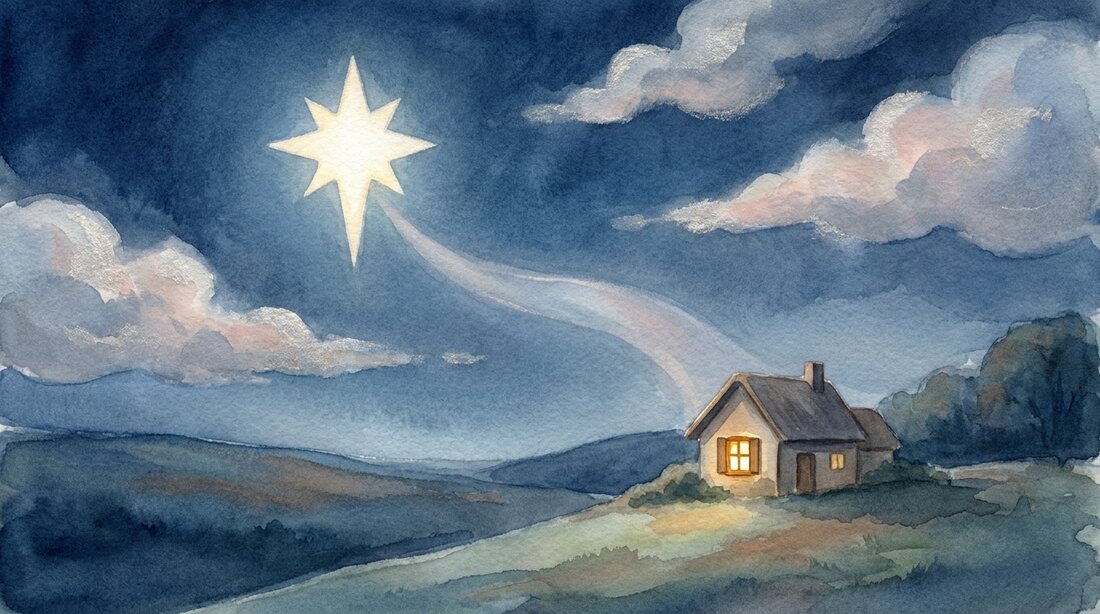
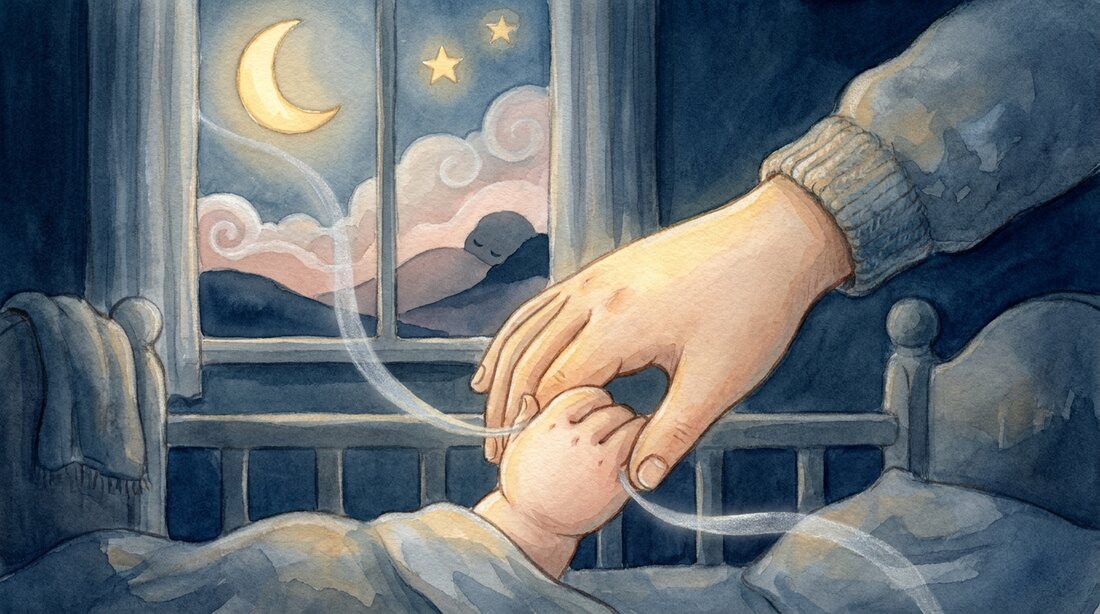
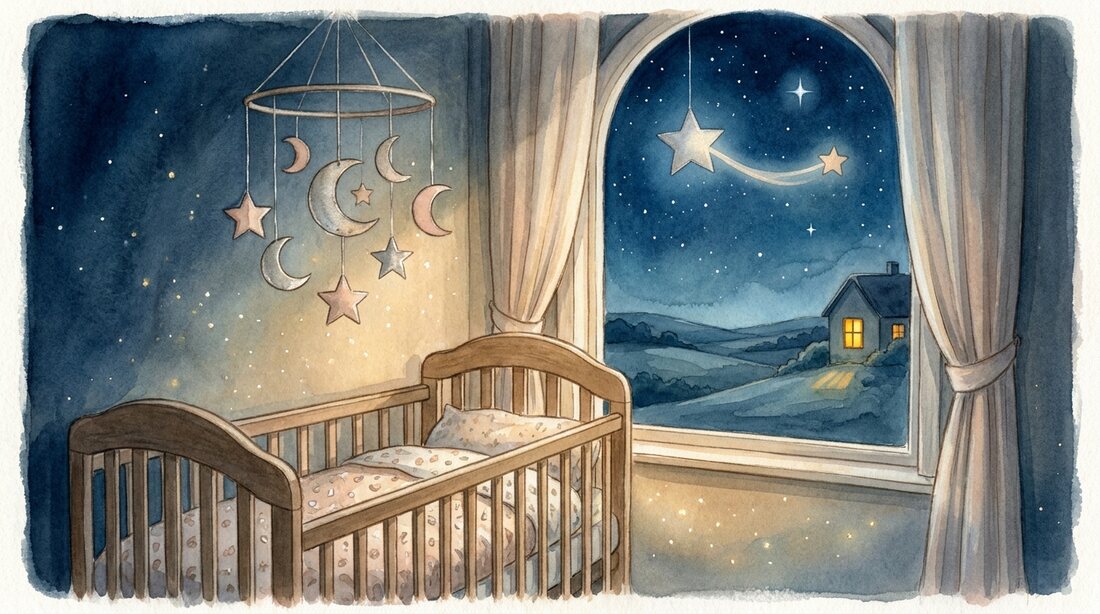
There has always been a star over the house. When a new child arrives a second one is lit beside it, and the two are joined by a thread of light so fine you would have to know to look for it. The first star is very clear on the point that it has lost no brightness whatsoever, and rather insists on saying so.
Where it actually comes from
This one is ours. There is no old folklore about a sibling star — what exists instead is a well-established modern practice of marking the arrival of a new baby with something for the older child: a gift “from the baby”, a job of their own in the household, a special outing in the first week. The reasoning behind it is sound and widely recommended by health visitors and family services, and this letter is a version of the same idea in a form that can be kept and re-read when the novelty has worn off and the reality has set in.
What it does for a child
Regression after a new sibling — in sleep, toileting, speech, clinginess — is extremely common and is usually a bid for reassurance rather than a setback. What consistently helps is naming the difficult feelings out loud instead of requiring the older child to perform delight. A child who is told in advance that they are allowed to find the baby annoying is far less likely to conclude that their resentment makes them bad, and far more likely to say how they feel rather than act it out. The explicit reassurance that nothing has been subtracted from them addresses the fear underneath almost all of it.
The Star That Lit Another Star
A story to read aloud · about 4 minutes
High above the rooftops, where the sky turns from blue to deep, dark velvet, there is a star for every child. Nobody knows who first told this story, but people have been telling it for a very long time. When a child is born, a new star opens its eyes in the sky. It shines over that child all their life, and it never goes out.
And the one who looks after all those stars is the New Sibling Star.
She is an old star, older than the moon, with a light as soft as candle glow. She knows every star by name. She knows which child each one belongs to. And she always knows, before anyone else does, when a new star is about to open.
One evening, the New Sibling Star noticed a small star named Ivy’s Star flickering in a worried way.
“What’s the matter, little one?” she asked.
“There is going to be a new star right next to me,” said Ivy’s Star. “A baby star. For Ivy’s new little brother.” It flickered again. “But what if there isn’t enough light to go around? What if my light has to be shared, and I get smaller? What if everyone looks at the new star and forgets about me?”
The New Sibling Star was quiet for a while. Then she said, “Come with me. I want to show you something.”
She floated down, down, down, until they were hovering just outside a window. Inside, on a table, a single candle was burning.
“Watch,” said the New Sibling Star.
Beside the burning candle stood a second candle, one that had never been lit. The New Sibling Star breathed on the first candle, and its flame leaned over, just a little, and touched the wick of the second. A new flame sprang up.
“Now look at the first candle,” she said. “Is its flame any smaller?”
Ivy’s Star looked very carefully. The first flame was exactly as bright as before. Not one bit dimmer. And now there were two flames, and the whole room glowed twice as warm.
“That is how love works,” said the New Sibling Star. “It is not like a cake that you cut into pieces, where everyone gets less. It is like a flame. When love lights a new flame, the first one does not get any smaller. There is just more light in the world.”
Ivy’s Star glowed a little brighter.
“And here is a secret,” said the New Sibling Star. “Long ago, the storks of Denmark used to say that children are always so pleased with a little brother or sister. But the baby star will be even more pleased with you. Every baby star looks first for the brightest star beside it. That will be you. You will be the one who shows it how to shine.”
That night, far below, Ivy lay in her bed. She did not know why, but she felt warm all over, as if something had been lit inside her that could never go out.
And a few nights later, right beside Ivy’s Star, a tiny new star opened its eyes, blinked, and looked around. The very first thing it saw was Ivy’s Star, shining steady and bright, right next to it.
And the sky was brighter than it had ever been.
An original Keepers story, grounded in recorded folk custom.
More from the story
A few more pictures to look at together.