The story
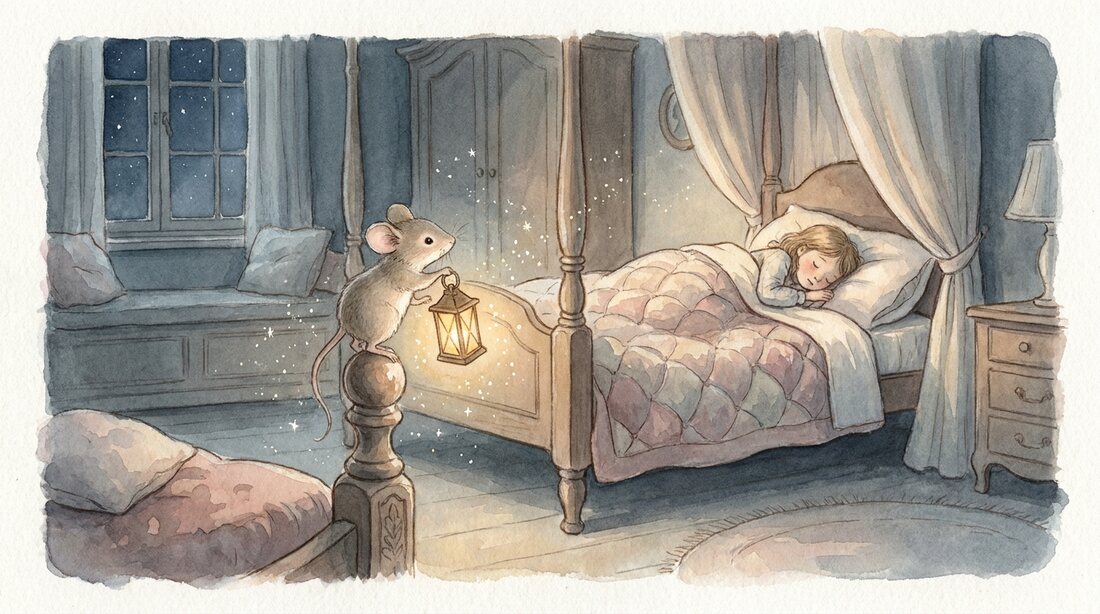
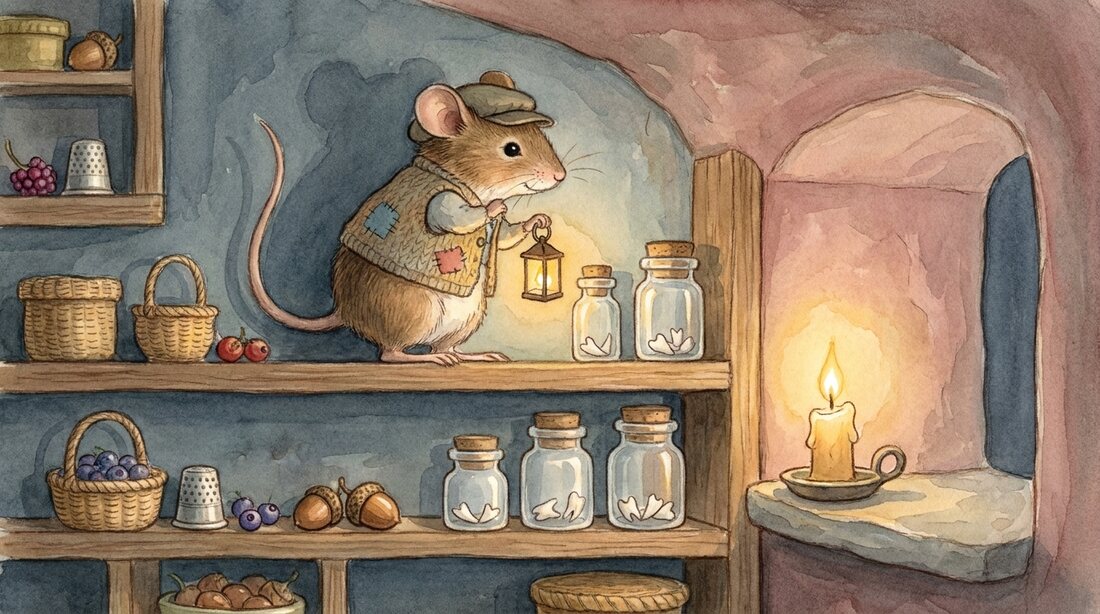
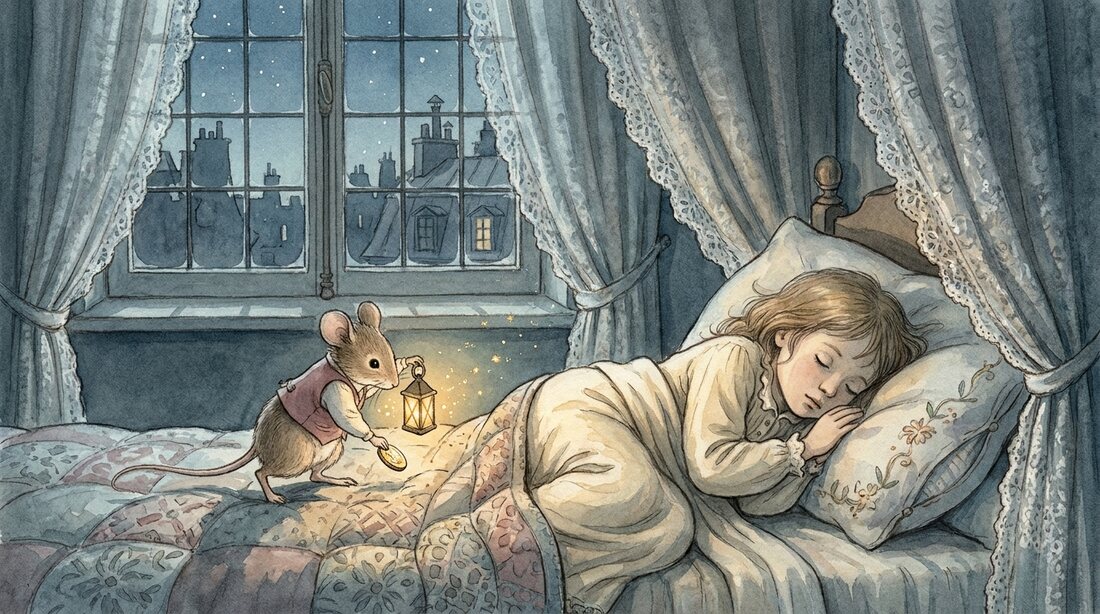
She is smaller than Ratoncito Pérez, greyer, and considerably more discreet. She works alone across the rooftops with a lantern, and she has an established professional opinion that haste is the enemy of the job. Nobody has ever heard her arrive. A very small number of children claim to have heard the lantern.
Where it actually comes from
The tooth-taking mouse is the older European tradition, long predating the winged fairy, and la petite souris is its French form. A clear literary ancestor is Madame d'Aulnoy's "La Bonne Petite Souris" of 1697, in which a fairy takes the form of a mouse, hides under a pillow and knocks out a wicked king's teeth — a good deal less gentle than the modern version. The custom of putting the tooth under the pillow for the mouse is documented across France, Belgium, Switzerland and French-speaking Canada, and it spread with the language.
What it does for a child
La Petite Souris is a gift for a bilingual or French-heritage family: the letter carries the language into a moment the child already cares about, which is worth more than a great deal of deliberate practice. Her particular lesson — that careful and slow beats fast — is also a genuinely useful counterweight for children who rush at things and give up when they go wrong.
More from the story
A few more pictures to look at together.