The story
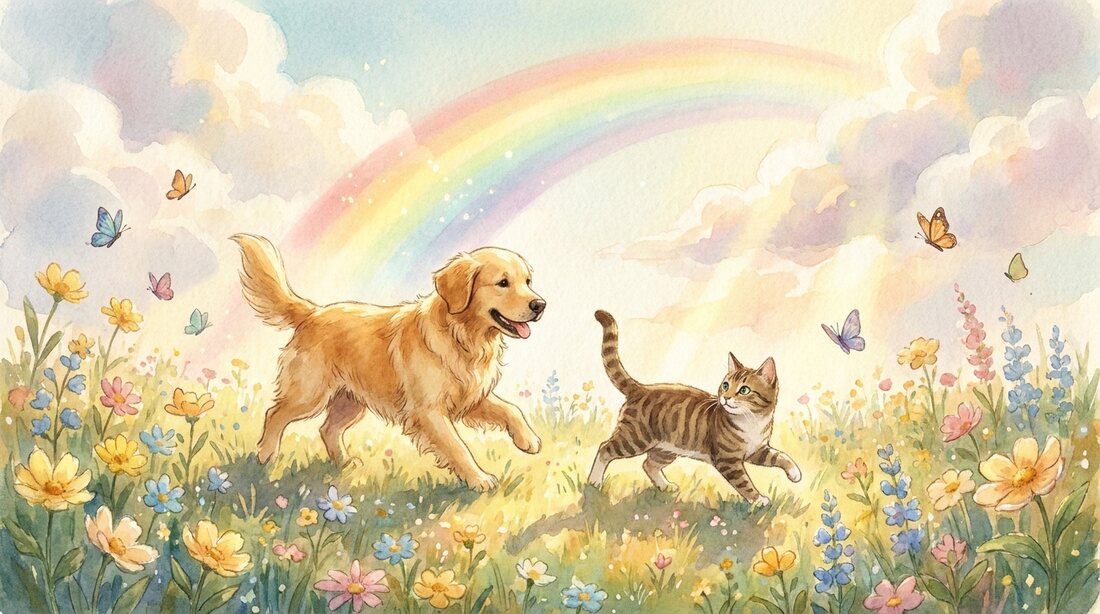
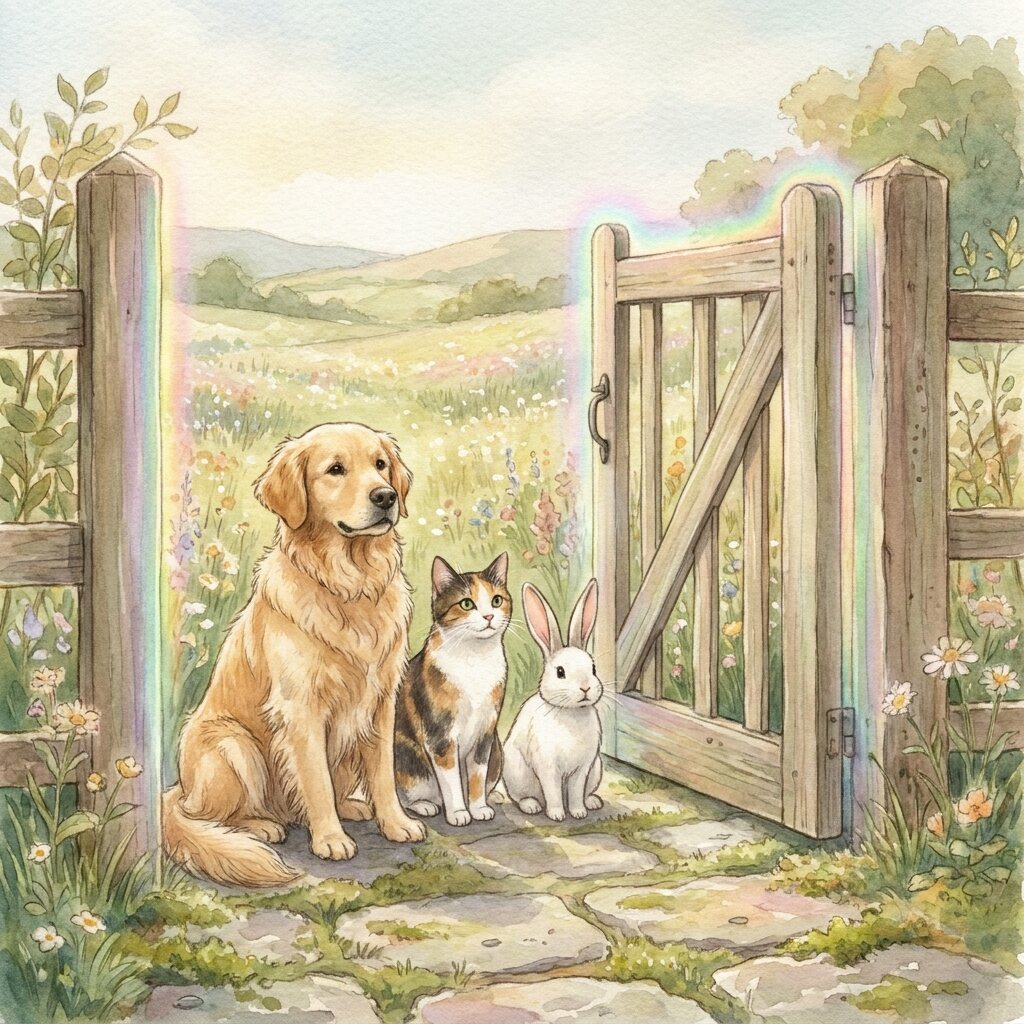
The meadow is on the far side of a green rise, and the keeper stands at the gate to meet every arrival personally. It is warm, there is no illness in it, and the grass is long. He is described as unhurried, and as having a particular gift for the ones who arrive confused.
Where it actually comes from
The Rainbow Bridge is a modern tradition rather than an ancient one, and its recent origin is part of its appeal — it was written for exactly this purpose. The prose poem circulated in pet-loss support networks from the 1980s onward, initially anonymously; research by the Oxford English Dictionary in 2023 identified Edna Clyne-Rekhy, a Scottish artist, as having written it in 1959 at the age of nineteen after the death of her dog Major. The image draws on older bridge-to-the-afterlife motifs found in Norse and other traditions, but the text itself is recent, and it has become one of the most widely shared pieces of consolation writing in the English language.
What it does for a child
A pet is very often a child's first bereavement, and how it is handled tends to set the pattern for later ones. Guidance from child bereavement services is consistent on a few points: use the real words — died, not "put to sleep" or "gone away", which frighten children about sleeping and about people leaving — allow the grief rather than rushing to replace the animal, and keep talking about them afterwards. A letter helps because it gives the child something to hold and re-read, and because it says explicitly that being sad is correct, which children often need permission for.
Pictures for a hard week
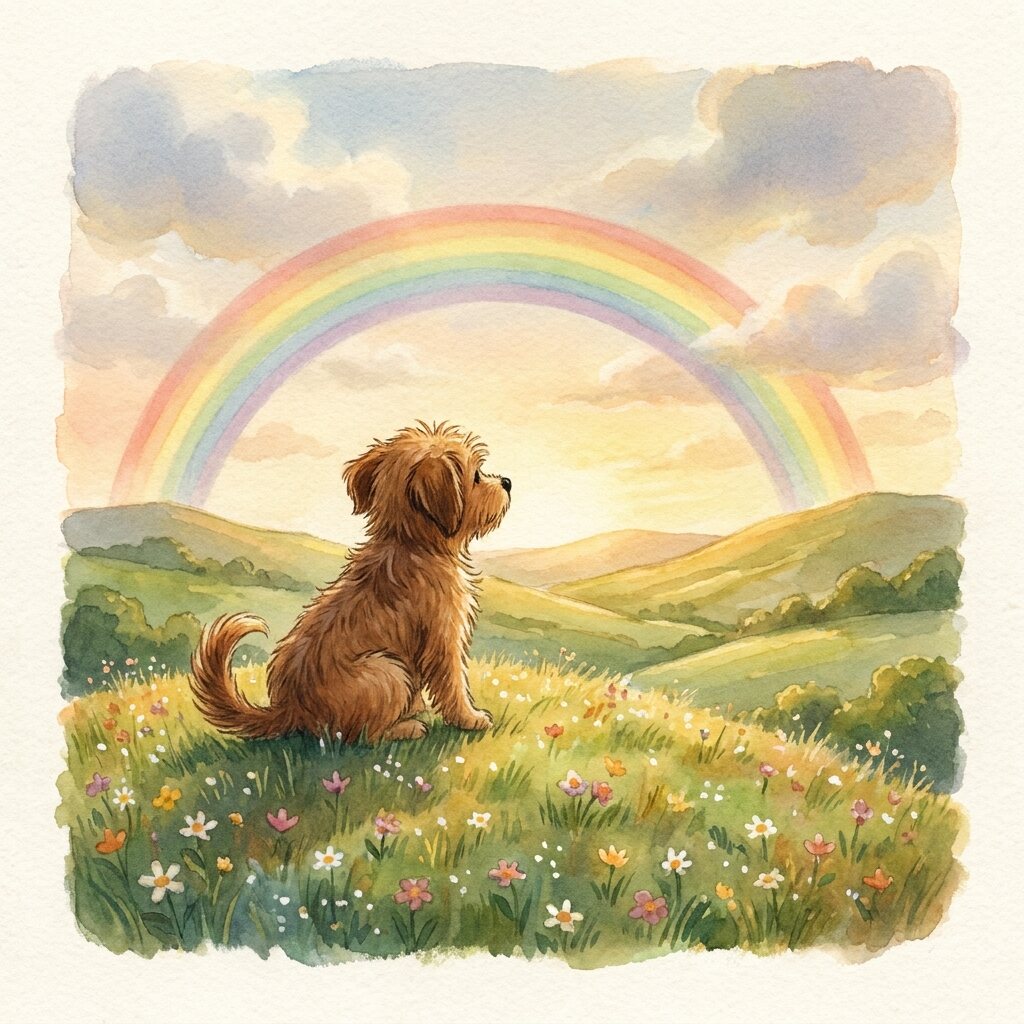
Some children find it easier to look than to talk. These are here to sit with together.