The story
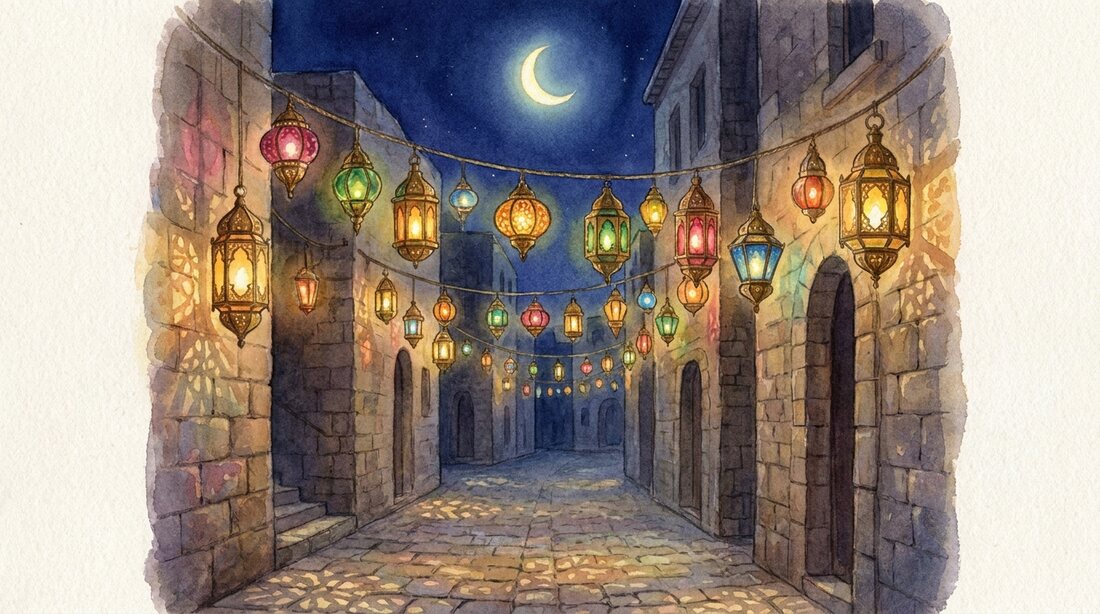
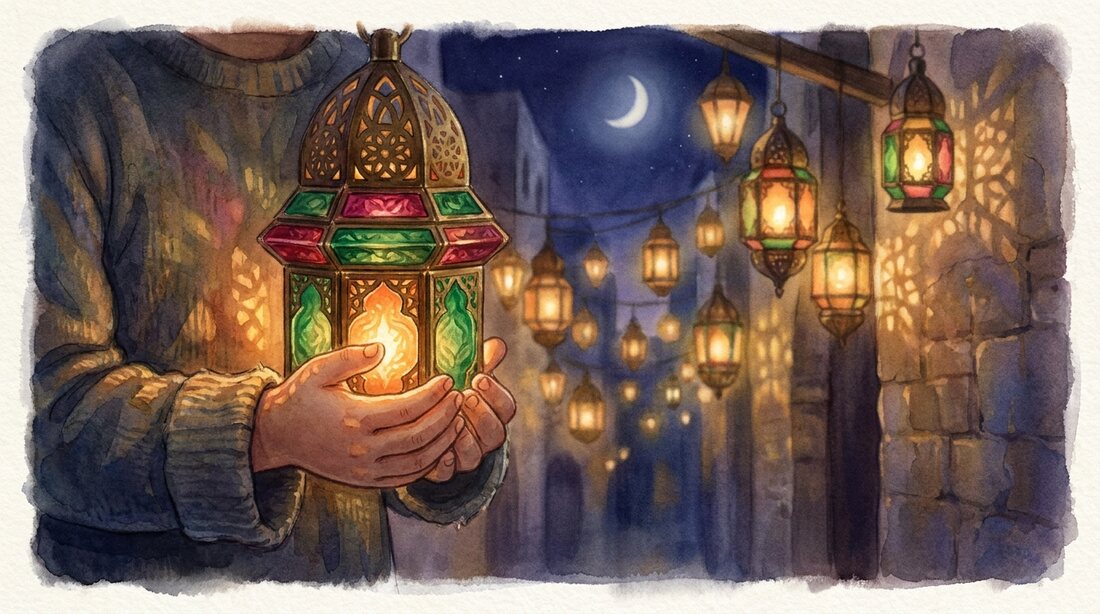
The fanoos is pierced brass and coloured glass, and it is hung on the first night and lit every evening until the month is finished. It is not a decoration so much as a marker: while the lantern is lit, the month is running. Children in Cairo have carried small ones through the streets for centuries, singing, which is how most of them first learn what the month is.
Where it actually comes from
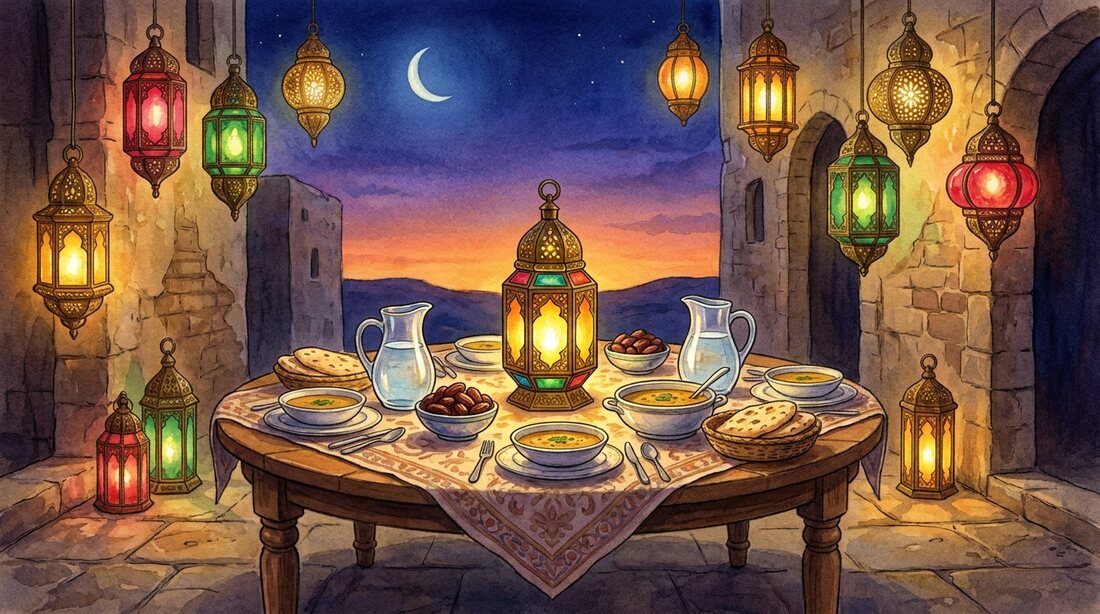
The Ramadan lantern is most strongly associated with Egypt, and tradition traces it to the Fatimid period — the usual story has Cairo lit by lanterns to welcome the Caliph al-Mu'izz into the city in 969 CE, after which lanterns became the mark of the month. Fanoos are now found across the Muslim world and the diaspora, in brass, glass, tin and increasingly as strung lights. Ramadan itself is the ninth month of the Islamic calendar and one of the five pillars of Islam; adult Muslims fast from dawn to sunset, breaking the fast at maghrib with iftar, traditionally with dates, and rising before dawn for suhoor. The month is also marked by increased charity, night prayers, and recitation of the Qur'an.
What it does for a child
Ramadan asks children to live inside a whole month of collective effort, which is rare and valuable. The lantern gives them something concrete to attach it to at an age when thirty days is an abstraction. And naming the scratchy afternoons in advance — rather than pretending the month is effortless — lets a child understand that finding something hard is not the same as doing it badly.
More from the story
A few more pictures to look at together.