The story
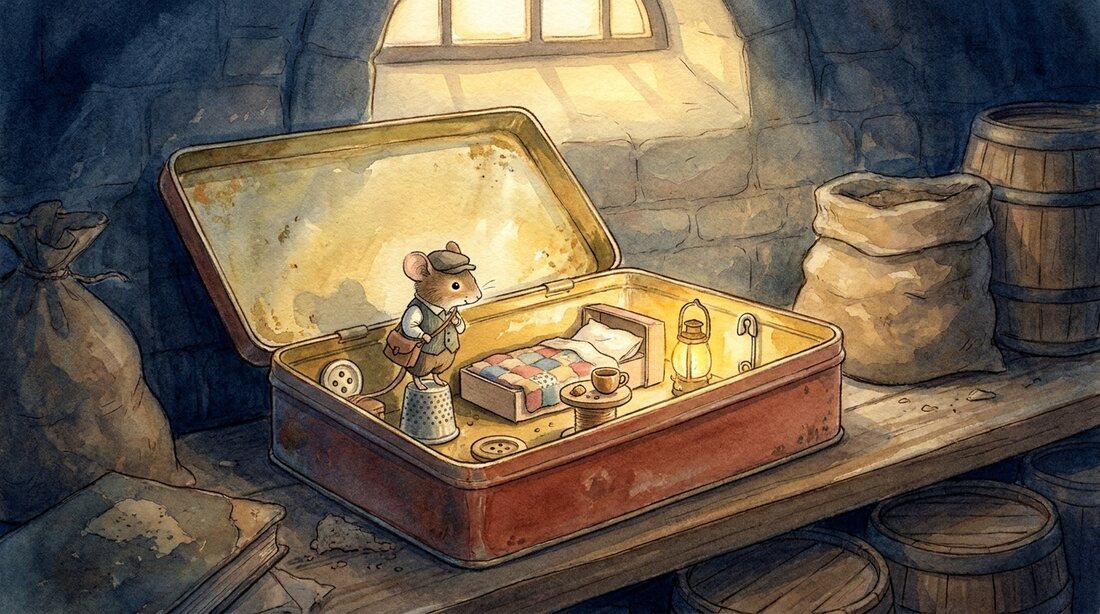
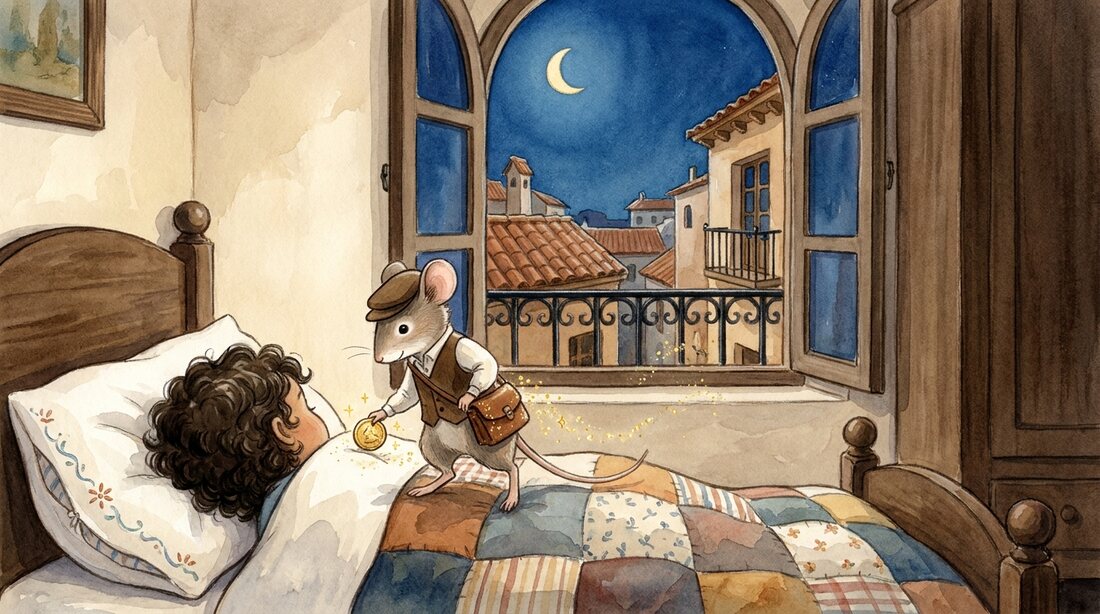
He wears a small hat and carries a satchel, and he works the rooftops of the Spanish-speaking world by night, going under pillows without ever waking anyone. Where the Tooth Fairy is made of light, Ratoncito Pérez is made of practicality: he is a small working mouse with a job, a route and a tin he goes home to. He is said to be excellent company and a terrible timekeeper.
Where it actually comes from
Ratoncito Pérez has an author and a date, which is rare. The Jesuit priest Luis Coloma wrote him in 1894 for the eight-year-old King Alfonso XIII, who had just lost a tooth — the queen regent asked for a story, and Coloma produced one in which the boy king shrinks to mouse size and tours the poor quarters of Madrid with Pérez, seeing how other children live. The moral was deliberate. A plaque now marks the mouse's address at Calle Arenal 8 in Madrid, and there is a small museum. The tooth-collecting rodent is far older and far wider than the story, though, appearing across Spain, Latin America and France for centuries.
What it does for a child
The mouse works better than the fairy for some children, and it is worth knowing why: he is not magical, he is just small and good at his job. For a child who finds fairies babyish, or who is anxious about a being with powers moving around their bedroom, a mouse with a satchel is far easier to accept. He is also the natural choice for a Spanish-speaking family that wants their own tradition rather than an import.
More from the story
A few more pictures to look at together.