The story
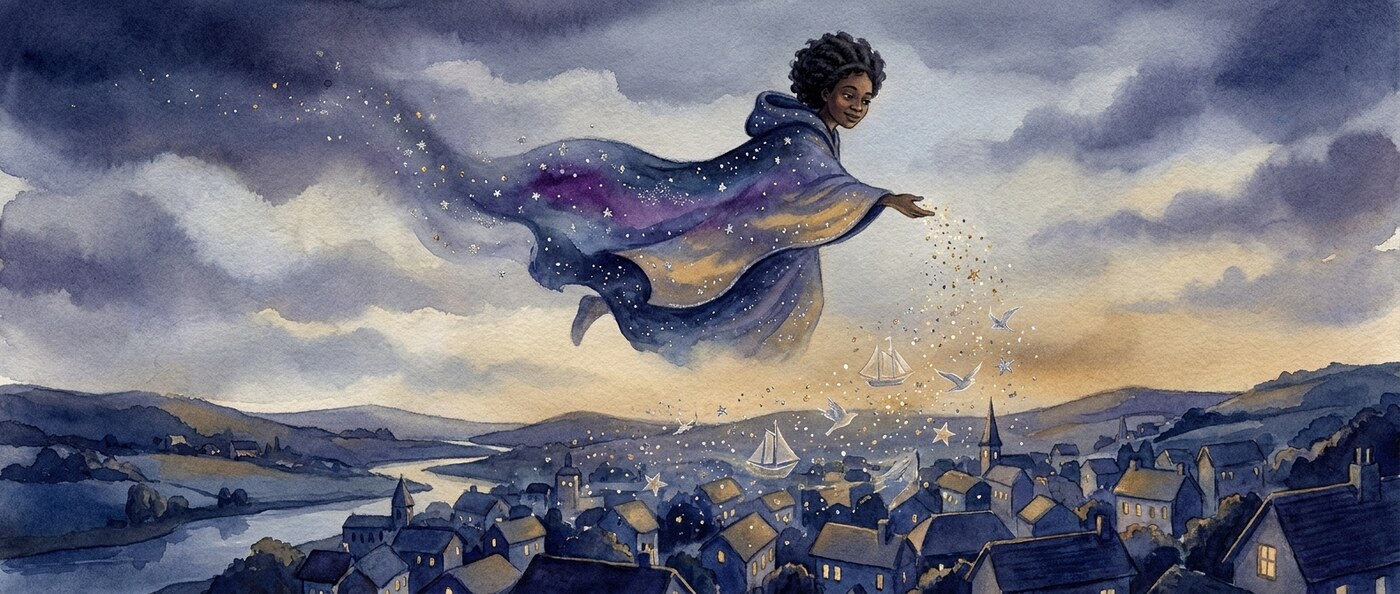
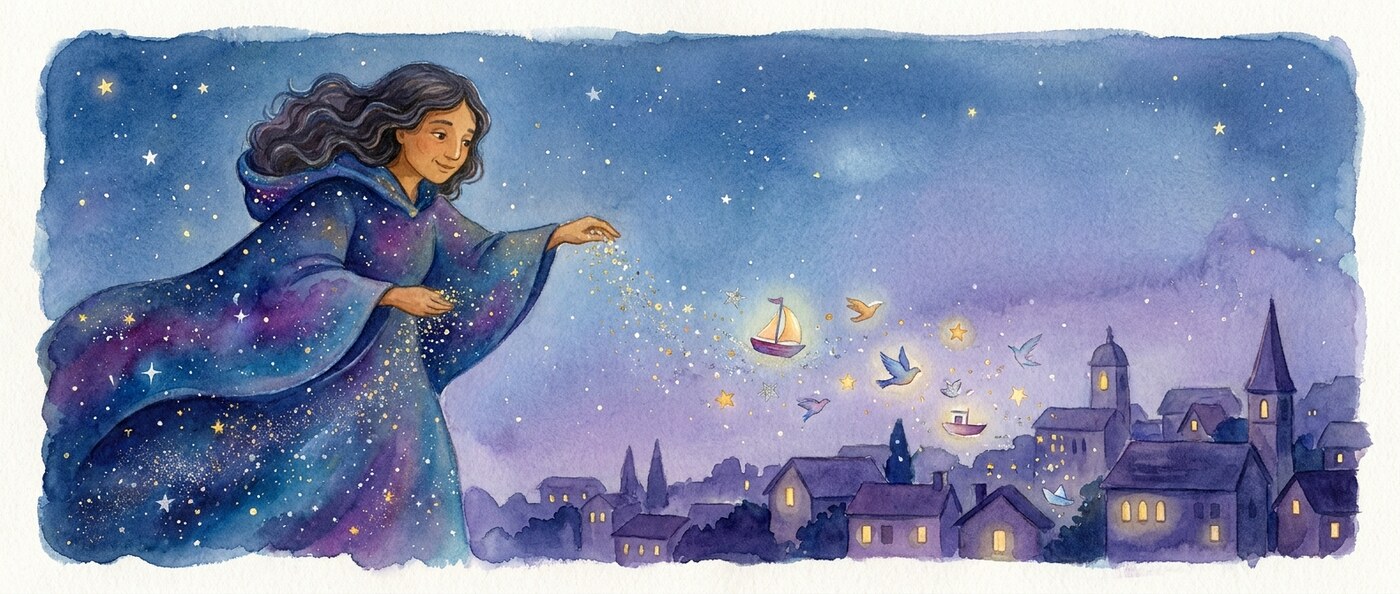
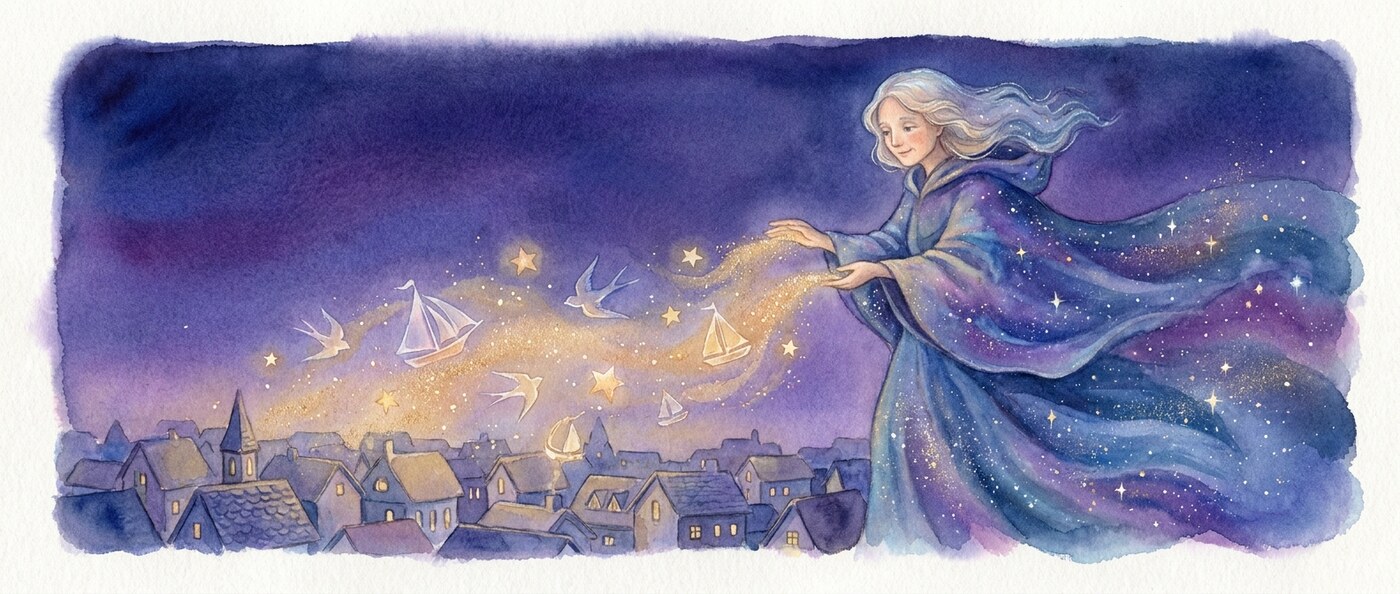
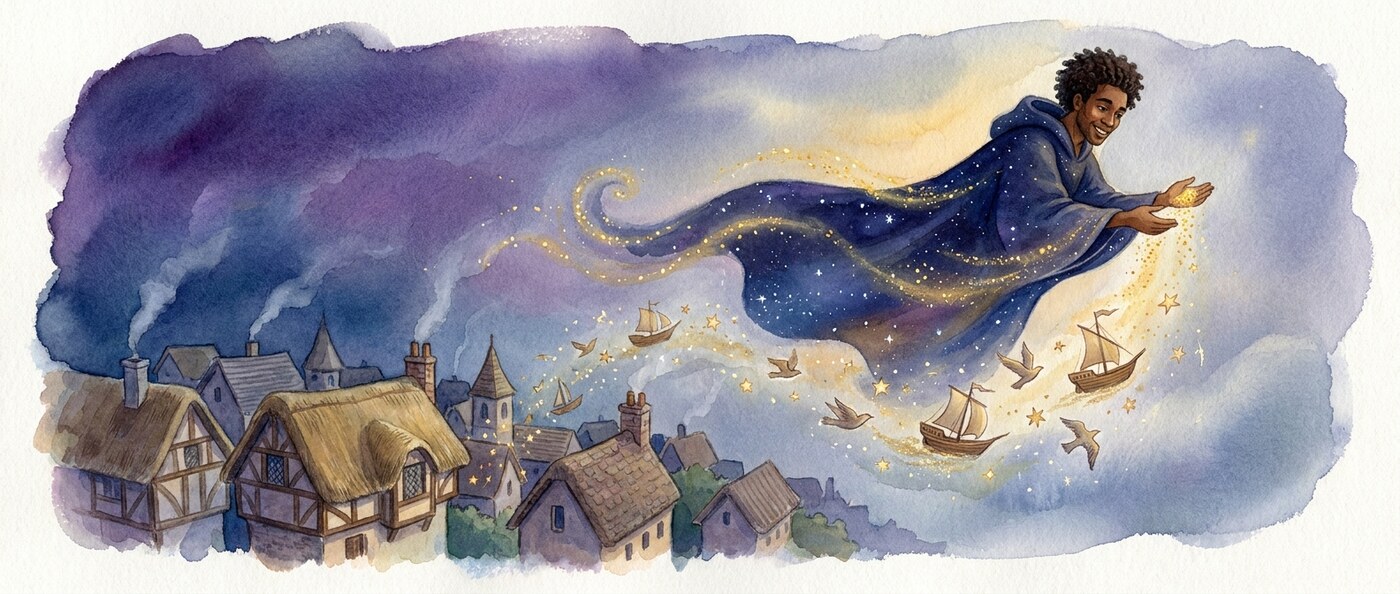
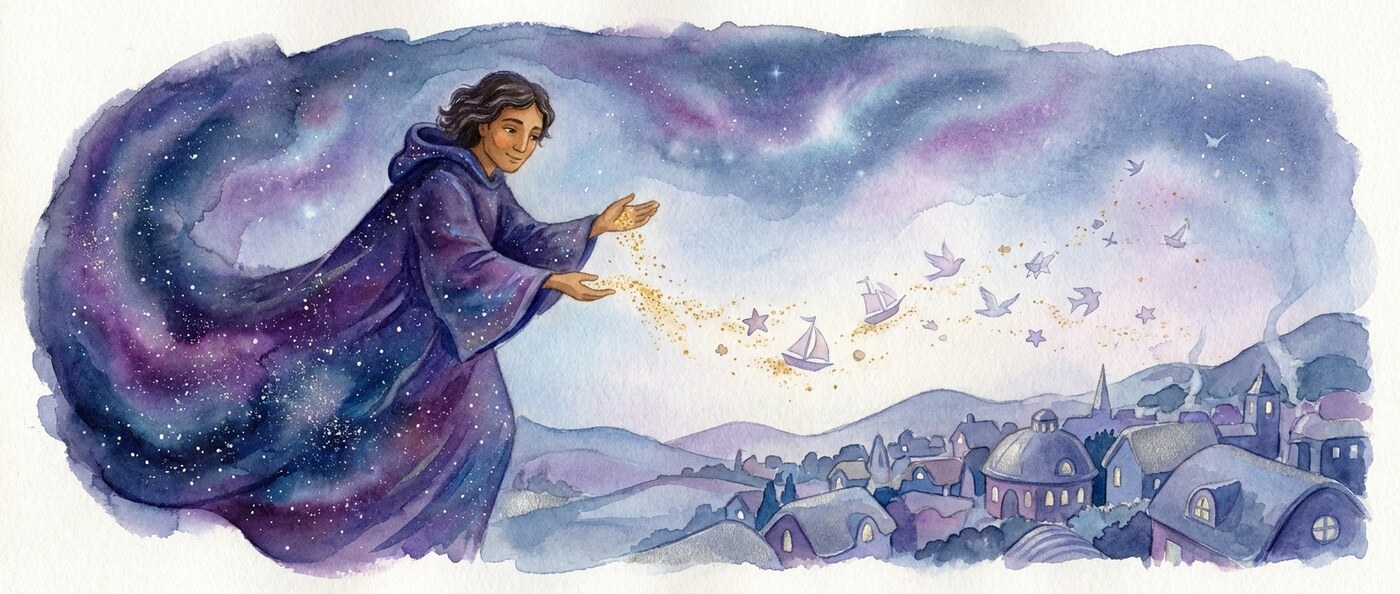
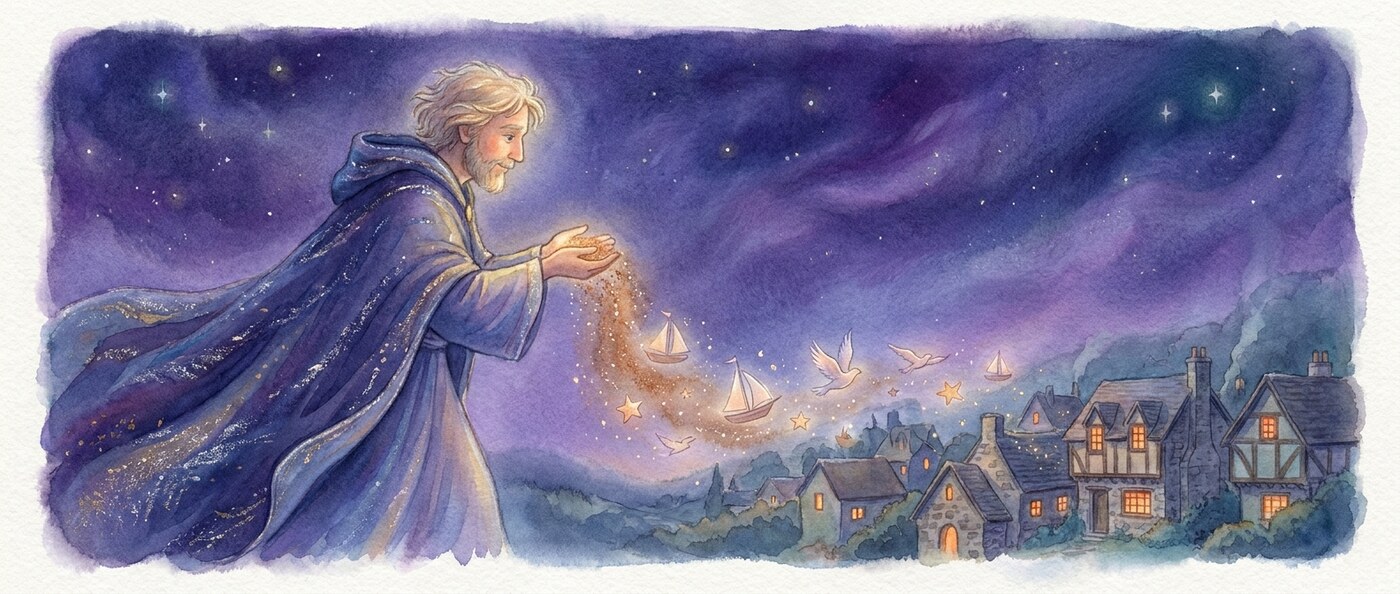
He is the one who comes last. Every other keeper visits on a particular night of the year; the Sandman comes every single one, which is why he is the most tired and by far the best travelled. He is described as tall, unhurried, and made largely of the colour the sky goes about ten minutes after sunset. He carries a satchel and he is very careful about which dream goes to which window.
Where it actually comes from
The sand-bringer is old northern European folklore, but his modern form comes from literature. Hans Christian Andersen's Ole Lukøje — "Ole Shut-Eye" — of 1841 is the gentle version most families know: he sprinkles children's eyes with sweet milk and opens umbrellas over them, a decorated one for good children's dreams and a plain one for dreamless sleep. E. T. A. Hoffmann's 1816 story Der Sandmann is the other tradition entirely, and is genuinely frightening — it is where the nightmarish version comes from. The homely explanation is simple: "sleep" in the corner of the eye really does look like sand.
What it does for a child
Bedtime resistance and fear of the dark are near-universal between three and seven, and they respond far better to a story that gives the child a companion than to reassurance that there is nothing to fear — which a frightened child hears as a denial of what they are feeling. A letter that says the dark is simply the same room, from someone who works in it, meets the fear on its own terms. It also gives an anxious child something concrete to reach for at two in the morning when nobody is awake to ask.
However they look at your house
No two families picture The Sandman quite the same way. Here are six of them.