The story
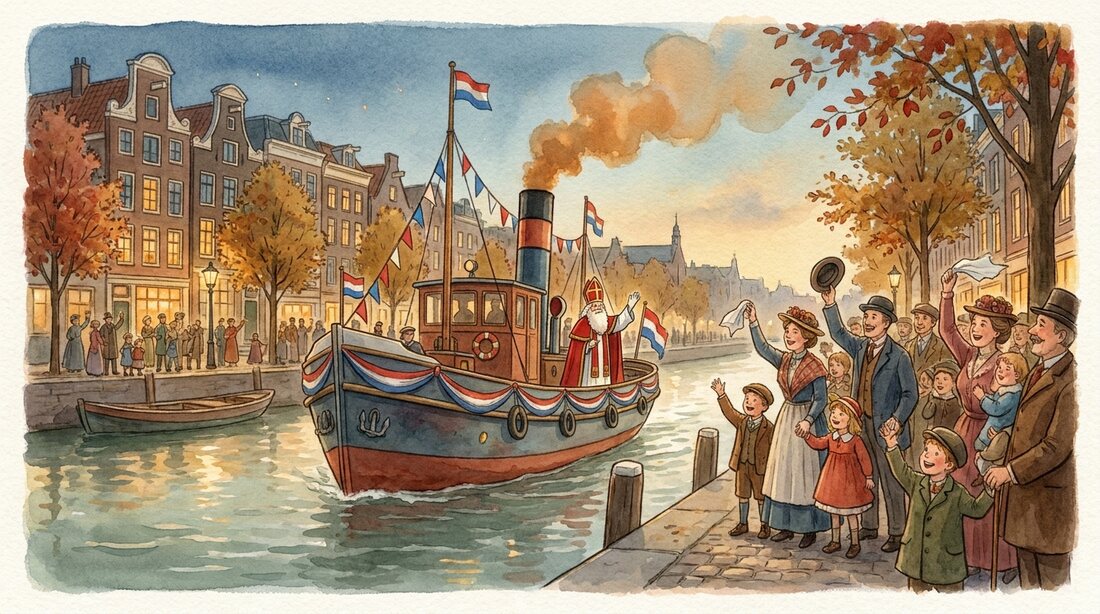
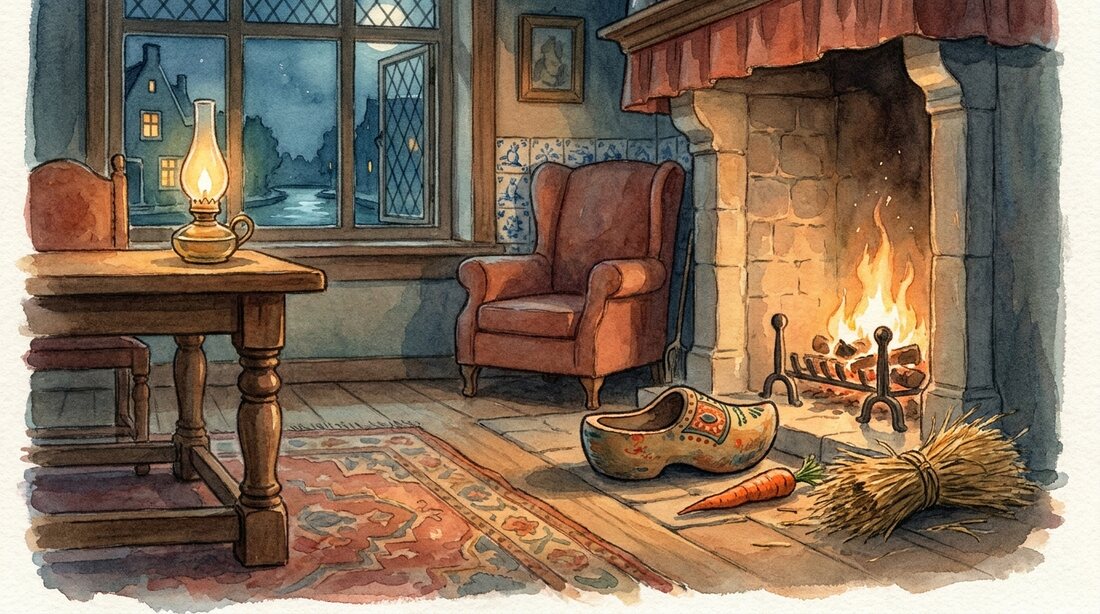
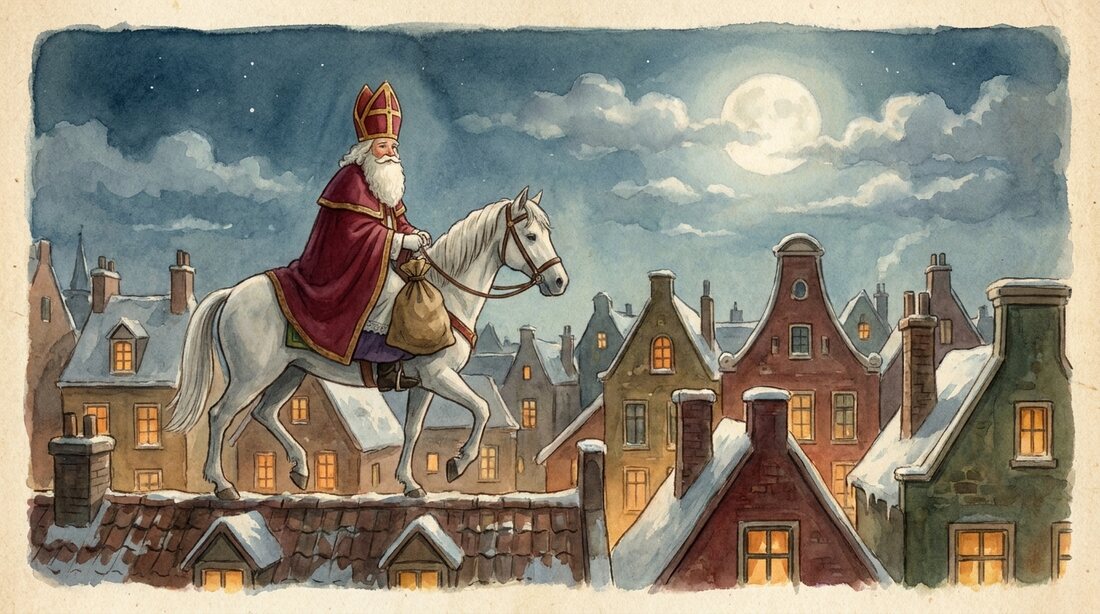
Sinterklaas arrives by steamboat, not by sleigh, and the whole country watches him dock. He is stately where Santa is jolly, and he rides a white horse over the rooftops at night while children sing at the door with a shoe put out and something in it for the animal. He is the patient one. He has been doing this longer than almost anybody.
Where it actually comes from
Sinterklaas is the direct Dutch descendant of Saint Nicholas of Myra, and his feast on the evening of 5 December — Pakjesavond, "parcel evening" — remains the main gift-giving night in the Netherlands, separate from Christmas. Dutch settlers carried the custom to New Amsterdam, and "Sinterklaas" became "Santa Claus" in American English. His horse is traditionally named Amerigo, or Ozosnel in recent years. His companion figure has been the subject of serious national debate in the Netherlands over its racial caricature, and many broadcasters, cities and families have changed or dropped it; Dreams leaves the companion out entirely and keeps the letter to Sinterklaas himself.
What it does for a child
What distinguishes Sinterklaas is that the child does something first. You put out the shoe, you leave something for the horse, you sing at the door — participation rather than waiting. For small children the small act of hospitality towards the animal is often the part that sticks, and it is a gentle early lesson in thinking about the tired traveller rather than the parcel.
More from the story
A few more pictures to look at together.