The story
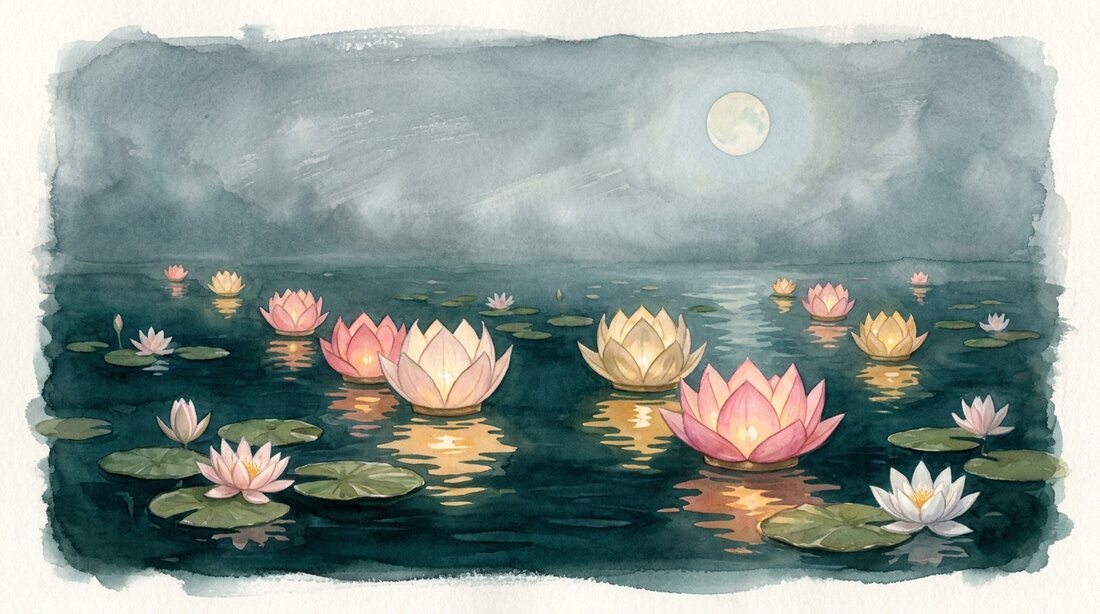
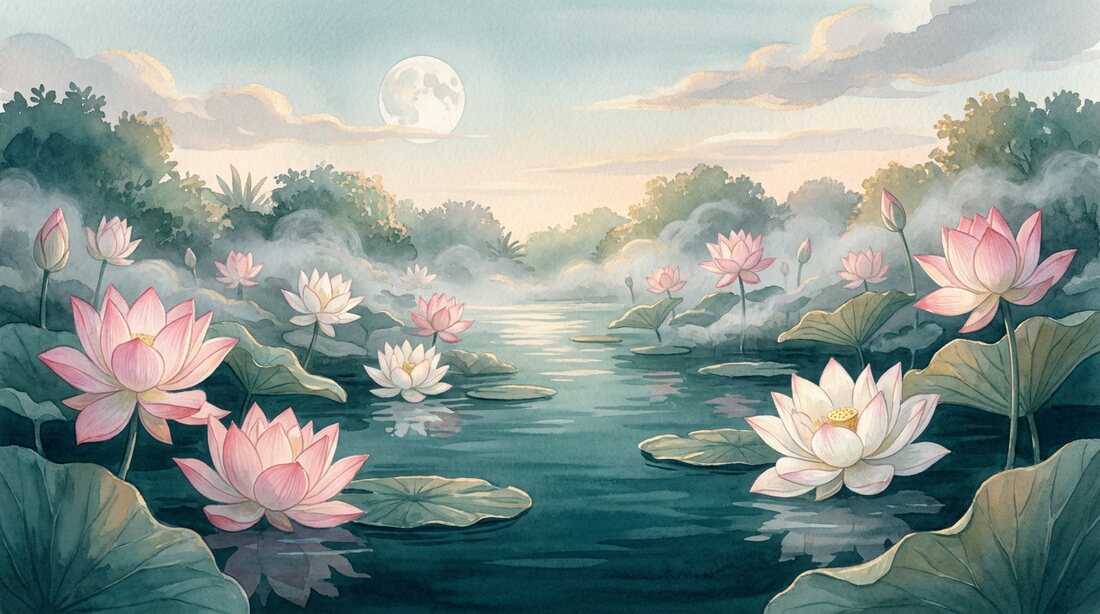
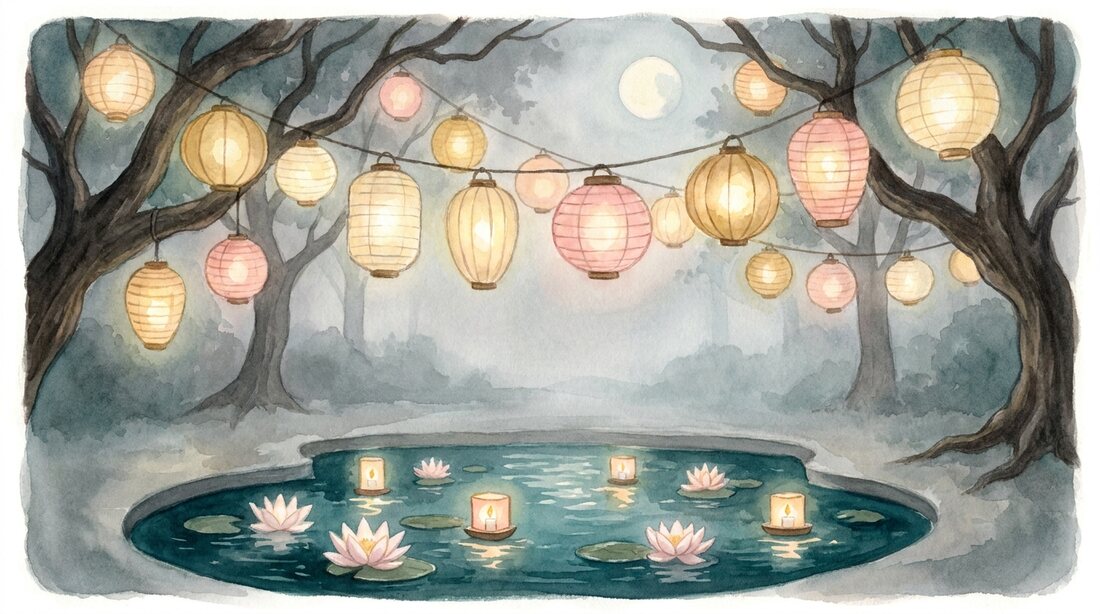
It grows up through dark water from the mud at the bottom, and it opens clean. Rain runs off it without wetting it. It closes at night and opens again in the morning, which is why it has stood for beginning again in so many traditions for so long. On Vesak evening the water around it fills with small floating lanterns.
Where it actually comes from
Vesak — also Buddha Purnima, Wesak or Saga Dawa — falls on the full moon of the lunar month Vesakha, usually in May, and commemorates the birth, enlightenment and passing of the Buddha, held by many Theravada traditions to have occurred on the same day of the year. Observances vary widely: lanterns and lamps, offerings of flowers and incense, giving to those in need, freeing captive animals, vegetarian meals, and in Sri Lanka the great illuminated lantern displays. The United Nations formally recognised Vesak in 1999. The lotus is among the oldest and most widespread Buddhist symbols, precisely because it is rooted in mud and opens unstained above the water.
What it does for a child
Vesak is the quietest festival in this catalogue and that is its value. Where most celebrations are additive — more lights, more food, more noise — this one is about subtraction: be gentler, take less, harm nothing for a day. Children are rarely offered a festival shaped like that, and it lands especially well with the ones who find loud celebrations difficult. The lotus is also the kindest available image for a child having a hard year.
More from the story
A few more pictures to look at together.