The story
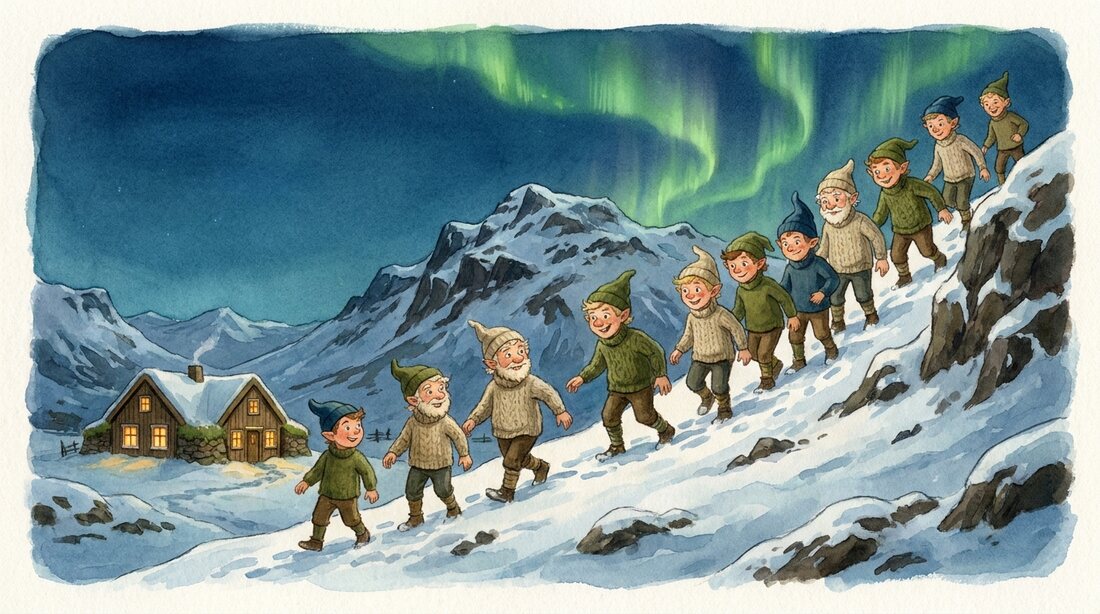
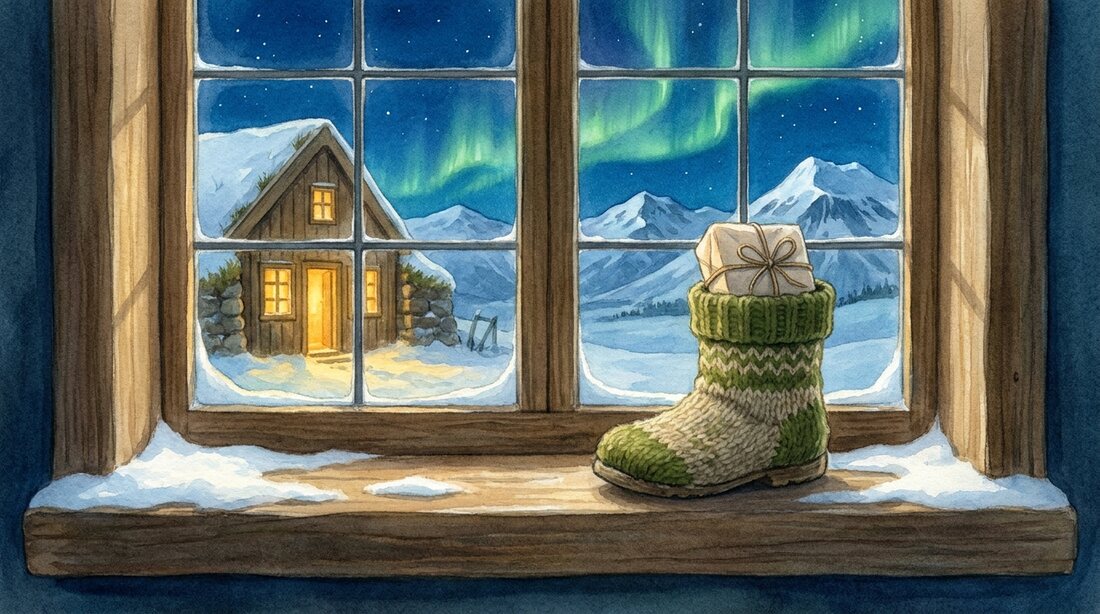
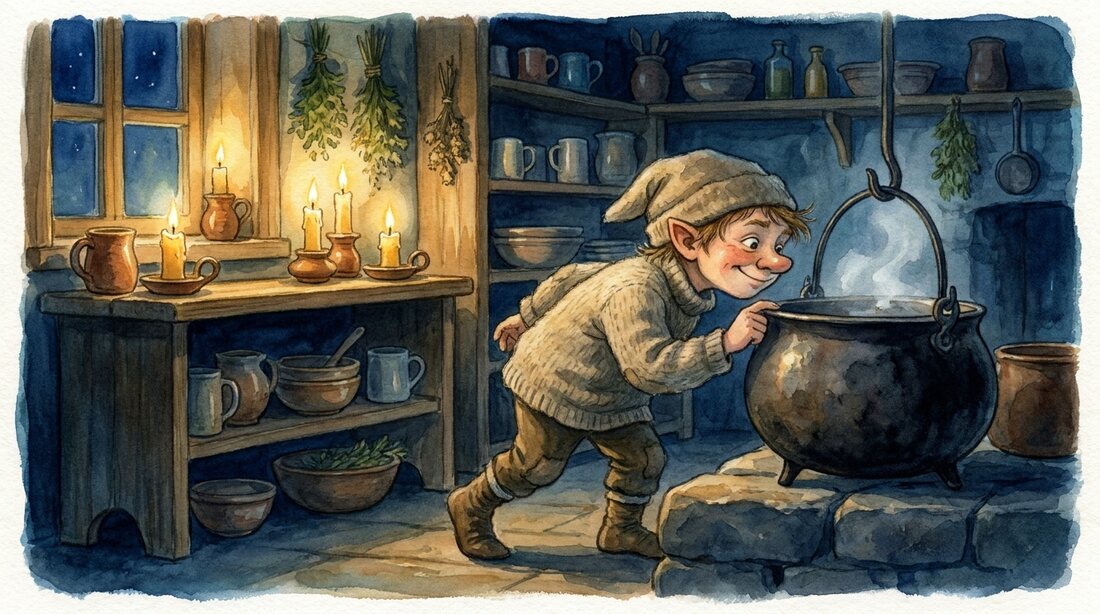
They live in the mountains with their mother Grýla, a formidable figure of Icelandic folklore, and they come down to the farms one at a time over the thirteen nights before Christmas, each leaving on the thirteenth night after in the same order. Their names are their crimes: Spoon-Licker, Door-Slammer, Skyr-Gobbler, Sausage-Swiper, Window-Peeper, Doorway-Sniffer, Meat-Hook, Candle-Stealer, and the rest. A child who has behaved leaves the shoe and finds a small gift; a child who has not, traditionally, finds a raw potato.
Where it actually comes from
The Yule Lads are genuinely old and were genuinely frightening — early versions were child- stealing trolls, and in 1746 a Danish public decree actually forbade parents from terrifying their children with them. Their number and names varied by region for centuries before settling at thirteen, largely through the poet Jóhannes úr Kötlum's 1932 verses, which remain the standard list. Over the twentieth century they softened into gift-givers and picked up red suits from international Santa imagery, though many Icelandic families keep them in traditional Icelandic wool.
What it does for a child
The thirteen-night structure is the cleverest thing about them. Waiting is genuinely hard at five, and a single distant date is close to unbearable; thirteen small marked mornings turn one enormous wait into a countable sequence. It is, in effect, a folk advent calendar with personality, and the fact that the Lads are naughty rather than judgemental takes the moral pressure off entirely.
More from the story
A few more pictures to look at together.